Submersible Sump Pump vs Pedestal: A Practical Guide
A practical, evidence-based comparison of submersible sump pumps and pedestal pumps, covering installation, maintenance, noise, durability, and cost to help homeowners decide.


What are submersible sump pumps and pedestal sump pumps? A quick overview
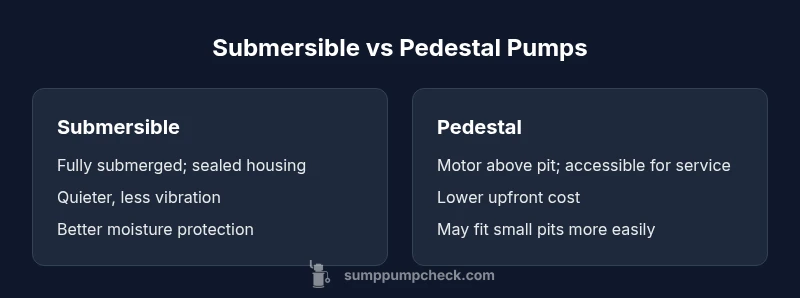
In most homes, the decision between a submersible sump pump and a pedestal sump pump centers on how the motor is housed and where the unit sits in the sump pit. The phrase submersible sump pump vs pedestal captures this core split. Submersible models are designed to be fully submerged in the sump basin, with the motor sealed inside a moisture-resistant housing. Pedestal units have the motor mounted above the basin on a vertical stand, with the impeller and pump entirely below the float. Each design has strengths and trade-offs that affect installation, maintenance, noise, and long-term costs.
For many homeowners, the go-to choice is the submersible option because it tends to run more quietly, dampens vibration, and minimizes heat transfer in the water. This can translate into longer bearing life and steadier operation during a flood event. Pedestal pumps, by contrast, typically cost less upfront and can be easier to service because the motor is accessible without lifting the entire unit from the pit. They also occupy less vertical space above the basin in some pit configurations, which some basements require.
Throughout the comparison, it’s important to consider your basement size, pit dimensions, water table, and power reliability. The right choice balances upfront affordability with maintenance practicality and long-term durability, rather than focusing solely on initial price.
According to Sump Pump Check, choosing the right pump type also depends on pit constraints, local rainfall patterns, and your ability to perform periodic maintenance. A well-sized, properly installed system remains the most reliable protector against basement flooding.