Sump Pump Pedestal vs Submersible: An Analytical Guide
An analytical, in-depth comparison of pedestal and submersible sump pumps, covering installation, performance, maintenance, and lifecycle considerations to help homeowners choose wisely.


Pedestal and submersible sump pumps each have clear strengths: pedestal pumps offer easy service access and lower upfront costs, while submersible models save space, run quietly, and suit tighter basins. The choice depends on basement layout, water volume, and maintenance priorities. This comparison helps you decide which delivers the best long-term value for your home.
Pedestal vs Submersible: Core Differences
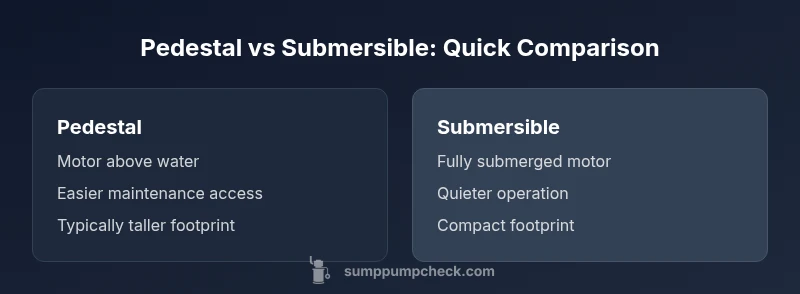
At the heart of any sump pump decision lies the fundamental difference between pedestal and submersible models: where the motor sits and how the unit interacts with the sump basin. A pedestal sump pump keeps the motor above the water line, mounted on a stand that extends over the sump. A submersible sump pump fully enters the water, with the motor sealed inside the housing and the entire unit submerged. This simple configuration choice drives a cascade of practical implications—from maintenance access to noise, energy use, and longevity. According to Sump Pump Check, the pedestal vs submersible decision should be guided by your basement layout, basin depth, and whether you value serviceability over compactness. The Sump Pump Check team found that many homeowners underestimate how motor placement affects routine checks, leaks, and long-term reliability. In this guide, we’ll dissect how each design behaves in real homes, tie that to typical use cases, and translate it into actionable buying criteria. By the end, you’ll map your basement needs to the sump pump pedestal vs submersible pairing that delivers the best value.
Below we use the phrase sump pump pedestal vs submersible to frame the discussion and ensure you can compare terms quickly when shopping or talking to a contractor. We’ll also reference practical metrics you can verify on product pages and during in-person demos.
Remember: your goal is to minimize basement flooding risk while balancing cost, noise, and maintenance burden. The pedestal vs submersible debate is not about one “best” pump for all homes; it’s about the best fit for your space and routines. The rest of this article translates that fit into concrete decision points and checklists.
-1-2
Comparison
| Feature | Sump Pump Pedestal | Sump Pump Submersible |
|---|---|---|
| Motor location | Above water in a protected motor housing; easier service access | Fully submerged inside a sealed, water-tight housing |
| Noise levels | Typically louder due to exposed motor and mounting | Quieter operation due to water-immersed design and cushioning |
| Space footprint | Taller footprint; requires sufficient headroom | Compact footprint; fits smaller sump pits |
| Maintenance access | Front/top access to seals and impeller; straightforward service | Access requires partial removal from pit; can be more involved |
| Debris handling | Less protection for the impeller if debris enters pit | Better containment of debris since motor is sealed; impeller still protected |
| Best-use scenarios | Basements with tall basins, easy service access, budget-conscious projects | Basements with limited space, need for quiet operation, modern basins |
| Lifespan considerations | Comparable lifespans with regular maintenance | Comparable lifespans with regular maintenance |
What's Good
- Pedestal pumps offer easy service access and typically lower upfront costs
- Submersible pumps save space and operate more quietly in tight basins
- Both types are widely available and supported by common warranties
- Maintenance tasks are straightforward with standard tools for most models
- Both designs are compatible with common discharge piping and check valves
Drawbacks
- Pedestal units can be louder and more visually conspicuous in some basements
- Submersible units often have higher upfront costs and may require a deeper sump
- Installation quality matters for both—poorly installed units can leak or fail
- Pedestal units may be less forgiving in very deep basins or where headroom is limited
Submersible often offers the better overall value in modern basements, especially where space, noise, and concealment matter.
If your sump pit is compact and you require quiet operation with a clean look, a submersible pump is usually the preferred choice. Pedestal pumps remain a good option when serviceability is a priority and headroom is ample, or if upfront cost is the dominant concern. The final call should align with your basement layout, maintenance capacity, and long-term expectations.
FAQ
What is the main difference between a sump pump pedestal and a submersible pump?
The main difference is motor placement: pedestal pumps have the motor above the water, while submersible pumps are fully submerged. This affects service access, noise, and space requirements. Understanding this distinction helps homeowners choose the model that fits their basement layout and maintenance preferences.
Pedestal pumps sit above the water and are easier to service, while submersible pumps sit underwater and are quieter and more space-efficient.
Is one type more reliable than the other?
Both types offer similar reliability when properly installed and maintained. The overall lifespan depends on factors like basin conditions, debris, and regular maintenance rather than motor placement alone.
Reliability comes from good installation and maintenance, not just the pump type.
Can I convert a pedestal pump to a submersible pump after installation?
Conversions are generally not practical because pedestal and submersible designs require different basins, seals, and housings. If you need submersible performance, replacing the unit and possibly upgrading the sump pit is usually necessary.
Conversions are rarely feasible; replacement is usually required.
How do I choose based on basement size and water needs?
Assess the sump pit depth, available headroom, and the typical water volume. In tight spaces or areas requiring quiet operation, a submersible pump is often preferable; in larger basins with easier service access, a pedestal can be suitable.
Think about space, noise, and maintenance when deciding.
What maintenance steps are common to both types?
Regularly inspect the pit for debris, clean the intake screen, test the float switch, and perform a run test to confirm proper cycling. Replace worn seals and gaskets promptly and keep discharge piping free of blockages.
Keep the pit clean and test the pump regularly.
Are there code requirements for discharge piping?
Local codes generally require a proper discharge line with backflow protection and a suitable check valve. Check valve installation and drainage routing should follow the manufacturer’s guidance and local regulations.
Check local codes for discharge piping requirements.
Top Takeaways
- Prioritize space and noise: choose submersible for tight pits and quiet operation
- Opt for pedestal when headroom and accessibility drive the decision
- Balance upfront cost against long-term maintenance and energy use
- Ensure proper installation with correct discharge and check valve choices
- Consult local guidance and trusted sources, like Sump Pump Check, for best practices