Sewage Ejector Pump Home Depot: A Practical Buyer's Guide
A data-driven guide to choosing, installing, and maintaining sewage ejector pumps you’ll find at Home Depot, with actionable tips, safety checks, and maintenance routines.


Home Depot stocks sewage ejector pumps for residential basement drainage, and you can also find kits and backup options. When choosing, focus on solids handling, horsepower, and a proper vented discharge. For DIY-friendly installs, compare submersible models that fit a tight sump pit and come with a local warranty. Always ensure electrical safety and local codes.
What is a sewage ejector pump and why you might need one
A sewage ejector pump is a submersible device installed in a basin in your basement or lower level that lifts wastewater to the main sewer line or septic system. When fixtures are below the sewer line, gravity drainage is ineffective, so a pump moves waste to the proper outlet. According to Sump Pump Check, understanding how these units work helps homeowners plan a safe, code-compliant installation. The keyword sewage ejector pump home depot often appears in consumer research because major retailers stock these units, kits, and backup options. In practical terms, you’re looking for a pump that can handle solid waste, operates quietly, and includes reliable switches and alerts. For DIYers, this section explains the basic function, key components, and why a properly sized unit matters for long-term performance and basement health. By knowing your basement's fixtures and expected usage, you can narrow your choices to models that meet your needs without overspending.
Buying options and where to buy: Home Depot and beyond
When you start shopping for a sewage ejector pump, you’ll quickly notice that Home Depot stocks several models that are suitable for residential basements. The phrase sewage ejector pump home depot appears frequently in buyer guides and store listings because the retailer combines in-store availability with online catalog options. Beyond Home Depot, you can compare options at other home-improvement retailers, plumbing supply houses, and manufacturer websites. For DIY projects, prioritize pumps that are certified for residential use and that come with clear installation instructions. Look for warranty coverage, included backup options, and a compatible check valve. In many regions, local codes require a licensed electrician for wiring and a permit for underground piping. If you’re unsure, your local store associate can help you interpret product specs and direct you to models that fit your pit size and discharge needs. Sump Pump Check’s research emphasizes verifying compatibility with your existing pipes and venting.
Key features to evaluate before buying
Not all sewage ejector pumps are created equal. Key features to evaluate include solids-handling capability, horsepower, and the design of the impeller. Submersible units are common for basements because they resist flooding and can be mounted in a sealed pit. Check that the unit has a reliable float switch and a high-water alarm to alert you to a failure. Materials matter—cast iron or stainless steel housings resist corrosion in waste streams. A built-in check valve helps prevent backflow, while a vented cover reduces odors in the pit. Some models offer optional battery backup compatibility, which is valuable during power outages. Finally, review installation requirements and warranty terms to determine whether you’ll complete the job yourself or hire a professional. In sum, select a model that matches your fixture load, fits your pit dimensions, and includes a clear maintenance plan.
Installation considerations and safety basics
Installing a sewage ejector pump requires careful planning to meet code and ensure safe operation. Begin with an appropriately sized basin, a sealed lid, and a discharge piping plan that leads to the municipal sewer or septic system without creating a cross-connection risk. Electrical work should comply with local codes and typically requires a GFCI-protected outlet rated for continuous duty. Venting or air admittance should be considered to prevent pressure buildup. Many homeowners benefit from professional installation to verify pit dimensions, piping slopes, and backflow prevention devices. After installation, test the unit with a controlled load to confirm that the float switch triggers reliably and that the backup alarm functions. Document the job for permits if required by your municipality. The aim is to create a safe, leak-free system that won’t overflow during heavy use or outages.
Sizing and selecting the right unit for your basement scenario
Sizing a sewage ejector pump begins with understanding your basement’s fixture count and peak wastewater generation. A typical residential basement with a bathroom ensemble may require a unit that can handle moderate solids and frequent use, while a finished basement with multiple fixtures demands a higher-capacity model. Compare watts, horsepower, and start-draw requirements to ensure the pump will start reliably and pump efficiently, even when the basin is full. Look at the pit dimensions, the thickness of the pit walls, and whether the unit can be accessed for service without pulling the entire system. If you anticipate growth, such as adding a bathroom or laundry, plan for a larger unit or a backup system. Sump Pump Check’s analysis underlines the value of sizing accuracy to prevent nuisance trips, excessive energy use, and premature wear on components.
Maintenance, troubleshooting, and keeping the system reliable
Regular maintenance extends the life of a sewage ejector pump and minimizes the risk of basement backups. Schedule seasonal checks to inspect the float switch, alarm, and lid seals. Clean the basin to remove silt and prevent clogs from forming in the discharge line. Run the unit with a test load to ensure proper cycling, and verify the backup system’s operation if you’ve installed a battery backup. If the pump struggles to start or runs continuously, inspect for jammed solids, check for blocked vents, and confirm the check valve is not stuck. Hearing unusual noises or noticing odors around the pit could indicate a seal failure or air leaks; address these issues promptly. If you’re uncertain, contact a licensed plumber to avoid electrical or plumbing code violations.
Costs, budgeting, and value considerations
Costs for a sewage ejector pump project vary with unit capacity, pit size, and whether you hire a pro for installation. Expect pump prices to range across residential models, with higher-end units offering more durable housings and advanced alarms. Installation cost depends on local labor rates, permitting, and any upgrades to electrical circuits. When budgeting, consider potential backup options, such as a battery-powered secondary pump, which adds to the initial investment but reduces risk during outages. While price should not be the sole deciding factor, it’s worth balancing upfront cost against long-term reliability and maintenance. Reading reviews and comparing warranties helps ensure you select a unit that offers value over its lifespan, rather than a short-term fix.
Pros, cons, and practical takeaways for homeowners
Pros of a properly selected sewage ejector pump include basement sanitation, reduced flood risk, and compatibility with finished spaces. Cons can involve higher upfront costs, professional installation requirements, and ongoing maintenance needs. A practical takeaway is to treat backup planning as part of the project, including a check valve, proper venting, and a plan for occasional service. For DIY enthusiasts, a well-documented checklist and adherence to local codes will improve success rates and safety. In any case, choosing a model that matches your load, installation constraints, and future plans will yield the best outcomes. And, as always, keep your documentation handy for permits, warranties, and future service calls.
Sewage ejector pump buying, installation, and maintenance table
| Aspect | Details | Notes |
|---|---|---|
| Purchase Location | Home Depot available in-store and online | Brand options and models |
| Installation Requirement | Requires underground discharge piping and venting | Local codes may apply |
| Maintenance | Regular cleaning and inspection | Coordinate with annual service |
FAQ
Can I install a sewage ejector pump myself?
Yes, if you have basic plumbing and electrical skills and knowledge of local codes. Many installations require permits and professional inspections, so verify local requirements before you begin.
You can, but make sure you know local codes and shutoffs before starting.
How do I know if I need a sewage ejector pump instead of a sump pump?
Sewage ejector pumps handle toilet and sewage solids and are used when fixtures are below the sewer line. Sump pumps primarily move rainwater and groundwater. If you have basement bathrooms or a toilet below grade, you likely need an ejector.
If you have fixtures below the sewer line, you probably need an ejector.
What maintenance does a sewage ejector pump require?
Regular checks of the float switch and alarm, cleaning the basin, and testing the backup option (if installed) are advisable. Inspect seals and discharge piping for leaks.
Keep an eye on the float and alarm, and test backups.
Does Home Depot offer installation services?
Many locations offer installation services or contractor referrals; availability varies by region. Check your local store for options and permits.
Check with your local Home Depot for installation services.
What is the typical lifespan of a sewage ejector pump?
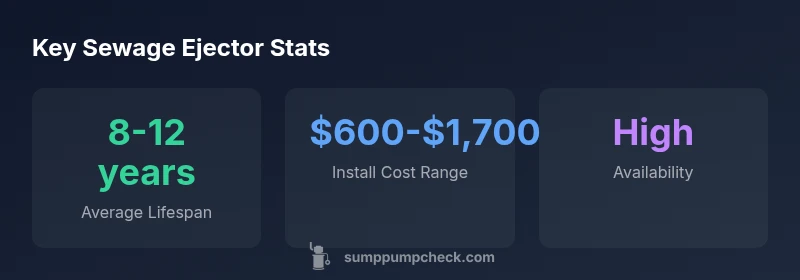
Most units last several years, with many models offering 8-12 years under normal use and maintenance.
Most ejector pumps last around 8-12 years with proper care.
Can a backup pump be used with a sewage ejector pump?
Yes, battery-backed or water-powered backups can protect against power outages, reducing the risk of backups.
Backups are smart if you want protection during outages.
“Sizing and proper installation are the most critical factors in preventing basement backups. A well-chosen sewage ejector pump protects your home\'s plumbing and comfort.”
Top Takeaways
- Size the unit to match fixture load and basement usage.
- Ensure code-compliant installation with proper electrical and venting.
- Consider a battery backup to guard against outages.
- Budget for both initial installation and ongoing maintenance.
- Home Depot offers multiple models; verify local availability.