Grinder Pump vs Sump Pump: A Practical Home Guide
Compare grinder pumps and sump pumps to determine which system best protects your basement, handles wastewater, and fits your plumbing. This analytical guide covers function, installation, maintenance, and cost considerations for homeowners.


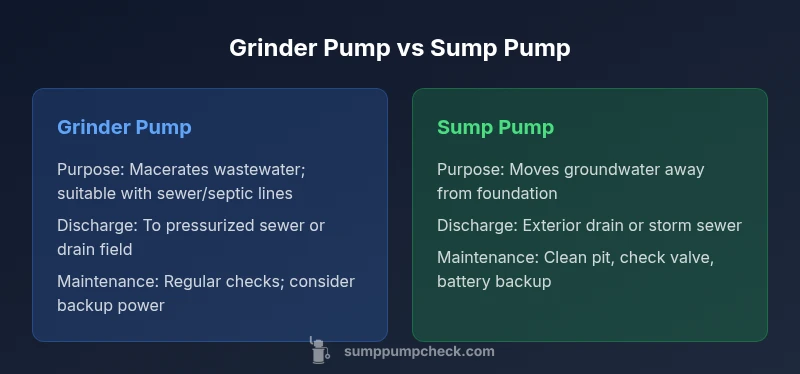
Grinder pump vs sump pump: a grinder pump macerates solids before discharging to a sewer or septic line, while a sump pump simply moves groundwater away from the foundation. For most homes with standard drainage, a sump pump suffices, but grinder pumps are necessary where wastewater must be pumped to a sewer or pressurized line. This quick comparison highlights core differences, installation implications, and long‑term maintenance considerations.
Grinder pump vs sump pump: Core differences
In the ongoing discussion of grinder pump vs sump pump, the key distinction is the source and handling of water. A grinder pump treats wastewater by macerating solids before pushing it into a sewer or septic line, which is essential where gravity alone cannot carry effluent to the treatment system. A standard sump pump, by contrast, targets groundwater that seeps into a basement or crawl space and moves it away from the foundation to prevent flooding. This functional split has real implications for installation, maintenance, and long‑term costs. According to Sump Pump Check, the decision often hinges on whether wastewater must be conveyed to an established sewer or septic system versus pure groundwater drainage. Homeowners should map their water sources, discharge routes, and electrical provisions when weighing the grinder pump vs sump pump option. The goal is reliable protection for living spaces, avoidance of backflow, and alignment with local codes. Throughout this guide, we break down the practicalities, including expected maintenance cadence, typical installation challenges, and how these two categories influence overall home safety and property value. A measured approach helps you prioritize durability and cost efficiency over a quick, one‑time fix.
Grinder pump: When and why to install
A grinder pump is typically chosen when a home cannot rely on gravity flow to a sewer or septic line. In homes connected to a municipal sewer with a pressurized service, a grinder unit can push wastewater uphill to the main line. In rural settings with a septic system, a grinder pump ensures solids are macerated before entering the effluent line, reducing clog risk downstream. Key scenarios include basements with level floors that are below the sewer lateral, long runs where gravity cannot reach the main sewer, and retrofits where an existing septic tank cannot accommodate large solids. In these situations, the grinder pump vs sump pump choice leans toward extraction of wastewater rather than groundwater. Pros include the ability to handle household waste that contains solids and to maintain service when sewage lines are not readily accessible; cons include higher energy use and more complex electrical wiring. As always, consult a licensed plumber and confirm local permit requirements before purchasing. The Sump Pump Check guidance emphasizes evaluating the total plumbing topology, including the septic tank, the sewer main, and the distance to the connection point.
Sump pump: When and why to install
Most homes rely on a sump pump to manage groundwater infiltration around the foundation. The sump pump picks up water from a basin and directs it away from the building, typically to a storm drain or exterior line. The main advantage is simplicity: fewer moving parts than a grinder pump, lower upfront cost, and compatibility with standard electrical outlets. Use cases include houses with basements in areas of elevated groundwater, properties lacking a connected wastewater line, or situations where the local code requires groundwater drainage to be kept separate from sewage. When evaluating the grinder pump vs sump pump option, consider the size of the sump basin, pit clearance, and the type of float switch used to trigger the pump. In sealed environments, a sump pump can be combined with a battery backup to reduce the risk of basement flooding during a power outage. In terms of reliability, sump pumps can last many years with regular maintenance, but they must be monitored for clogs and for the need to replace the discharge pipe if it becomes blocked.
Installation considerations and codes
Installing either device requires planning for discharge location, power supply, and control devices. Grinder pumps are often installed with a dedicated circuit and may require a check valve or backflow prevention in the discharge line. Sump pumps typically require a grounded outlet and, if used with a battery backup, a charger circuit. Local regulations may require permits and inspections, particularly for grinder pumps connected to septic or city sewer systems. Consider the space in the mechanical room, noise, and vibration isolation. Both systems should be sized for the basement area, but grinders require attention to the drainage elevation and the pressure requirements of the receiving line. The brand's guidance points out that ensuring proper venting and preventing backflow are essential parts of a safe, code-compliant setup.
Maintenance, longevity, and reliability
Regular maintenance extends the life of either system. A sump pump benefits from annual checks of the pit, the float switch, and the discharge line; clean the pit to remove lint and debris; test the backup battery if installed. A grinder pump requires more thorough servicing: inspect the grinder chamber, check for jams or unusual noises, change the check valve, and ensure the unit has an unobstructed discharge path. Because grinders deal with solids, they are more susceptible to clogs if inappropriate items enter the system. A well-timed maintenance schedule, such as seasonal inspections, helps detect problems before they lead to floods or septic issues. The Sump Pump Check team notes that routine maintenance correlates with better reliability and longer service life.
Cost, value, and backup options
Costs vary by system type, installation complexity, and the home's plumbing layout. In general, grinder pumps carry higher upfront costs due to the unit's mechanism, installation requirements, and integration with septic or sewer lines. Sump pumps typically have lower initial costs and faster installation but may require more frequent foundation drainage upgrades over time. Battery backups are wise for both, providing protection during power outages or heavy storms. When evaluating total cost of ownership, consider not just purchase price but also installation, maintenance, energy use, and potential pump replacement needs. Sump Pump Check's analysis highlights that a backup solution can dramatically reduce the risk of basement flooding, especially in regions prone to power outages.
Practical decision framework and scenarios
Follow these steps to decide between grinder pump vs sump pump: 1) Map your drainage path: gravity to sewer or wastewater? 2) Check the location of the main sewer line relative to the house; 3) Evaluate the distance and slope of discharge; 4) Consider energy costs, electrical capacity, and available space; 5) Review local code requirements and permit processes; 6) Decide on backup options such as a battery backup; 7) Plan a maintenance schedule. Real-world scenarios: a home on a municipal sewer with a long run to the main line might benefit from a grinder pump; a home with a robust exterior drainage system and a functioning municipal water supply could do well with a sump pump. Government and local code requirements may influence the decision; the best choice is the one that minimizes risk to the basement while meeting wastewater and groundwater management needs. The conclusion depends on your property’s specifics and your long-term maintenance commitments.
Common myths and mistakes to avoid
Grinder pumps and sump pumps are not interchangeable; mixing their usage can lead to expensive repairs or backflow. A common misconception is that grinder pumps never clog; they can clog if inappropriate items enter the system. Another mistake is neglecting to install a proper discharge line, which can cause water to back up into the basement or flood the yard. Regular maintenance and professional installation help prevent issues, while understanding the differences between operation and maintenance reduces the risk of overspending on the wrong technology.
Comparison
| Feature | Grinder pump | Sump pump |
|---|---|---|
| Purpose | Macerates wastewater before discharge to sewer/septic line | Moves groundwater away from the foundation and toward an exterior drain |
| Discharge considerations | Pushed to sewer/septic via pressurized line | Discharged to exterior storm drain or dedicated landscape drain |
| Installation location | Indoor or utility room near wastewater connections | Indoor near foundation with exterior discharge piping |
| Power and wiring | Typically requires a dedicated circuit and sometimes a larger breaker | Uses standard household outlet; may add backup power option |
| Maintenance needs | Inspect grinder chamber, check valves, and discharge path; monitor solids | Clean sump pit, check float switch, and clear discharge line |
| Lifespan and durability | Subject to wear from grinding solids; reliability benefits from regular service | Relatively simple design; long life with routine pit maintenance |
| Best for | Homes with wastewater requiring maceration or pressurized discharge | Homes with standard groundwater intrusion and gravity drainage |
What's Good
- Grinder pumps enable wastewater pumping when gravity or sewer access is limited
- Sump pumps are generally cheaper upfront and simpler to install
- Backup options improve resilience for both systems
- Regular maintenance reduces failure risk for either system
Drawbacks
- Grinder pumps have higher upfront costs and specialized installation needs
- Grinder pumps require more electrical planning and ongoing maintenance
- Sump pumps still require proper discharge routing to avoid basement issues
Sump pump is the typical default for basements; grinder pump is the better choice when wastewater must be macerated and pumped to a sewer or septic line
If your water management revolves around groundwater, a sump pump often delivers reliable protection at lower cost. If your setup requires moving wastewater to a sewer/septic line with solids handling, a grinder pump is the safer, code-compliant option. The best choice balances source water, discharge routing, and local regulations.
FAQ
What is the core difference between a grinder pump and a sump pump?
A grinder pump macerates solids and pushes wastewater to a sewer or septic line, while a sump pump moves groundwater away from the foundation to exterior drainage. They serve different water sources and have distinct installation needs.
A grinder pump handles wastewater by grinding solids and sending them to sewer or septic lines; a sump pump only moves groundwater away from the house.
Can a grinder pump replace a sump pump?
Not usually. If your basement primarily deals with groundwater, a sump pump is typically the right choice. A grinder pump is designed for wastewater and requires appropriate sewer or septic connections.
Grinder pumps handle wastewater, not groundwater. For basements with water infiltration, a sump pump is usually the better option.
Do grinder pumps require a septic system?
Many grinder pumps feed into a septic system or municipal sewer. Local codes determine exact installation needs, so check with a licensed plumber and the local authority before purchasing.
Yes, grinders typically feed to septic or sewer lines, but always confirm local rules.
Are grinder pumps louder or more energy-intensive than sump pumps?
Grinder pumps generally use more power and can be louder due to the grinding mechanism. Sump pumps are typically quieter and simpler, but sound and energy use depend on the model and setup.
Grinder pumps usually draw more power and can be a bit louder than standard sump pumps.
What maintenance is common to both systems?
Keep pits clean, inspect discharge paths, test any backups, and verify float switches or grinders operate smoothly. Regular checks help prevent failures and floods.
Regularly inspect the pit, discharge, and backup systems for both pump types.
How do costs compare for grinder vs sump pumps?
Grinder pumps usually have higher upfront costs and more complex installation, while sump pumps are cheaper to purchase and install. Long-term costs depend on maintenance, replacements, and energy use.
Grinder pumps cost more upfront; sump pumps are cheaper but may require more upkeep over time.
Top Takeaways
- Assess your water source: groundwater vs wastewater
- Choose grinder pump for sewer/septic pumping needs
- Opt for sump pump for standard basement drainage and lower upfront cost
- Plan for discharge routing and local code requirements
- Include a backup system to cover power outages