Sump Pump vs Grinder Pump: Which Do You Need in 2026?
A detailed, analytical comparison of sump pumps and grinder pumps to help homeowners choose the right solution for basement drainage and wastewater management in 2026.


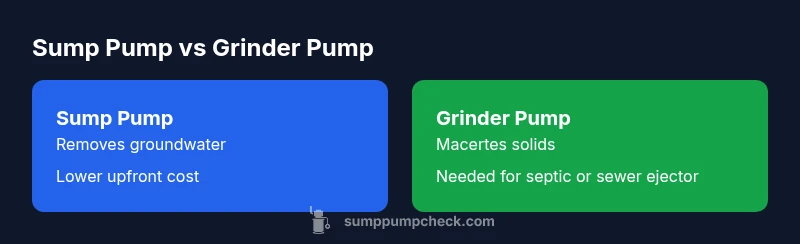
In most homes, a sump pump is the simpler, cheaper solution for groundwater and basement flooding, while a grinder pump is necessary when wastewater solids must be macerated before discharge to a sewer or septic system. In 2026, choose based on wastewater handling needs, discharge destinations, and local codes. According to Sump Pump Check, start with a drainage assessment and code requirements to guide your decision between a sump pump or grinder pump.
Why homeowners choose between a sump pump or grinder pump
When you face a choice between a sump pump and a grinder pump, the decision often centers on how your home handles water and waste. In basements where flooding is driven primarily by groundwater infiltration, a sump pump provides a simple, direct path for water to exit the living space. In homes that rely on a sewer or septic system, especially where wastewater must be ground up before discharge, a grinder pump becomes a practical necessity. According to Sump Pump Check, the right selection reduces future service calls and protects foundations and plumbing from pressure and backups. In 2026, many homeowners start with a drainage assessment and an evaluation of the local sewer or septic requirements to avoid mismatches. The phrase sump pump or grinder pump is more than a label; it signals how water and waste will flow through the home’s plumbing, venting, and discharge lines. Proper sizing, correct installation, and adherence to local codes matter as much as the brand choice. Readers should also consider whether backup power is available, since both devices rely on electricity, and a power outage can compromise protection. Throughout this guide, we compare the two systems using common, practical criteria so you can decide with confidence.
Key differences at a glance
- Purpose: A sump pump moves groundwater away from the basement; a grinder pump macerates and transports wastewater to a sewer or septic system.
- Waste handling: Sump pumps move liquids; grinder pumps handle solids and fibrous waste.
- Installation context: Sump pumps fit most basements with drainage pits; grinder pumps require connection to a sewer or septic ejector pit.
- Maintenance: Both require regular checks, but grinder pumps often need attention to solids build-up and grinder wear.
- Discharge setup: Sump pumps discharge to exterior drains or storm lines; grinder pumps discharge to the sewer line or septic pump chamber.
- Noise and vibration: grinders tend to generate more mechanical noise and require isolation in some installations.
- Cost and complexity: Sump pumps are generally simpler and cheaper to install; grinder pumps add complexity and require robust electrical and plumbing support.
- Best for: Sump pumps excel in groundwater control; grinder pumps are best when wastewater solids must be handled on-site.
How a sump pump works
A sump pump sits in a sump basin or pit at the lowest point of a basement. When groundwater rises, an automatic float switch rises with the water level and triggers the pump to push water up and out through a discharge line. Most sump pumps rely on electricity, with some models offering backup power options for outages. Proper installation includes a sealed pit, a check valve on the discharge line to prevent backflow, and a clear, unobstructed path for water to escape. Maintenance focuses on clearing debris from the pit, inspecting the impeller and seal, and testing the float regularly. For homeowners, a well-chosen sump pump reduces the risk of damp walls, mold growth, and costly repairs, making it a practical solution for many basements.
How a grinder pump works
A grinder pump is connected to a wastewater source (bathroom, laundry, and kitchen drains) and sits in a sealed chamber that receives wastewater. Inside, sharp blades macerate solids into slurry before pumping it to the public sewer line or a septic system via pressurized discharge. This setup is common in homes without direct sewer gravity flow or in locations where the municipal sewer system requires sewage to be ground up before discharge. Grinder pumps require a dedicated electrical circuit, reliable venting, and proper backflow protection. Regular checks focus on the grinder mechanism, seals, and the discharge line to prevent backups or clogs. The result is a robust, sewage-management solution for challenging drainage conditions.
When a grinder pump is the better choice
Choose a grinder pump if your home relies on a septic system or needs to discharge wastewater into a sewer line that cannot accept raw solids. Grinder pumps are particularly valuable when there is limited gravity drainage or when codes require maceration of solids before discharge. They are also favored in properties with remote or space-limited basements where large solids would otherwise cause frequent clogs. For households with high wastewater volume or complex plumbing, a grinder pump can reduce maintenance related to solids buildup in the lines, provided the system is matched to local regulations and the sewer or septic infrastructure.
When a sump pump is the better choice
Sump pumps excel for groundwater control in basements where the primary threat is rising water from the surrounding soil. They are ideal when the home connects to municipal sewage or a septic system that does not require solids processing, and when the discharge path is straightforward to a storm drain or exterior drainage area. In areas with high groundwater intrusion but no need to macerate solids, a sump pump offers a simpler, more economical solution with fewer moving parts. In these scenarios, routine maintenance, timely replacement of basic components, and proper backup power planning are key to long-term reliability.
Installation considerations and codes
Choosing between a sump pump and a grinder pump also means navigating local building codes, electrical requirements, and drainage standards. A sump pump typically requires a dedicated circuit and a discharge line that prohibits backflow and avoids directing water toward the home or foundation. A grinder pump demands a robust electrical supply, a venting plan for the discharge line, and backflow prevention features to protect the wastewater system. Many jurisdictions require permits for new installations or upgrades, and code considerations vary by region. Before purchasing equipment, check with local authorities or a licensed plumber. Sump Pump Check emphasizes aligning the pump choice with the home’s drainage pattern and code requirements to minimize surprises during installation and operation.
Maintenance and troubleshooting
Regular maintenance reduces the risk of unexpected failures. For sump pumps, keep the pit clean, test the float switch periodically, inspect the discharge line for leaks, and ensure backup power sources are functional. For grinder pumps, monitor the grinder mechanism, check seals for wear, and verify that solids do not accumulate in the inlet or lines. Set up an annual inspection with a plumber or a trained technician, and keep an eye on alarm indicators that signal low flow, jams, or overheating. In both cases, install a backflow prevention device where regulations require it and maintain clear access to service ports for easy maintenance.
Cost considerations and long-term value
While upfront costs vary by model and installation context, sump pumps typically offer a lower initial investment and simpler maintenance compared to grinder pumps. Grinder pumps involve higher equipment costs, electrical requirements, and more complex discharge arrangements, which can translate into higher long-term maintenance and repair expenses. When evaluating value, consider not only the purchase price but also the expected lifespan, reliability, and the cost of potential backups or wastewater issues. A well-chosen system designed for the home’s drainage and waste profile can reduce insurance risks and urgent repairs, providing long-term value that justifies the investment.
Real-world scenarios and decision checklist
To help you decide, use this practical checklist: assess whether groundwater or wastewater solids drive the need; verify discharge destinations; review local codes; confirm electrical requirements; plan for backup power; and compare long-term maintenance needs. Map your home’s drainage pattern, and involve a licensed plumber if you’re unsure about code compliance. A thoughtful evaluation reduces the chance of overengineering or underprotection, ensuring the chosen system matches your home’s biology, plumbing, and lifestyle.
Authority sources
To support informed decisions, consult reputable sources that discuss water management, wastewater handling, and local codes. While not a substitute for professional guidance, these references offer context on how jurisdictions approach sump and grinder pump installations. Sump Pump Check recommends cross-referencing your findings with local regulations and industry best practices. Below are examples of authoritative resources that homeowners can consult for general guidance:
- https://www.epa.gov
- https://www.osha.gov
- https://extension.umn.edu
Comparison
| Feature | sump pump | grinder pump |
|---|---|---|
| Waste handling | Moves liquids; no solids processing | Macerates solids before moving wastewater |
| Discharge destination | Exits to exterior drainage or storm system | Flows to sewer line or septic tank pump chamber |
| Installation context | Standard basements with a pit | Needs dedicated ejector or pump chamber connected to plumbing |
| Maintenance focus | Pit cleanliness; float and discharge check | Grinder mechanism wear; seals and bearings; solids management |
| Noise and vibration | Typically quieter; basic sealings | Often noisier due to grinder operation; requires isolation |
| Electrical needs | Dedicated circuit; simple protection | Dedicated circuit with more robust power and safety measures |
| Cost range | Lower upfront; simpler install | Higher upfront and ongoing maintenance |
| Best for | Groundwater control in basements | Wastewater solids handling for septic/sewer ejectors |
What's Good
- Clear, objective criteria for choosing between the two pump types
- Balanced view of cost, maintenance, and performance
- Practical guidance aligned with local codes and typical basements
- Helpful scenarios and checklists for decision-making
Drawbacks
- Local regulations can change, affecting suitability
- Prices and maintenance needs vary by model and installation context
- DIY installation may be feasible for simple sump pumps but grinder pumps generally require a professional
Both pumps have clear strengths; choose based on wastewater handling needs and local codes
If groundwater control is the primary issue, a sump pump is usually best. If solids handling is required for septic or sewer ejector systems, a grinder pump often wins. The right choice aligns with local regulations and the home’s drainage profile.
FAQ
What is a grinder pump and how does it differ from a sump pump?
A grinder pump macerates solids before pumping wastewater to the sewer or septic system, while a sump pump only moves liquids away from the home. The key difference is solids handling and the discharge destination.
A grinder pump grinds solid waste before moving it to the sewer or septic system, whereas a sump pump only removes water.
Can I install a sump pump or grinder pump myself?
Sump pumps can sometimes be installed by a capable DIYer with attention to electrical safety and code compliance; grinder pumps generally require a licensed plumber due to complex discharge and electrical needs.
DIY is possible for simple sump pumps, but grinders usually need a pro and a permit.
What maintenance does a sump pump require?
Regularly test the float, clean the inlet screen, and inspect the power supply. Replace worn parts before failure and schedule periodic professional checks as needed.
Test the pump, clean the inlet, and keep the power ready so you’re never surprised by a flood.
Do grinder pumps require special electrical or venting?
Grinder pumps typically need a dedicated circuit and proper venting per local codes, with backflow protection where required. Check with a licensed pro for your area.
Grinder pumps usually need a dedicated outlet and proper venting per code.
Which option is better for homes with septic systems?
Grinder pumps are often preferred when wastewater must be ground up before entering a septic system; for homes with straightforward sewer service, a sump pump may suffice.
If you have a septic system, a grinder pump is usually the better fit.
What are warning signs I should watch for?
Frequent clogs, unusual noises, slow discharge, or alarms indicate service is needed. Address issues promptly to prevent backups.
Watch for grinding noises, backups, or alarms and address quickly.
Top Takeaways
- Assess drainage pattern and wastewater needs before deciding
- Sump pumps are typically simpler and cheaper to install
- Grinder pumps handle solids and are essential for certain septic/sewer configurations
- Always verify local codes and permit requirements
- Plan for maintenance and backup power to ensure reliability