Best Way to Route Sump Pump Discharge: A Homeowner's Guide
Learn the best way to route sump pump discharge safely, code-compliant, and reliably. Practical planning, materials, and step-by-step instructions for DIY homeowners.


By the end of this guide, you'll know the best way to route sump pump discharge safely, legally, and reliably. You'll learn how to plan a route that prevents flooding, protects landscaping, and stays clear of foundations. This guide covers code considerations, suitable discharge locations, materials, and step-by-step installation tips you can follow as a confident DIY homeowner.
Why routing sump pump discharge matters
Routing sump pump discharge properly is essential for preventing basement flooding, protecting landscaping, and avoiding water damage to the home’s foundation. According to Sump Pump Check, the best route minimizes backflow, reduces pressure on the pump, and keeps discharge away from windows, doors, and electrical outlets. A well-planned path also helps you stay compliant with local codes and utility rules, which can vary by city or county. In practice, a good discharge route should exit above grade, slope away from the foundation, and avoid directing water toward neighbors or through finished living spaces. This block will explain why routing matters and set the stage for choosing safe discharge destinations, selecting materials, and planning a path that works with your home’s layout.
Key considerations: local codes, slope, distance, check valve, frost
Before you cut or route pipe, factor in local codes and practical constraints. Many jurisdictions require discharge to terminate outside and away from living spaces; some prohibit discharging into storm drains or onto sidewalks. In addition, plan for gravity slope to prevent standing water; a common guideline is about 1/4 inch of slope per foot of run. Choose a durable pipe diameter (typically 1.5 to 2 inches) and respect frost depth to avoid freezing in cold climates. Install a check valve to prevent backflow, and consider a cleanout or access point to clear blockages. The goal is to create a reliable, code-compliant path that performs under heavy rainfall and heavy usage, while keeping outdoor spaces accessible and aesthetically intact.
Acceptable discharge destinations
The discharge should terminate in a place that drains away from the home and does not cause soil erosion or water pooling. Yard areas with good drainage, a dedicated dry well, a rain garden, or a permitted connection to a municipal storm system are common options where allowed. Avoid directing water toward walkways, doors, window wells, or any space that could flood indoor areas. If you live in a multi-unit or HOA environment, check rules about drainage destination permissions. A well-chosen destination reduces backflow risk and keeps neighbors happy while protecting your foundation.
Materials and fittings you’ll need
Selecting the right pipe material and fittings is critical for long-term reliability. PVC or ABS pipe in a 1.5- to 2-inch diameter is common for residential discharge, with primers, cement or solvent welds, and appropriate adapters for field routing. A check valve is essential to prevent backflow when the pump restarts. Include elbows, couplings, and tees to navigate obstacles, plus a through-wall sleeve and exterior termination kit to weatherproof the exterior. Keep clamps and pipe supports handy to secure the run. Always choose corrosion-resistant components for outdoor exposure.
Planning the route: mapping the path through basement and exterior walls
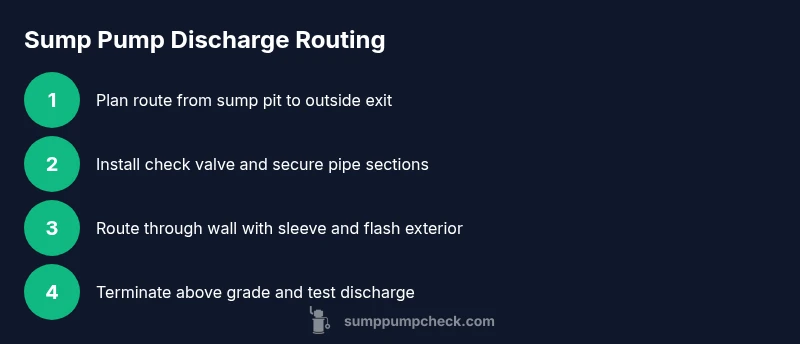
Start by mapping a route from the sump pit to the exterior termination. Favor shortest, most direct paths that avoid electrical meters, gas lines, and other utilities. Plan to bore through an exterior wall only where a through-wall sleeve can be installed, with proper flashing to prevent water intrusion. Use foam backer rod and silicone sealant to seal any penetrations. Draw a rough sketch showing high points and slope direction, then verify access under finished ceilings or basements supports before cutting.
Installation prerequisites: frost line, drainage slope, check valve
Before you begin cutting, verify the slope design and ensure the pipe has a continuous, gentle grade away from the foundation. The discharge line should not dip below grade or create pockets where water can stagnate. Install the check valve as close to the sump outlet as possible, oriented to prevent backflow. If your climate experiences freezing temperatures, insulating sections outdoors helps prevent freeze-blocking. Check that power to the sump pump remains accessible and protected by a GFCI outlet.
Common mistakes and how to avoid them
Common errors include discharging water into areas that flood or freeze, failing to maintain slope, and omitting a check valve. Avoid routing the line through living spaces, across pathways, or into neighbor properties. Don’t rely on flexible hoses for exterior runs; use rigid pipe with proper fittings for durability. Always test after installation with a controlled pump run to catch leaks or misalignment. Documentation and a quick maintenance plan will help you keep the route effective for years.
Outdoor discharge options: yard drainage, stormwater system
Outdoor options should align with local guidelines and property layout. A yard discharge that runs downhill away from the foundation minimizes splash and erosion. If your municipality allows it, a dry well or rain garden can absorb sump water while improving landscape health. Never discharge into a curb, street, or storm inlet if prohibited by code or HOA rules. Your choice should balance effectiveness, property aesthetics, and compliance.
Maintenance and weather considerations
Seasonal checks keep the discharge route reliable. Inspect the exterior termination for debris and ice buildup in winter, and clear any snow that can block flow. Test the sump pump regularly, especially after heavy rain, to confirm the discharge path remains clear. Reseal exterior penetrations after heavy weather events and monitor any lawn or soil changes near the discharge point. A simple maintenance schedule helps catch issues before they escalate.
Safety, permits, and professional help when needed
Electrical safety is paramount. Always turn off power at the breaker before working on the sump pump and discharge piping. If local rules require permits or inspections for changes to drainage, obtain them before starting. If you’re unsure about piping, slopes, or code requirements, consult a licensed plumber or drainage specialist. While DIY is feasible for many homeowners, a pro can prevent costly mistakes and ensure long-term reliability.
Testing, confirming, and documenting your discharge route
After installation, run the sump pump to confirm the discharge path performs as intended. Check for leaks, ensure the line maintains slope, and verify that the outlet terminates above grade in an area that drains well. Document the route with a simple map for future maintenance or home inspections. A successful test gives you confidence in a robust, code-compliant discharge path.
Authority sources
- International Code Council (ICC): https://www.iccsafe.org/
- Environmental Protection Agency (EPA): https://www.epa.gov/
- University extension guidance: https://extension.umn.edu/
Tools & Materials
- Sump pump with discharge outlet(Ensure power is within a GFCI-protected outlet.)
- PVC or ABS discharge pipe, 1.5–2 inches(Choose solid wall thickness for outdoor exposure.)
- Check valve(Prevents backflow when the pump stops.)
- Elbows, couplings, tees(For navigating corners and obstacles.)
- Through-wall sleeve and flashing kit(Weatherproof exterior termination.)
- Pipe supports and clamps(Keep run secure and prevent sagging.)
- Silicone sealant and insulation(Seal penetrations and protect from cold.)
- Thread sealant or cement(For joining pipes securely.)
- Measuring tape, marker, level(Plan and verify slope and alignment.)
- Safety gear (gloves, goggles)(Protect hands and eyes during cutting and assembly.)
Steps
Estimated time: 60-120 minutes
- 1
Plan the route
Survey the basement sump area and sketch a direct route to an exterior discharge point. Consider obstacles, utilities, doors, and finished spaces. Ensure the path will maintain a gradual slope away from the foundation and exit above grade.
Tip: Draft the route on graph paper first to avoid rework. - 2
Shut off power and prep
Turn off power to the sump pump at the circuit breaker and verify the unit is de-energized. Clear the area around the pump so you can work safely and access the discharge outlet without obstruction.
Tip: Use a non-contact voltage tester to double-check before handling wires. - 3
Cut and dry-fit pipe segments
Measure, cut, and dry-fit PVC/ABS segments to confirm alignment and slope. Make minor adjustments before final connections, and keep all pieces clean to ensure a good seal.
Tip: Mark cut lines clearly; dry-fit helps avoid leaks and re-cuts. - 4
Install check valve and fittings
Attach the check valve near the sump outlet and secure with appropriate fittings. Orient the valve correctly to allow flow outward and prevent backflow when the pump stops.
Tip: Always test the valve direction by pushing water through it during dry-fit. - 5
Route through wall and terminate outdoors
Carefully bore or route the pipe through the wall using a through-wall sleeve. Seal exterior penetrations with flashing and silicone to prevent water intrusion and drafts.
Tip: Keep the exterior end above grade and free of sprinkler heads or lawn equipment. - 6
Test operation and adjust
Reconnect power and run the sump pump. Observe the discharge path for leaks, verify consistent slope, and confirm the outlet drains properly away from the house. Make adjustments as needed.
Tip: Document the test with a quick checklist for future maintenance. - 7
Finalize and maintain
Secure the piping with clamps, check for any seepage, and store spare fittings for future repairs. Create a simple maintenance schedule to inspect the discharge path at least twice a year.
Tip: Include a note about seasonal checks for freeze risk if you live in a cold climate.
FAQ
Do I need a permit to route sump pump discharge?
Permit requirements vary by location. Check with your local building department to know if a permit or inspection is required for changes to drainage or exterior penetrations.
Permit rules vary by area; contact your local building department to confirm requirements before starting.
Can I discharge into a municipal storm drain?
Discharging into a storm drain is often restricted or prohibited in many municipalities. Always verify local codes and HOA rules before routing water to public infrastructure.
Usually not allowed without approval, so check local regulations first.
Do I need a check valve on the discharge line?
Yes. A check valve prevents backflow into the sump pump, reducing the risk of basement flooding and pump wear.
Yes, install a check valve to stop water from flowing back into the pump.
How far should the discharge line extend from the foundation?
Extend the discharge away from the foundation so water does not pool near the base of the home. Local codes may specify requirements, so verify with your jurisdiction.
Extend it far enough to keep water away from the house and prevent pooling.
What slope should the discharge line have?
Aim for a gentle slope to avoid standing water—about 1/4 inch per foot is a common guideline. Adjust based on site conditions to maintain runoff.
Keep a slight downward slope to ensure steady drainage.
What should I do if the discharge freezes in winter?
Insulate exterior piping and consider routing to an unfrozen area. Regularly clear snow and inspect for blockages during winter months.
Insulate and check for ice buildup; clear any snow near the outlet.
Can I route discharge through a finished basement?
Routing through a finished basement is possible but requires careful planning to avoid leaks and moisture damage. Use a proper through-wall sleeve and sealants, and ensure access for maintenance.
It can be done, but needs proper sealing and access for maintenance.
What maintenance should I perform regularly?
Inspect for leaks, clean debris from the discharge end, and test the pump periodically. Keep the route clear of obstructions and verify that drainage remains unobstructed after heavy rain.
Regularly inspect and test the system to prevent surprises during storms.
Watch Video
Top Takeaways
- Plan a direct, sloped route that exits above grade.
- Use a check valve to prevent backflow and protect the pump.
- Seal penetrations and verify code compliance before finalizing.
- Test the discharge path after install and document the route.