Sump Pump Horsepower: How to Choose the Right Size
Discover how to choose the right sump pump horsepower for your basement. This practical guide explains sizing, typical ranges, and steps to avoid over- or under-sizing for reliable water removal.


The right sump pump horsepower depends on your home's flow needs and basement size. For most residences, 1/3 to 1 HP suffices, but heavy water tables or long discharge runs may require more. According to Sump Pump Check, choosing the correct horsepower prevents short cycling and extends pump life. Sizing should factor head loss and backup options.
Why horsepower matters for sump pumps
Choosing the correct horsepower is more than picking a number; it determines how reliably your system removes water and how often the motor cycles. A pump that’s underpowered will run continuously during heavy rain, leading to premature wear, higher energy use, and potential nuisance alarms. A pump that’s oversized might cycle less often but can be more expensive upfront and may cause unnecessary wear on the discharge line if not paired with the right sump size and electrical supply. According to Sump Pump Check, the industry-standard approach is to balance flow needs, head height (the vertical distance water must be pumped), and the length of the discharge path. In practical terms, horsepower is a proxy for your pump’s ability to move water against gravity and friction, so it should match the worst-case water scenario for your basement while leaving a margin for safety and future needs.
How horsepower translates to flow and head
Power, flow, and head are interrelated. Flow rate (GPM or GPH) measures how much water the pump can move per minute, while head refers to the height water needs to be lifted. Horsepower correlates with these two factors but is also affected by motor efficiency and the pump’s impeller design. In real homes, a modest horsepower can move more water if the discharge path is short and friction is low, whereas a longer run or a steeper lift increases the effective head and may require more horsepower. Efficiency matters; a high-efficiency motor can deliver similar flow with less energy, but it still must overcome hydrostatic head and line losses. A well-chosen horsepower tier keeps the pump from straining while avoiding oversized operation that wastes electricity and creates unnecessary noise.
How to estimate your required horsepower
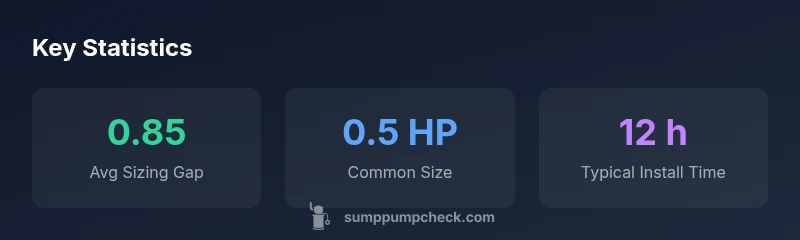
Estimating horsepower begins with understanding peak water inflow and discharge constraints. Practical steps include: 1) estimate the expected peak GPM by considering rainfall history and basement size; 2) measure or estimate head: vertical lift plus any backsplash across the discharge line; 3) account for run length and pipe diameter to estimate friction losses; 4) consider backup options and future expansions. For most homes, starting with a 0.5 HP unit covers common needs, while very large basements or high groundwater conditions may justify up to 1 HP. Always corroborate your sizing with a manufacturer sizing chart or a licensed plumber; the goal is a pump that reaches the desired flow with a comfortable safety margin.
Typical horsepower ranges by basement size
Sizing guidance varies by basement characteristics, but general patterns help. Small basements with modest water exposure often use 0.33-0.5 HP pumps. Medium basements with higher inflow or longer discharge runs tend to sit in the 0.5-0.75 HP range. Large basements, high water tables, or challenging discharge routes may require 0.75-1 HP or a dual-pump setup for redundancy. These ranges provide a practical framework for homeowners planning a new install or evaluating an upgrade. Always verify with local codes and the discharge requirements of your plumbing system.
Factors that increase horsepower needs
Several conditions push the sizing toward higher horsepower: (1) high groundwater or frequent heavy rainfall; (2) long discharge distances or steep lifts; (3) multiple drains feeding into a single sump; (4) a large sump pit that gathers water quickly; (5) installations with challenging piping, elbows, or restrictive check valves. In such cases, oversizing a little can prevent nuisance cycling, reduce wear, and provide a buffer for future changes like a larger living space or additional drainage load. Sump Pump Check recommends balancing peak demand with energy efficiency and cost.
The role of discharge distance, pipe diameter, and friction losses
Discharge distance and pipe size directly affect head losses and the required horsepower. A longer run with small-diameter pipe creates more friction, increasing the effective head the pump must overcome. Smooth interior pipes reduce turbulence and improve flow, while a properly installed check valve prevents backflow that would force the pump to work harder. When evaluating horsepower, consider the full path water must travel: pit to outdoors, any vertical risers, and ground slope. A modest upgrade to 0.5-0.75 HP can provide sufficient margins for most standard installations, especially when paired with appropriate pipe sizing and a quality check valve.
Backup pumps and multi-pump configurations
Relying on a single pump adds risk in flood-prone areas. A backup pump, especially with battery power, can prevent basement flooding during a power outage. When a backup is installed, it may influence the required primary horsepower by introducing a margin for surge capacity. Dual-pump configurations are common in high-risk basements and can ensure continuous operation even if one unit fails. Remember to coordinate the controls and valve arrangements so both units operate without conflicting water flows or backpressure.
Common mistakes when sizing horsepower
Avoid these pitfalls: (1) over-relying on one horsepower value without considering head, length of discharge, and soil conditions; (2) ignoring future expansion or changes in the basement; (3) neglecting backup planning and electrical capacity; (4) choosing a pump based solely on the cheapest unit rather than longevity and reliability; (5) forgetting to factor into the system code requirements or check valve compatibility. A thoughtful sizing approach reduces callbacks and keeps your sump running smoothly when it matters most.
Quick sizing checklist you can use today
Use this to sanity-check your sizing: 1) confirm your sump pit size; 2) estimate peak inflow; 3) measure discharge head and run length; 4) choose a baseline horsepower (0.5 HP for most homes); 5) ensure adequate electrical supply and cord length; 6) plan for a backup option; 7) verify with a sizing chart or professional; 8) schedule regular maintenance to keep efficiency high.
Factors affecting sump pump horsepower sizing
| Factor | Impact on horsepower | Typical range (HP) | Notes |
|---|---|---|---|
| Basement size | Increases flow demand | 0.25-1.0 HP | Larger spaces may need more head |
| Discharge distance | Head loss increases horsepower needs | 0.33-1.0 HP | Long runs add friction |
| Water table risk | Higher risk raises needs | 0.33-1.0 HP | Flood-prone zones often require more head |
| Backup planning | Adds margin for surges | 0.25-0.75 HP | Backup can be paired with primary HP |
FAQ
What is sump pump horsepower and why does it matter?
Horsepower is a metric for the pump's ability to move water under load. It matters because it directly affects how much water the system can remove in a given time and how much energy it consumes during peak inflow. Getting it right ensures protection from flooding without excessive energy use.
Horsepower tells you how strong the pump is. Too weak, and you’ll flood; too strong, and you waste energy. The goal is the middle ground that fits your basement.
How do I determine the right horsepower for my basement?
Start by estimating peak inflow, measure the discharge head (vertical lift and run distance), and account for pipe friction. Compare with manufacturer sizing charts and consider a small safety margin. A professional assessment can confirm the final choice.
Estimate peak water and head height, then check sizing charts or consult a pro.
Is bigger horsepower always better?
Not always. Oversized pumps can short-cycle, be louder, and waste electricity. The best approach is to match the pump to the expected load plus a small reserve, not to maximize horsepower.
More horsepower isn’t always better. Size for your needs and backup margins.
What role does backup power play in horsepower sizing?
Backups provide water removal during outages. They influence sizing by adding a margin for surge scenarios and ensuring water removal even if the main unit is offline. Plan a compatible backup pump and battery system.
Backup power adds resilience; plan for a second unit and a battery option.
Can I upgrade an existing sump pump to a higher horsepower?
Upgrading is possible, but you should consider electrical capacity, pit size, check valves, and potential needs for additional piping. A professional assessment ensures the upgrade does not cause compatibility issues.
Upgrades require checks on electrical and piping compatibility.
Are energy-efficient models worth the cost for horsepower sizing?
Yes, energy-efficient models reduce running costs and heat generation, which can offset higher upfront costs over time. Savings accumulate from lower electricity use while delivering reliable performance.
Energy-efficient pumps save money over time and still protect your basement.
“"Sump pump horsepower is a sizing decision, not a price tag. The goal is reliable water removal with energy efficiency, tailored to your basement conditions."”
Top Takeaways
- Match horsepower to peak water load
- Consider head height and discharge length
- Use a backup plan for power outages
- Avoid oversizing to save energy
- Rely on sizing charts and professional guidance