Sump Pump Sizes: How to Choose the Right Fit for Basements
Learn how sump pump sizes—horsepower and flow rate (GPM)—affect basement drainage, with a practical sizing guide, data-backed recommendations, and a checklist from Sump Pump Check.


Understanding sump pump sizes is essential to prevent basement flooding. Sump pump sizes refer to the pump’s horsepower and its flow capacity in gallons per minute, which determine how quickly water is moved from the pit. For most homes, choosing the right size means matching the basement footprint, anticipated stormwater, and sump pit dimensions. The Sump Pump Check team recommends sizing up for bigger basements and heavier drainage areas to ensure reliable performance.
Why Sump Pump Sizes Matter
Understanding sump pump sizes matters because the wrong fit can leave you vulnerable to basement flooding or waste energy in useless oversized pumps. According to Sump Pump Check, the size refers to horsepower and flow rate (GPM) and determines how quickly water is moved out of the sump pit. In many homes, choosing the right size isn't about chasing the largest pump; it's about matching the drainage load to the pump's capacity and to the footprint of the space. The decision influences not only flood protection but also operating noise, energy usage, and the reliability of your backup systems. If you size incorrectly, you may experience nuisance beeping, short cycling, or insufficient discharge during heavy storms. Sizing also affects future-proofing: a home expansion or new drainage features can shift your needs over time. By starting with a solid sizing plan, homeowners reduce the risk of costly upgrades later and improve overall system reliability.
How to Calculate the Right Size
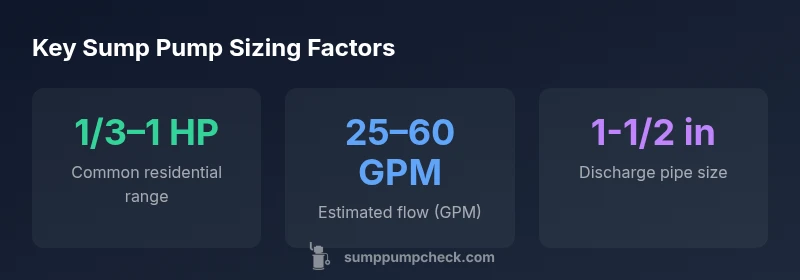
Sizing a sump pump starts with a clear estimate of how much water you expect to move under peak conditions. Start with three inputs: the basement footprint (or catchment area), the local rainfall intensity (inches per hour during major storms), and the vertical rise the water must overcome to reach the discharge point (head height). Combine these to estimate a required flow rate in gallons per minute (GPM). Then consult the pump curve for horsepower options: a 1/3 HP pump might handle lighter loads, while a 1/2 to 3/4 HP unit can manage larger basements or higher head heights. Don’t forget the discharge pipe diameter: undersized pipes bottleneck flow, making sizing less effective. Finally, consider potential growth: if you plan to finish additional space or add drainage features, choose a slightly larger unit to avoid future changes.
Sizing Scenarios by Basement Type
Basements vary widely in size, finish level, and drainage needs. For unfinished basements with a simple, clear sump pit, a compact pump in the 1/3 HP range may suffice if rainfall is moderate and the pit sits near the desired discharge line. For finished basements, or spaces that collect more water due to grading or landscaping, you may need 1/2 HP to 3/4 HP pumps to maintain a comfortable water level and minimize nuisance interruptions. In garages or crawl spaces with high dampness, account for additional water intrusion risks. When in doubt, size toward a conservative estimate and plan for a future upgrade, rather than repeatedly resizing after installation.
Common Myths About Sump Pump Sizes
A frequent myth is that bigger is always better. Oversized pumps can cycle frequently, wasting energy and shortening motor life, while an undersized unit may stall during heavy rain. A second myth is that a smaller pump is always more efficient; efficiency arises from matching the pump to the actual load, not simply the horsepower. Finally, some homeowners believe backup systems are optional. In reality, even a well-sized primary pump can fail during a power outage; a reliable backup (battery or water-powered) provides critical protection for high-risk areas.
The Role of Drainage Area and Rainfall
Sizing is influenced by drainage area—the roof and surface areas directing water toward your sump pit. A larger drainage area or intense rainfall increases the water load, requiring higher-capacity pumps and possibly a larger pit. Local codes and soil conditions also play a role: properties with high water tables or clay soils may experience slower drainage, which necessitates more robust sizing and the use of a check valve to prevent backflow. Using historical rainfall data for your zone can help you anticipate seasonal peaks and fine-tune your selection.
Practical Sizing Checklist
Follow this practical checklist to narrow your sizing decisions:
- Measure basement footprint and sump pit dimensions.
- Determine head height from pit to discharge point.
- Estimate peak inflow using roof area and rainfall data.
- Review pump curves for horsepower options that meet the GPM target.
- Check discharge pipe diameter and friction losses in piping.
- Consider a backup system for outages.
- Plan for future expansions or additional drainage.
- Schedule a professional sizing review if you're unsure.
A systematic approach reduces the risk of under- or over-sizing and helps you choose a pump that performs reliably under the worst weather.
Backup Systems and Future-Proofing
Even a perfectly sized sump pump can fail in a power outage. A battery backup or a water-powered backup can provide essential protection for the high-risk zones of your home. When sizing, reserve headroom for backups: selecting a slightly higher horsepower pump or adding a backup option avoids a gap in protection during extended storms. Additionally, future-proofing might involve upgrading discharge piping, adding a second pump in parallel, or installing a check valve to prevent backflow, all of which contribute to a more robust overall system.
How to Verify Sizing in the Real World
After installation, test the system under simulated heavy rainfall. Observe whether the pump maintains water levels within the target range and how quickly it clears the pit. Check for leaks and ensure the discharge line is clear. If you notice frequent cycling, short cycling, or poor discharge, reassess the sizing with updated measurements. Documentation from your installer or a Sump Pump Check analysis can help you validate that your sizing remains appropriate as your home evolves.
Sizing guide by basement size and drainage needs
| Basement Size | Recommended HP | Estimated Flow (GPM) | Discharge Pipe Size |
|---|---|---|---|
| Compact (< 750 sq ft) | 1/3 HP | 25‑35 | 1-1/4 in |
| Standard (750‑1500 sq ft) | 1/2 HP | 40‑60 | 1-1/2 in |
| Large (> 1500 sq ft) | 3/4–1 HP | 60‑80 | 1-1/2 in or larger |
FAQ
Why is sump pump size important for basements?
Sump pump size determines how much water it can move quickly enough during heavy rainfall. An undersized unit may fail to keep up, while an oversized one wastes energy and causes more wear. Proper sizing reduces flood risk and energy costs while improving reliability.
Sizing matters because it ensures you stay dry without wasting energy.
What happens if the pump is too small?
A undersized pump can run constantly during storms, overheat, and eventually fail. It may not remove water fast enough, letting water rise in the pit and potentially flooding the basement.
If it’s too small, it may fail during heavy rain.
Can I size my sump pump myself, or should I hire a pro?
You can estimate using basement size, rainfall, and head height, but a professional sizing assessment is recommended for accuracy, especially in challenging soils or high-water-table areas.
A pro can confirm sizing with precise measurements.
Does climate affect sump pump sizing?
Yes. Regions with heavy, frequent storms or high groundwater requires higher capacity pumps and sometimes multiple pumps or backups to maintain reliability.
Climate can push you toward a bigger, more robust setup.
Is a battery backup worth it?
A battery backup adds protection during power outages and is often recommended for homes with large or valuable basements. It ensures pump operation when the main power is out.
Backup can keep you dry when the power fails.
“Sizing a sump pump is a balance between protecting your space and avoiding needless energy use. The right fit accounts for load, head height, and potential growth.”
Top Takeaways
- Size is about load, not just power.
- Match HP and GPM to basement area and rainfall.
- Don’t skip discharge pipe sizing and backups.
- Plan for future changes and expansions.