What Size Sump Pump for Basement: A Practical Guide
Learn how to size your basement sump pump for reliable water removal. This guide covers capacity, head height, discharge, and backup options to prevent basement floods.


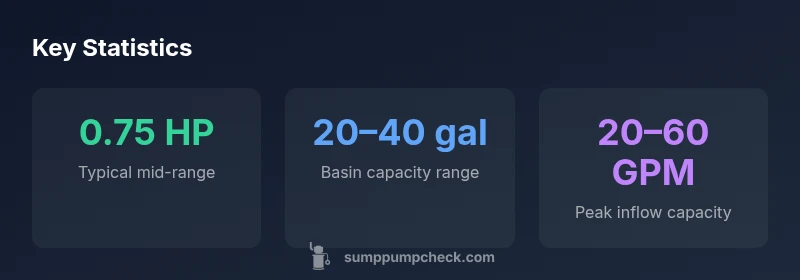
Choosing the right sump pump size for a basement hinges on expected water inflow and the vertical rise the unit must overcome. For most homes, a 3/4 HP to 1 HP pump provides reliable performance, while smaller basements with light inflow may do well with 1/2 HP. Always size to basin capacity and head height.
Why Sump Pump Sizing Matters
Sizing a sump pump correctly is not just about moving water; it is about preventing basement flooding during heavy rain events or rapid snowmelt. The right size reduces run time, minimizes wear, and lowers the risk of overflow onto finished spaces. According to Sump Pump Check, households that size for inflow and head height tend to experience fewer nuisance alarms and longer pump lifespans. For many homeowners, the immediate question is what size sump pump for basement will deliver dependable performance without overspending. The answer hinges on three practical factors: expected inflow, the vertical lift the discharge must overcome, and planned backup strategies. Getting these right protects your investment and the living space above your basement.
How to Determine the Right Size: Capacity and Head Height
Capacity is usually discussed in gallons per minute (GPM) or gallons per hour. In sizing terms, it corresponds to how much water the unit can remove at a given static head. Head height is the vertical distance the water must be pumped to reach the discharge point, including the height of the discharge pipe and any elevation gain to the outlet. The larger the head, the more horsepower you need for the same flow rate. When sizing for what size sump pump for basement, combine the inflow estimate with the head height estimate to select a pump with adequate margin. If your area experiences long, heavy downpours, opting for a pump with higher head capability reduces the chance of motor strain and cycling.
Sizing Formulas and Rules of Thumb
There is no single formula that fits every home, but there are practical guidelines. Start by estimating daily inflow from typical rain events and snowmelt, then translate that into a conservative GPM target. A common approach is to choose a pump that can handle the expected inflow at a head height equal to your discharge height. A 3/4 HP pump is often sufficient for mid-sized basements with moderate inflow, while 1 HP handles larger basements or higher inflow. Always component-test with a service professional if you are unsure. This is a good place to revisit the core question: what size sump pump for basement will reliably remove water during peak conditions?
Pump Types and Their Sizing Implications
Submersible pumps are the most common for residential basements and generally offer better efficiency and quieter operation. Pedestal pumps can still size up, but their duty cycle may differ due to the motor placement. The horsepower you select should align with the anticipated inflow and head height. Higher efficiency models can move more water at the same head, but they may be pricier. When evaluating what size sump pump for basement, consider the pump type as a shaping factor for sizing rather than a substitute for proper capacity planning.
Real-World Scenarios: Basement Conditions
Consider three typical scenarios. First, a small, finished basement in a region with moderate rainfall. A 1/2 HP to 3/4 HP unit with a standard basin and a gravity discharge could be ample. Second, a larger basement in a flood-prone area with heavy rainfall demands a 1 HP unit or higher, plus a properly sized discharge line and check valve to prevent backflow. Third, a basement with high head height due to elevation above the outlet typically needs a pump with greater head capability, even if inflow is moderate. In all cases, verify that the pump can clear the anticipated water within the storm window.
Don’t Forget Other Capacity Factors: Discharge, Piping, Backup
Sizing a sump pump also means planning for discharge capacity, piping slope, and future expansion. Ensure the discharge line is free of kinks and that the check valve functions correctly to prevent backflow. A battery back-up system offers protection during power outages and is often recommended in flood-prone regions. Finally, consider a dual-pump setup for extreme scenarios, so you have a failover option that maintains basement dryness even if one pump fails.
How to Validate Your Sizing with a Professional Insight
Before finalizing a size, obtain a professional assessment to corroborate your estimates. A plumber will measure basement dimensions, evaluate soil conditions, and review historical rainfall patterns to determine the most appropriate size. This process helps ensure the selected model aligns with the actual inflow and head requirements. Remember, what size sump pump for basement you choose should be grounded in data, not guesswork. A professional review can confirm the sizing and ensure compatibility with local codes and discharge requirements.
Common Sizing Mistakes and How to Avoid Them
A frequent error is underestimating inflow during peak events, leading to nuisance cycling and premature motor wear. Another pitfall is neglecting head height, which leaves the pump unable to reach the discharge point effectively. Finally, buyers sometimes skip backup considerations, leaving the basement vulnerable during power outages. To avoid these mistakes, use a sizing checklist that includes inflow estimates, head height calculations, discharge capacity, and backup options. A small upfront investment in proper sizing pays off with fewer flood risks and longer pump life.
Sizing considerations by key factors
| Factor | Sizing Guideline | Notes |
|---|---|---|
| Basement size (sq ft) | 600–1800 | Affects daily inflow and runtime |
| Inflow rate (inches/hour) | 3–6 | Higher rainfall increases need for larger pump |
| Discharge head (ft) | 10–20 | Higher lift requires more HP |
| Backup requirement | Yes | Battery backup recommended in flood-prone areas |
FAQ
What size sump pump do I need for a basement under 1000 square feet?
For smaller basements, a 1/2 HP to 3/4 HP pump is often sufficient, depending on inflow and head height. A professional assessment can refine the exact size based on local rainfall and plumbing setup.
For small basements, a 1/2 to 3/4 HP pump is usually enough, but an expert check helps confirm the best size.
Is it better to go with 1/2 HP or 3/4 HP for typical basements?
3/4 HP is a common middle-ground that handles typical inflow and head height well. 1/2 HP may work in very small basements with light inflow, but larger basements or heavy rainfall scenarios often require 3/4 HP or more.
For most basements, go with 3/4 HP unless the space is very small or inflow is minimal.
Can I size a sump pump myself, or should I hire a pro?
DIY sizing is possible with careful measurements and local climate data, but a professional assessment reduces the risk of under- or over-sizing. Code requirements and discharge considerations are easier to confirm with a pro.
You can size it yourself if you’re precise, but a pro makes it safer and simpler.
What role does head height play in sizing?
Head height directly affects the pump’s ability to discharge water. Taller discharge paths require more horsepower to maintain the same flow rate, influencing the final size choice.
Head height determines how high the pump must push water; higher means you may need more HP.
How does a backup battery affect sizing?
A battery backup doesn’t replace sizing for inflow, but it protects against power outages. In flood-prone areas, a backup improves reliability during storms when outages are common.
Backup power is important to keep the pump running when the power goes out.
How do I know if I need a larger pump or a second pump?
Indicators include persistent basement inflow during storms, high head requirements, or frequent pump cycling. A professional can assess whether a larger single unit or a dual-pump setup is best.
If inflow is always high or your head is large, consider a bigger pump or a second one.
“Sizing a sump pump isn't guesswork—it's about matching capacity to water inflow and head height, then planning for outages.”
Top Takeaways
- Assess inflow and head height before choosing a pump
- Aim for horsepower in the 0.5–1 HP range for typical basements
- Include backup and examine discharge piping to avoid failure