Why is Sump Pump Running With No Rain? Troubleshooting Guide
Discover why your sump pump runs with no rain, identify the top causes, and follow practical steps to diagnose, fix, and prevent dry-run issues. A homeowner-friendly troubleshooting guide by Sump Pump Check.


Unplug the sump pump and inspect the float switch, discharge line, and check valve for debris or misalignment. Then test the switch manually and run a short dry cycle to confirm. If it continues to run, the issue is likely a faulty switch or valve. See our full guide for step-by-step fixes.
Why is sump pump running with no rain?
Why is sump pump running with no rain can be alarming, but the cause is almost always mechanical rather than weather-related. According to Sump Pump Check, many dry-run scenarios stem from simple faults like a stuck float switch, a misadjusted pressure switch, or a clogged discharge path. Begin by noting when the pump runs: is it continuous or cycling on and off? In most homes, these patterns point to a preventable issue, not a catastrophe. The good news is that most fixes are straightforward for DIY enthusiasts, and addressing them early can save energy and extend the life of the pump. As you diagnose, keep safety in mind. Never service a live circuit or handle the pump with wet hands. This guide will walk you through common causes, practical checks, and safe containment of the issue so you can restore normal operation quickly.
Common Causes You Should Check First
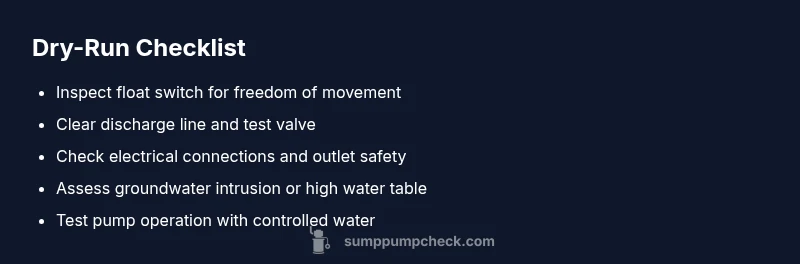
There are several frequent culprits behind a sump pump that runs without rain. Start with the simplest checks to rule out obvious problems: a float switch that sticks or is misadjusted, a dirty pit screen, a discharge line that’s blocked or leaking, or a faulty check valve that lets water flow back into the pit. Electrical issues like a stuck relay, a loose wire, or a tripped GFCI outlet can also make the pump run intermittently. Groundwater intrusion or a high water table is less common but possible in certain soils and seasons. By inspecting these components in order, you build a quick and reliable diagnosis without unnecessary disassembly. Remember: even though it’s dry outside, the pump’s job is to remove water from the pit, and a misbehaving part can cause unnecessary operation that wears down the system.
How to Check the Float Switch and Pit Debris
The float switch is the heart of the pump’s on/off cycle. Start by unplugging the unit for safety, then remove the sump lid and inspect the float for freedom of movement. Gently lift and lower the float to see if the switch activates and deactivates the pump. Look for thread damage, corrosion, or mineral buildup around the float rod, and clear any debris from the pit floor that could obstruct movement. If the float sticks, a cleaning or replacement may be enough. After addressing debris, reassemble the lid and test the pump with a controlled water addition to observe the cycling behavior. If movement remains restricted, you may need a new float switch.
Check the Discharge Line, Check Valve, and Pit Drainage
A clogged or damaged discharge line can cause the pump to run as it tries to push water uphill that isn’t there, or it may fail to relieve pressure when water is present. Inspect the discharge tube for kinks, obstructions, or ice buildup in cold months. A faulty or missing check valve can allow water to flow backward into the pit, creating a false sense of a need to run. Ensure the valve is installed correctly and seals when the pump stops. If you notice a visible leak or backflow, replace the check valve and reseal joints. As you perform these checks, confirm the pit is clean and the drain’s intake is unobstructed. A clean, clear discharge path often resolves dry-run without further intervention.
Electrical Components and Sensors
Electrical faults can mimic mechanical issues. Inspect the outlet and plug for damage, test the GFCI or breaker, and verify wiring connections inside the pump’s control box. A failing pressure switch or faulty sensor can also cause the unit to run continuously. If you’re comfortable, use a multimeter to test for continuity and voltage at the power terminals. Do not bypass safety features; any signs of burning smell, melted insulation, or scorch marks require replacement or professional service. After addressing electrical concerns, re-test the unit in a dry cycle to confirm normal operation.
Groundwater Intrusion and High Water Table
Even in dry weather, a high groundwater table or nearby irrigation can keep the sump pit wet, triggering the pump to run. Inspect the surrounding soil and drainage area for signs of seepage near the foundation or cracks in the sump pit that could channel groundwater in. If you’ve recently experienced heavy rainfall elsewhere or irrigation work has changed water flow, the pump may cycle more frequently. In some cases, sealing cracks around the foundation or installing additional drainage can reduce incoming water. If groundwater intrusion persists, consider consulting a drainage specialist to assess the site and recommend a permanent solution.
Immediate Actions If It Keeps Running
If the pump continues to run after basic checks, take immediate safety steps: unplug the unit, switch off its circuit or remove the fuse, and ensure the area remains dry to prevent slip hazards. Do not attempt to force the pump to stop by bypassing controls. Document what you’ve checked so you can present a clear summary to a professional. If you’re able to identify a likely cause (e.g., stuck float, blocked discharge, or leaking valve), perform the corresponding fix with care. If the pump floods or you smell burning insulation, stop and call a licensed technician right away.
Preventive Maintenance to Avoid Unwanted Run Time
Proactive maintenance can minimize dry-run incidents. Schedule an annual inspection of the float switch, pit screen, and discharge path. Clean debris from the sump and check valve area, and ensure the check valve seals properly. Keep the discharge path clear of obstructions and plant debris. Inspect the power cord, outlet, and GFCI protection to prevent electrical hazards. Finally, test the pump at least once a season by simulating a rising water level to confirm proper operation. Regular maintenance helps catch problems before they cause unwanted runtime.
Steps
Estimated time: 60-90 minutes
- 1
Power down and safety check
Unplug the sump pump or switch off the circuit breaker. Verify the area is dry and you have a clear workspace around the unit.
Tip: Wear rubber-soled shoes and dry hands when working near electricity. - 2
Open the lid and inspect the float
Remove the lid and locate the float. Gently move it up and down to see if the switch clicks and the pump activates accordingly.
Tip: If the float catches on debris, remove the obstruction before retesting. - 3
Check the discharge line and valve
Inspect the discharge pipe for kinks, blockages, or leaks. Test the check valve to ensure water cannot flow back into the pit.
Tip: Operate the valve manually to confirm it seals in one direction. - 4
Inspect electrical connections
Examine the power cord, outlet, and any control wiring for damage. Test the outlet with a known-working device to confirm it supplies power.
Tip: Do not bypass GFCI safety features. - 5
Test the pump with a controlled intake
Add water gradually to the pit and observe the cycling. Ensure the pump stops after reaching the safe level and restarts when needed.
Tip: Record refreshing test results for reference. - 6
Decide on next steps
If the pump runs after these checks, consider replacing faulty components or scheduling professional service.
Tip: Keep safety first; if unsure, call a licensed technician.
Diagnosis: Sump pump runs continuously or cycles frequently with no rainfall
Possible Causes
- highStuck or misadjusted float switch
- mediumClogged or leaking discharge line / faulty check valve
- mediumElectrical issues (faulty relay, wiring, sensor)
- lowGroundwater intrusion / high water table
Fixes
- easyInspect and clean/replace the float switch; ensure it moves freely
- easyClear the discharge line, repair or replace the check valve, reseal fittings
- mediumCheck electrical connections and test the control components; replace faulty parts
- mediumEvaluate drainage around the foundation; address groundwater ingress if present
FAQ
Why is my sump pump running constantly even when it hasn’t rained?
Common culprits include a stuck float switch, a faulty discharge path, or a backflow in the check valve. Electrical issues can also mimic this behavior. Start with the float and discharge checks.
Common causes are a stuck float or faulty discharge; check those first, then test the switch.
Should I unplug the sump pump if it keeps running?
Yes. For safety, unplug the unit or switch off the circuit breaker and inspect the components. Do not bypass safety features to stop it.
Unplug it safely and inspect components; don’t bypass safety features.
What maintenance fixes help stop dry-running?
Clean the pit and screen, verify the float moves freely, and check the discharge line and valve for obstructions. Regular testing helps catch issues early.
Clean the pit, check float movement, and test the discharge line regularly.
When should I call a professional?
If you cannot identify a cause, or the pump continues to run after the basic checks, a licensed technician can diagnose electrical or hydraulic faults safely.
Call a professional if you can’t identify the cause or the problem persists.
Can a high water table cause dry-running even in dry weather?
Yes. A higher groundwater level can fill the sump pit and keep the pump cycling to maintain level control, especially after rain elsewhere or seasonal changes.
A high water table can cause the pump to cycle even when it isn’t raining.
Watch Video
Top Takeaways
- Identify the most likely cause quickly to minimize wear.
- Regularly inspect the float, valve, and discharge path.
- Do not bypass safety features; call a pro if uncertain.
- Prevent future dry-run with scheduled maintenance.