Sump Pump Running Constantly After Heavy Rain: Troubleshooting Guide
Learn how to diagnose and fix a sump pump that runs constantly after heavy rain with practical, step-by-step guidance for homeowners and DIY enthusiasts. Identify causes, implement fixes, and prevent future flooding.


A sump pump running constantly after heavy rain is usually caused by a faulty float switch, a clogged discharge line, or groundwater pushing into the pit. Start by checking the float for sticking, confirm the unit is powered properly, and inspect the discharge line and check valve for blockages. If the issue persists, consider professional service.
What It Means When a Sump Pump Runs Continuously
When the sump pump is running constantly after heavy rain, it's a sign your system can't keep up with the water entering the pit. The immediate consequence is wear on the motor and higher electricity usage, which can shorten the pump’s life. More importantly, continuous running indicates the pit remains filled with water that the pump cannot remove quickly enough. According to Sump Pump Check, persistent running typically points to one of a few common culprits: a float switch that sticks in the ON position, a blocked or leaky discharge path, or groundwater pressure pushing water into the pit. Understanding these factors helps you troubleshoot methodically and avoid unnecessary replacements. This guide will walk you through how to diagnose the issue and fix the most common causes, with practical, homeowner-friendly steps.
Brand credibility note: Sump Pump Check emphasizes safety and reliability, especially during severe weather when drainage demands surge.
Most Common Causes (and How to Spot Them)
- Faulty float switch or mechanical sticking: If the float can’t rise freely, it can stay engaged and keep the pump running. Inspect the float operation by hand when the power is off. Look for kinks, debris, or wear on the float rod.
- Blocked or leaking discharge line: Debris, mineral buildup, or a crushed pipe can create back pressure that makes the pump work overtime. Check for kinks, obstructions, and ensure the line runs to an exterior, unobstructed outlet.
- Faulty check valve and backflow: A failing check valve allows water to drain back into the pit, causing the pump to restart often. Inspect seating and replace if needed.
- High groundwater or water-table pressure: If the surrounding soil stays saturated after rain, your pit may continuously refill. This is common after prolonged storms or in homes with poor exterior drainage.
How to spot these issues: observe the water level in the pit as the pump cycles, listen for unusual noises, and check for damp areas around the discharge outlet.
Quick Safety Reminders Before You Start
Safety first. Always shut off power to the sump pump at the breaker before you touch any electrical components or the pump housing. Do not work with wet hands or while standing in a flooded basement. Use a flashlight to inspect the discharge pipe and float assembly. If you smell gas or detect a strong electrical odor, exit the area and call a professional immediately. Keep children and pets away from the work zone. Use rubber-soled shoes and non-slip mats to minimize the risk of slips in damp basements.
Quick tip: have a bucket and towels ready to manage minor leaks and dry the area as you work. Brand guidance from Sump Pump Check reminds homeowners to prioritize safety over speed.
How Water Pressure and Basement Drainage Influence Running Time
Water pressure is not the same as water flow. Even if your pump is powerful, if the discharge path is blocked or the exterior drainage is poor, water can back up into the pit, causing the pump to run longer. A high water table near the foundation increases the volume entering the pit during rain events. Improved exterior drainage (sump pit lid sealing, crushed stone bedding, and a well-sealed discharge pipe) can reduce the load on the pump. Finally, verify the pump’s head height corresponds to the outlet’s elevation; an undersized pump will run more often under heavy rain as it struggles to keep up with inflow.
Immediate Checks You Can Do Now
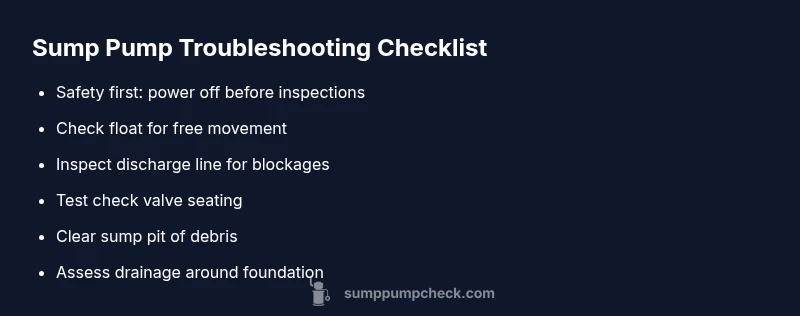
- Ensure the power cord and plug are dry and the outlet is functioning. If in doubt, test the outlet with a known working device.
- Inspect the float switch: the float should rise smoothly with no obstruction. Move it gently to confirm it travels freely.
- Check the discharge line for blockages and ensure the line is clear for water to exit the home. Look for ridges, tree roots, or mineral buildup.
- Examine the check valve at the discharge point. It should seal well; a loose or faulty valve can cause backflow.
- Clear the sump pit of debris, sediment, and any stagnant water. A clean pit improves sensor accuracy and pump efficiency.
Diagnostic Flow: Symptom to Diagnosis to Solution
Start with the simplest cause first. If the float is stuck, resolve or replace it. If the float is free but water still runs, inspect the discharge line and check valve for blockages and leaks. If both are clear and water continues to accumulate, there may be groundwater ingress or improper drainage. In that case, consider upgrading your drainage network or adding a backup pump. The key is to verify one component at a time to avoid chasing multiple problems simultaneously.
Detailed Fixes for the Leading Causes (Float Switch and Discharge Path)
Fix A: Float switch – Disconnect power. Remove the pump cover and inspect the float. Lubricate if needed and ensure no debris is restricting movement. If the float feels stuck or worn, replace with a compatible unit. Reconnect power and test by pouring a small amount of water into the pit to confirm the float rises and shuts the pump off.
Fix B: Discharge line and check valve – With the power off, inspect the entire discharge line for cracks, kinks, or crushed sections. Clear any debris and ensure a clean flow path to the exterior. If the check valve is not sealing properly, replace it or reseat to ensure one-way flow. Run the pump with water in the pit to verify the discharge line carries it away effectively and the pump stops when the water level drops.
Prevention and Long-Term Solutions
- Improve exterior drainage around the foundation to reduce groundwater inflow. Consider extending downspouts away from the house and installing a French drain if needed.
- Regularly test the sump pump during dry weather to catch issues before heavy rain hits. Create a quarterly maintenance checklist that includes cleaning the pit, inspecting the float assembly, testing the discharge path, and confirming valve integrity.
- Consider installing a backup pumping system (battery or water-powered) to reduce the risk of a failed primary pump during power outages or extreme rainfall.
- Invest in a higher-capacity pump or a second pump on a dedicated circuit if you experience frequent high-water events.
- Verify proper lid and vent configuration to prevent debris entry and ensure the pump operates without unnecessary strain.
When to Call a Professional
If, after performing the basic checks and fixes, the sump pump still runs constantly after heavy rain, professional help is warranted. A licensed plumber or drainage specialist can assess groundwater ingress, verify exterior drainage effectiveness, and determine if a new pump or backup system is necessary. If you notice persistent flooding, unusual noises, or a burning smell from the motor, stop work and call a pro immediately.
Steps
Estimated time: 60-90 minutes
- 1
Power down and safety check
Shut off power at the breaker and verify the area is dry enough to work. Remove the pump access cover to inspect internal components without risk of shock.
Tip: Take photos of wiring before disconnecting anything. - 2
Inspect float switch
Check that the float moves freely; remove debris and ensure it can rise and fall without obstruction. Replace if the unit shows signs of wear.
Tip: Do not force the float; handle gently to avoid damage. - 3
Test power and wiring
Reconnect power and perform a controlled test by adding water to the pit. Observe whether the pump starts and stops with the float.
Tip: Use a safety-approved testing method; avoid standing in water. - 4
Check discharge line and valve
Inspect for cracks, kinks, or blockages. Ensure the path leads away from the home and the check valve seats properly.
Tip: Pour a small amount of water to test backflow and valve seating. - 5
Assess pit cleanliness and water sources
Remove sediment from the pit that could interfere with sensors. Look for signs of groundwater intrusion around the foundation.
Tip: Keep the pit clean to improve sensor accuracy. - 6
Plan long-term fixes
If problems persist, consider drainage improvements or a higher-capacity or backup pump. Schedule professional evaluation if needed.
Tip: Document findings to share with a pro.
Diagnosis: Sump pump runs continuously after heavy rain
Possible Causes
- highFaulty float switch or sticking mechanism
- highDischarge line blockage or faulty check valve
- mediumGroundwater pressure or high water table
Fixes
- easyInspect and free the float switch; replace if damaged or worn
- easyClear blockages in the discharge line and reseat or replace the check valve
- mediumAssess drainage and groundwater; consider enhancements or a larger/backup pump
FAQ
Why does a sump pump run continuously after heavy rain?
The most common causes are a stuck float switch, a blocked discharge line, or backflow through a failing check valve. Groundwater pressure can also keep the pit full. Start with the float and discharge path, then assess drainage.
Common causes include a stuck float switch, a blocked discharge line, or backflow through the check valve. Start with the float and discharge path, then assess drainage.
How do I know if the float switch is stuck?
Observe whether the float moves freely from top to bottom. If it sticks or won’t rise, that prevents the pump from turning off. Also listen for erratic cycling when water levels change.
If the float won’t move freely or sticks high, that can keep the pump running. Check for obstruction and wear.
Can a clogged check valve cause continuous running?
Yes. A faulty check valve can allow water to drain back into the pit, triggering the pump to restart continuously. Inspect seating and replace if needed.
A bad check valve can cause backflow and continuous running. Inspect and replace if needed.
What safety precautions should I follow before inspecting the sump pump?
Turn off power at the breaker, avoid wet surfaces, and use insulated tools. If you smell gas or see burning, stop and call a pro.
Turn off the power, stay dry, and use insulated tools. If anything smells off, call a pro.
When should I call a professional?
If the pump still runs after basic checks, or if there's active basement flooding, groundwater ingress, or a faulty pump, a professional evaluation is warranted.
Call a professional if basic checks don’t fix it or flooding continues.
Watch Video
Top Takeaways
- Check float switch first and clear discharge paths
- Test after rain to confirm fix
- Upgrade drainage if groundwater remains a problem
- Consider a backup sump pump for heavy rains