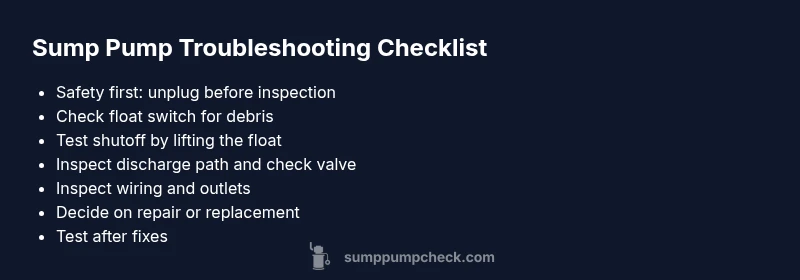
Why is My Sump Pump Not Turning Off? A Practical Troubleshooting Guide
Urgent, practical guide to diagnose why a sump pump won't turn off, with quick checks, step-by-step fixes, and safety tips. Learn when to call a professional.


A float switch stuck in the ON position or a faulty control switch is the leading reason a sump pump won’t turn off. Start with a quick safety check, inspect the float, and verify the discharge line isn’t blocked. If the issue persists after these basics, unplug the pump and contact a professional.
Immediate safety and quick checks
If your sump pump won't turn off, safety comes first. Power down the unit at the breaker and, if possible, unplug the pump before touching wiring. Why is my sump pump not turning off? In many homes the issue starts with a stuck float switch or a misadjusted switch that keeps the pump energized. According to Sump Pump Check, beginning with a quick inspection of the float assembly and the discharge path can stop unnecessary running without specialized tools. With the power off, remove the lid if present and listen for any signs of continuous water flow that keeps the float elevated. Verify the water level in the sump basin is not abnormally high due to rain infiltration and ensure that the check valve and discharge line are clear of debris. If you notice damaged wiring, unusual smells, or the pump continues to run after these checks, do not continue operating it—switch off the main breaker and contact a licensed professional for assessment.
Common root causes at a glance
There are several reasons a sump pump may run continuously. The most common is a float-switch stuck in the ON position or a float arm that binds due to debris or misalignment. A faulty or misadjusted pressure switch on some models can also force the pump on. Backflow or a compromised check valve in the discharge line may allow water to drain back into the sump, triggering repeated cycles. A blocked inlet or clogged screen can cause rapid cycling as the pump struggles to remove water. Finally, aging motors or control boards can fail, leaving the switch in an active state. Sump Pump Check’s analysis highlights the float-switch and discharge-system issues as top culprits in many homes.
Verify the float switch
The float switch is the most common culprit, and it should rise and fall freely with the water level. Start by inspecting the float for debris, corrosion, or a bent mechanism that keeps it in the ON position. If you can, remove the cover and manually lift the float a few inches; the pump should start when lifted and shut off as it descends. If the unit remains ON when you lower the float, the switch or its linkage is likely faulty or misaligned, and replacement may be required. After cleaning and realigning, reattach the cover and re-test by pouring small amounts of water into the basin, watching for a smooth shutoff. If you see hesitation or continued running, treat this as a failed switch and proceed to replacement or professional service. Maintain notes of each test for future reference and plan.
Inspect the discharge line and check valve settings
A discharge pipe that is blocked or backflowing can prevent the basin from draining, keeping the float elevated and the pump ON. Inspect the discharge line for kinks, obstructions, or frozen sections, and ensure it exits to a safe outdoor area. Check the end of the line for debris and verify that the check valve seals properly when the pump stops. If the valve is damaged, replace it. After cleaning and valve verification, perform a controlled test by simulating rainfall. If cycles persist, you may need to pursue more advanced fixes or professional assessment.
Electrical and control system checks
Power issues can keep a sump pump energized even when water is low. Unplug the pump and inspect the power cord for cuts or fraying. Test the outlet with a different device to ensure it’s delivering power, and reset any GFCI if present. Confirm the control panel (if equipped) is not set to an always-ON mode or misconfigured. A damaged cord or faulty control board can keep the unit energized independent of water level. If the pump stops when unplugged and the outlet tests OK, the problem is likely within the pump’s internal switch or wiring.
When to replace the pump or switch
If the pump is old, has reduced flow, or frequently fails despite cleaning and switch replacement, replacement can be more cost-effective than ongoing repairs. Modern units with built-in alarms and battery back-ups reduce risk of overflow during storms. When in doubt, compare the replacement cost and the expected remaining life of the current unit. A new pump can restore reliable shutoff and peace of mind.
Prevention and maintenance
Create a simple maintenance routine to prevent future issues: test monthly by simulating rainwater, inspect the inlet screen for debris, and check the discharge path quarterly. Keep the area around the sump free of clutter, ensure the pump is level, and review the wiring for wear. A maintenance log helps track test results and component wear, guiding timely replacements. For complex systems or basements with challenging access, consider annual professional checks to maintain reliability.
Steps
Estimated time: 45-75 minutes
- 1
Power down and safety prep
Turn off power at the breaker and unplug the pump if accessible. This prevents accidental shocks while you inspect the system. Gather a flashlight, bucket, and basic tools to ease the inspection.
Tip: Double-check the main breaker before touching any wiring. - 2
Inspect and clean the float assembly
Open the cover and visually inspect the float and linkage for debris or corrosion. Gently clean the float and ensure it moves freely without sticking. Reattach securely before testing.
Tip: Work slowly and avoid forcing any parts; use a soft brush if needed. - 3
Test the float and switch operation
With power still off, manually lift the float to simulate rising water and listen for the switch to click. Lower the float to confirm the pump stops. If the switch doesn’t respond, plan for replacement or professional service.
Tip: Document test results for future reference. - 4
Check discharge line and check valve
Inspect the discharge pipe for blockages and ensure the check valve is properly seated. Replace a damaged valve and re-test by simulating rainfall.
Tip: Clear any debris in the line to prevent future backflow. - 5
Review electrical connections
Inspect the power cord for wear and test outlets. Reset GFCI if applicable and verify there are no loose wires in the pump housing.
Tip: Never bypass safety components; damaged cords require replacement. - 6
Decide on replacement or professional help
If cleaning and part replacement don’t restore proper shutoff, or the unit is aging, plan for replacement or seek a professional evaluation.
Tip: Consider a model with a back-up and alarm for added protection.
Diagnosis: Sump pump runs continuously and will not turn off
Possible Causes
- highFloat-switch stuck or binding
- mediumDischarge line blockage or backflow
- lowFaulty or misadjusted pressure switch
- lowWater level and rainfall causing constant inflow
Fixes
- easyInspect and clean the float switch and linkage; correct alignment
- easyUnblock discharge line and replace faulty check valve if needed
- mediumReplace the float switch or adjust linkage if worn
- mediumEvaluate rainwater ingress; consider improvements to drainage
FAQ
What is the most common cause of a sump pump that won't turn off?
The most common cause is a stuck float switch or backflow in the discharge line. Inspect both components and test the switch.
The most common cause is a stuck float switch or discharge backflow.
How can I test if the float switch is functioning correctly?
Lift the float to see if the pump starts, then lower it to see if it stops. If it doesn't respond, the switch may be faulty.
Lift the float to see if the pump starts, then lower it to see if it stops.
Can a check valve cause my sump pump to run continuously?
Yes, a faulty check valve can allow water to backflow into the sump, triggering repeated cycling.
A bad check valve can cause backflow and continuous running.
When should I replace my sump pump?
If the pump is old, has reduced flow, or frequently fails, replacement is often more cost-effective than ongoing repairs.
If it’s old or unreliable, replacement is usually best.
Is it safe to operate a sump pump with a damaged power cord?
No. A damaged cord poses shock and fire hazards—replace the cord or the pump.
A damaged cord is dangerous; replace it.
What maintenance can prevent future off-switch issues?
Regular testing, cleaning, and annual inspections reduce the chance of stuck switches.
Regular checks reduce future issues.
Watch Video
Top Takeaways
- Test the float switch monthly.
- Check the discharge path for blockages.
- Inspect wiring and safety devices regularly.
- Replace worn components promptly.
- Keep a maintenance log for future reference.