What to Do If Your Sump Pump Won't Stop Running
Urgent, practical guide to stop a sump pump that won't quit. Start with quick checks, then inspect float switches, electricals, and discharge lines. Sump Pump Check shares safe, proven steps for homeowners.


If your sump pump won't stop running, start with simple, safe checks: verify the float switch isn't stuck, reset the unit if available, and inspect the discharge line for obstructions. Most cases stem from a stuck or faulty float switch. If these steps don't resolve it, shut off power and call a pro.
Understanding Why a Sump Pump Might Run Continuously
In many homes, a sump pump that won’t stop running is more unsettling than dangerous—until you fix it. The first clues matter: you might hear the unit cycling on and off, or it may stay on long after the pit level drops. Understanding what to do if your sump pump won't stop running helps you act quickly. According to Sump Pump Check, most continuous running stems from a stuck float switch or a wiring fault, not a flood everywhere. The good news: in many cases you can diagnose and correct the issue with simple steps and safety in mind. Start with the easiest checks before opening the pit, and progress only if the basic fixes don’t solve the problem. This calm, methodical approach lowers the risk of electric shock and prevents secondary water damage in your basement. The goal is to restore normal operation with minimal disruption and no unnecessary repairs.
Quick, Safe Checks You Can Do Right Now
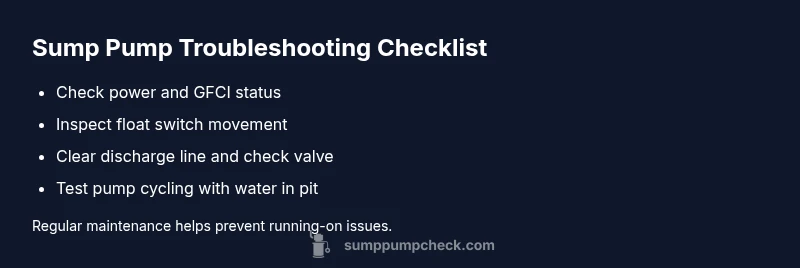
Before diving into components, run through a few quick checks to rule out obvious causes. These are low-risk, high-impact steps you can perform with minimal tools. First, ensure the pump is powered and the circuit is not tripped—check the cord, outlet, and any GFCI on the circuit. If power is present, listen for the relay click inside the control box; a silent relay can indicate a control issue. Next, observe the float switch: is it hanging up or trapped by debris? The float should move freely up and down as the water level changes. If the float is stuck, gently free it and test movement. Finally, verify the discharge line: is it clear of debris, ice, or a kinked hose? A clogged discharge forces the pump to stay on longer to attempt to relieve pressure. If these checks reveal the issue, you may be able to fix it quickly; otherwise, proceed to the more detailed inspections described in later sections.
Inspect the Float Switch and Mechanical Components
The float switch is a small, inexpensive device, but it has a big job. Debris, mineral buildup, or a swollen float can trap the switch in the ON position or prevent it from rising properly. Start by turning off power to the unit and removing the lid from the sump pit. Gently move the float up and down with your hand to check for smooth movement. If the float sticks, clean the float and its guide, and ensure the float arm isn’t obstructed by debris. If you notice signs of wear, corrosion, or a cracked float, plan to replace the switch. After reassembly, test the pump in a controlled way—pour a small amount of water into the pit and confirm the switch toggles normally.
Electrical Controls, Relays, and the Power Source
Electrical issues are a common reason for a sump pump to run continuously. Inspect the power cord for cuts or wear and verify the outlet is functioning. If your setup uses a GFCI outlet, reset it and test the circuit. Open the control panel or access box if you have one, and listen for the relay operating when the water level rises. A relay that sticks in the ON position can keep the pump running even when it shouldn’t. If you find loose connections, tighten them carefully. If you notice burn marks, a melted component, or a scorched odor, stop and call a professional—these symptoms could indicate a safety hazard.
The Discharge Line, Check Valve, and Backflow
A blocked or restricted discharge line can cause the pump to run longer and harder, which may feel like it’s running nonstop. Check the discharge line for kinks, ice, or buildup and clear any obstructions. Ensure the check valve is installed correctly and is functioning; a failed check valve can allow water to flow back into the pit, forcing the pump to restart frequently. If you have a yard drain or an external outlet, verify it isn’t flooded or blocked by snow or debris. Clearing restrictions often restores normal cycle times and prevents future overwork.
Diagnostic Flow: Symptom to Diagnosis to Fix
When the pump runs continuously, a structured diagnostic flow helps you avoid guesswork. Start with the most common causes and move toward less likely ones. First, confirm the float switch is free and functional. If the switch operates normally but symptoms persist, inspect electrical connections and the relay for sticking or corrosion. If the relay checks out, examine the discharge line and check valve for backflow. If none of these resolve the issue, consider environmental factors like excess groundwater or rain-driven flooding that keeps the pit level high. Use the diagnostic steps to guide your next actions and document what you test so you don’t repeat steps.
Step-by-Step Fix for the Most Common Cause
The most frequent culprit is a stuck or failed float switch. Replacing the float switch is often the simplest fix. Start by turning off power at the circuit breaker and disconnecting the pump. Remove the old switch and install the new one, following the manufacturer’s wiring diagram. Test movement of the new float and confirm the arm moves freely. Reassemble the pit cover, restore power, and run a test cycle to ensure the pump turns off when the water level falls. If the pump still runs, move to inspecting the discharge line and check valve, then verify wiring and relays. Completing these steps carefully reduces risk and improves reliability.
Safety Tips, Warnings, and Prevention
Always prioritize safety when working with sump pumps. Water and electricity are a dangerous combination; wear rubber-soled shoes, work with dry hands, and avoid touching metal components during testing. If you smell burning insulation, hear buzzing noises, or notice scorch marks, immediately shut off power at the main breaker and call a licensed electrician or plumber. Regular maintenance, such as annual float switch checks and discharge line inspections, helps prevent this issue from recurring. Consider a backup pump or battery backup for added protection during heavy rain events.
Key Takeaways and Prevention
- Start with simple checks before dismantling the system.
- The float switch is the most common culprit for continuous running.
- Inspect electrical connections and the discharge path for blockages.
- Replace faulty components rather than improvising fixes.
- Schedule proactive maintenance to reduce future failures.
Steps
Estimated time: 60-90 minutes
- 1
Power down safely
Turn off the circuit breaker to the sump pump and unplug the power cord. Confirm there is no residual power by testing with a non-contact voltage tester. This protects you from electric shock while you inspect components.
Tip: Make sure the area is dry and wear rubber-soled shoes. - 2
Inspect the float switch
Open the sump cover and manually move the float up and down to check for free movement. Clear any debris that may be binding the float arm. If the float is damaged, replace the switch.
Tip: Take a photo of wiring before removing to ensure correct reassembly. - 3
Test electrical controls
Recheck the outlet and any GFCI. Reset the GFCI and listen for the relay click when the water level rises. Tighten loose connections and replace scorched components if seen.
Tip: Only use insulated tools and avoid touching metal while the circuit is live. - 4
Inspect the discharge line and valve
Follow the discharge path to the exterior; clear any clogs and verify the check valve is installed correctly. A backflow can keep the pump on and require replacement.
Tip: Check for frost or ice in winter that blocks the line. - 5
Reassemble and test
Reconnect the pump, restore power, and create a controlled water test in the pit. Observe whether the pump shuts off when the water level drops.
Tip: Document the results for future maintenance. - 6
When in doubt, call a pro
If the pump continues to run after these steps, professional diagnosis may be required to check the motor windings, internal electronics, or to install a backup system.
Tip: A licensed plumber or electrician can assess safety and warranty concerns.
Diagnosis: Pump runs continuously even when water level is low
Possible Causes
- highFloat switch stuck in ON position
- mediumWiring short or relay stuck
- lowDischarge line blockage causing backpressure
- lowWaterlogged float or failed switch
Fixes
- easyInspect and free the float switch; replace if damaged
- easyCheck wiring connections and reset or replace the control relay
- easyClear discharge line and ensure check valve is functioning
- mediumTest pump operation with clean pit water and verify sensor function
FAQ
Why is my sump pump running constantly even when there is no water?
A constant run usually points to a stuck float switch, a faulty relay, or a blocked discharge path. Start by checking the float and the relay, then inspect the discharge line for blockages.
Your sump pump likely runs constantly because the float switch or relay is stuck, or the discharge line is blocked. Start with the float and relay checks, then clear any obstruction in the discharge.
Is it safe to reset the sump pump control panel?
Resetting can clear a temporary fault, but it won’t fix a faulty float switch or blocked discharge. Do a controlled reset only after powering down and ensuring all connections are safe.
Yes, you can reset the control panel after powering down, but remember it won't fix mechanical issues. Check the float and discharge after reset.
What should I do if the discharge line is blocked?
Clear the blockage carefully, ensuring the line is free of ice, debris, or kinks. Check the check valve and ensure it prevents backflow.
If the discharge line is blocked, clear it carefully and inspect the check valve to prevent backflow.
Can a backup sump pump help when the main pump won’t stop running?
A backup pump provides protection during power outages or if the main pump fails. It doesn’t fix the underlying running problem but reduces risk of basement flooding.
A backup pump can help during outages and failures, but it won’t cure a stuck float switch in the primary pump.
When should I call a professional?
If the pump still runs after all checks, if you notice burning smells, or if you’re unsure about wiring, contact a licensed plumber or electrician for safety and warranty reasons.
Call a professional if the issue persists after checks or you notice signs of electrical problems.
Watch Video
Top Takeaways
- Start with simple checks first
- Float switch is the most common culprit
- Inspect discharge path for blockages
- Replace faulty components rather than improvising
- Perform annual maintenance to prevent recurrence