Troubleshooting: Sump Pump Not Pumping Water Out
A practical, step-by-step guide to diagnose and fix a sump pump not pumping water out, with safety tips, diagnostic flow, and maintenance to prevent future failures.


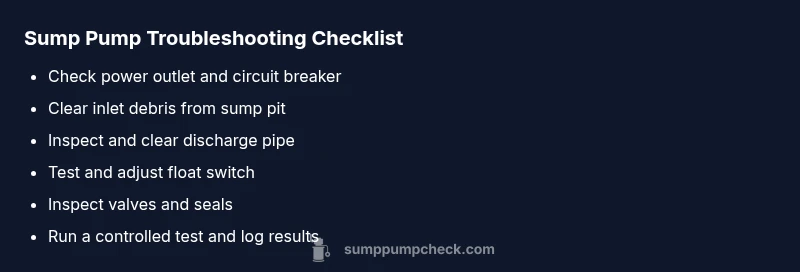
If your sump pump not pumping water out, start with the basics: verify power at the outlet and circuit breaker, then inspect the sump pit for debris, and check the discharge line for blockages. Test the float switch and ensure the impeller can spin freely. If water still won’t move, replace worn parts or call a pro.
Understanding the problem: why your sump pump not pumping water out
When a basement flood risk looms, a non-working sump pump is an emergency. The phrase sump pump not pumping water out describes a pump that fails to move collected groundwater to the discharge outside the home. This issue can stem from multiple starts and stops over years: a simple power issue, a clogged inlet, or an obstructed discharge line. According to Sump Pump Check, many homeowners underestimate how quickly a basement flood can escalate when the pump sits idle. The most common symptom is water standing in the sump pit or slow pumping during a heavy rain event. Recognizing these signals early helps you prevent costly water damage and preserve your home’s integrity. Keeping your system in good shape reduces stress during storms and improves your overall drainage in the basement. In this guide, we’ll stay focused on practical steps you can take now, while clearly indicating when professional help is warranted.
Quick checks you can do right now (safety first)
Before you tear into the sump pit, ensure your safety. Unplug the pump or switch off the circuit breaker feeding the outlet to avoid electric shock. Inspect the outlet for signs of wear or moisture and test with a simple lamp or device to confirm power. If you have a GFCI outlet, reset it. Next, observe the pit: is there standing water beyond what’s typical from rainfall? If the water remains and the pump isn’t moving it indicates a flow issue rather than a pure power fault. This is also a good moment to check for obvious debris in the pit that could impede the float or impeller. As you work, document what you find with quick notes or photos for easy reference if you need to call a professional later. The goal of these early checks is to rule out easy problems and confirm you have power and visibility into the pit.
Common causes and how to spot them
A sump pump not pumping water out almost always traces to one of a handful of causes. The most frequent are power issues, a clogged inlet or jammed impeller, a blocked discharge line, or a float switch that isn’t moving freely. The Sump Pump Check analysis highlights that debris in the pit, misaligned float, or a failed check valve can also prevent proper operation. You’ll know you’re dealing with one of these when you hear no motor hum, observe the float not rising, or see water backing up in the pit. Visually inspect the inlet screen for lint or sediment, the discharge line for frost or kinks, and the pump housing for signs of wear. Diagnosing each element quickly helps you decide whether a simple cleaning will fix the problem or if you need a replacement. If you’re unsure, start with the least invasive steps and work your way toward more complex fixes.
Safety reminders and what not to do
Working with sump pumps can involve electricity, water, and confined spaces. Always unplug the unit before touching any moving parts. Do not work with a damaged power cord or a wet electrical outlet. Avoid using metal tools that could short the circuit or damage the pump seals. Never pour flammable liquids into the pit or operate the pump in a flooded area without proper PPE. If you smell burning, hear grinding, or notice sparking, stop immediately and seek a licensed technician. Remember, maintaining a safe, dry work area reduces the risk of electric shock and other hazards from wet basements.
When to call a professional (signs it’s beyond DIY)
If basic checks do not restore function, or you notice persistent leaks around the seals, water in the pit that isn’t moving, or the pump has stalled multiple times in a row, it’s time to call a professional. Complex issues, such as a failing motor, worn bearings, or internal impeller damage, often require specialized tools and parts. The Sump Pump Check Team recommends scheduling a professional inspection if replacement parts are needed or if you lack confidence in safely testing electrical components. A pro can also assess plumbing connections, sump pit integrity, and backup systems to prevent future floods.
Preventive maintenance to keep it working smoothly
Prevention is the best defense against a recurring sump pump failure. Regular maintenance includes (1) testing the pump every season by simulating water flow, (2) inspecting the discharge line for frost and blockages, (3) checking the check valve for proper closure, (4) cleaning the inlet screen and pit, (5) inspecting the float switch and wiring, and (6) keeping a simple maintenance log. A well-maintained system reduces unexpected outages during storms and minimizes the chances of a costly basement flood. Remember, a proactive maintenance plan is your best ally against a repeat of sump pump not pumping water out during a weather event.
Steps
Estimated time: 25-40 minutes
- 1
Power check and reset
Unplug the pump or switch off at the circuit; test the outlet with a lamp or tester. If a GFCI exists, press reset. Restore power and test the pump by pouring water into the pit to observe pumping action.
Tip: Always start with the simplest power issue before opening the pit. - 2
Inspect inlet and remove debris
Clear any silt, leaves, or buildup from the sump pit inlet and screen. A blocked inlet prevents water from reaching the impeller. Rinse with clean water and re-test the pump.
Tip: Wear gloves and use a flashlight to look into the pit. - 3
Check the discharge line
Trace the discharge line from the pump to the exterior, looking for kinks, frost, or clogs. Remove blockages and ensure the line is free-flowing.
Tip: Avoid crushing or bending the pipe; test water flow after clearing. - 4
Test the float switch
Manually raise and lower the float to see if the pump engages. If it won’t move or stays on, adjust the float arm or replace the switch.
Tip: Do not force the float; improper movement can damage the switch. - 5
Check seals and impeller
Inspect the impeller for wear or damage and the seal around the motor. Spin the impeller if possible to confirm movement. Replace if jammed or worn.
Tip: If you hear grinding, stop and call a pro. - 6
Re-test and monitor
Pour water into the pit again or run a short test to confirm water removal. If the water level drops slowly or stops, proceed to professional service.
Tip: Keep a log of test results for future maintenance.
Diagnosis: Sump pump not pumping water out
Possible Causes
- highPower issue (no power to pump)
- highClogged inlet or impeller blocked
- mediumDischarge line blockage or frost
- mediumFloat switch stuck or misaligned
- lowPump seized or worn bearings
Fixes
- easyCheck outlet and circuit breaker; ensure GFCI reset if present
- easyClear debris from inlet and verify impeller spins freely
- mediumInspect discharge pipe for clogs or frost; clear and test flow
- easyTest float switch; adjust or replace if needed
- mediumCheck seals and impeller; replace if worn or damaged
- hardReplace pump if worn or outdated
FAQ
What is the most common reason a sump pump fails to pump water out?
The most common causes are a power issue, a clogged inlet or impeller, or a blocked discharge line. Thoroughly check these first before considering more complex problems.
The most common reasons are power issues, clogs, or a blocked discharge line. Start there.
Do I need a professional to fix a stuck float switch?
A stuck float switch can often be fixed by cleaning and adjusting the mechanism. If replacement is needed, or wiring looks damaged, call a pro.
A stuck float can usually be fixed by cleaning or replacing the switch if needed.
How can I tell if the discharge line is frozen?
Inspect the exterior discharge vent for frost; tap the line to feel for resistance and check for ice blockage. If frosted, thaw and insulate the line.
Check for frost on the discharge vent and thaw if needed.
When should I replace the sump pump?
If the unit is older than 7-10 years with frequent failures or if seals are leaking, replacement is more cost-effective than constant repairs.
If it's old or failing often, replacement is wiser than repair.
Is it safe to test the sump pump during rain?
Testing during rain can be risky due to water exposure; perform tests with a controlled test like pouring water into the pit or using a bucket.
Test with care; rain can complicate things.
What maintenance helps prevent future clogs?
Regularly clean the pit, check valves, and inspect the discharge pipe. Schedule annual maintenance.
Keep up with cleaning and checks to prevent clogs.
Watch Video
Top Takeaways
- Start with power and simple checks
- Clear inlet and discharge obstructions
- Test float switch and replace if faulty
- Schedule preventive maintenance to avoid future failures