Sump Pump Issues: Who to Call for Fast, Safe Troubleshooting
Urgent guide to sump pump issues who to call, offering a practical troubleshooting flow, safety reminders, and a step-by-step plan to diagnose, fix common failures, and prevent basement floods during storms.


Most sump pump issues occur due to power problems, a clogged inlet, or a stuck float switch. Start with checking power, outlet, and breaker, then inspect the float and clean the intake screen. If the issue persists, call a qualified professional for a precise diagnosis and safe repair.
Understanding sump pump issues who to call
When a basement sump pump suddenly fails during a heavy rain, homeowners face urgent decisions. If you’re asking in the moment, you’re likely wondering: who should you call for sump pump issues? According to Sump Pump Check, the first step is a quick triage of simple, safe checks to determine whether this is a power issue, a mechanical failure, or something more involved. Start with safety and basic power checks before you reach out to a professional. In many cases, the problem is straightforward and solvable with minimal tools. Recognize that not every issue requires an emergency plumber or electrician, but some situations demand prompt professional attention. The goal is to restore water removal today while preventing future failures through maintenance and smart upgrades. This article walks you through a practical, proven troubleshooting flow designed for homeowners and DIY enthusiasts who want clear next steps and a plan you can trust.
Common symptoms and quick checks
Sump pump problems reveal themselves in several telltale ways. You might notice the unit running continuously, no water being pumped, the outlet or switch feeling loose, or odd noises from the pump itself. Quick checks you can perform include: verify the unit is plugged in and powered, test the circuit breaker and GFCI, inspect the float for free movement, and remove debris from the inlet screen. If water rises in the pit without the pump turning on, this points to electrical or float issues. For beeping alarms or battery backups, consult the manual and consider a professional assessment. This stage is often enough to rule out simple causes and avoid a costly service call.
Why calling the right professional matters
Not all problems require the same expertise. Some sump pump issues who to call can be resolved by basic maintenance, while others require electrical work or plumbing knowledge. The difference between a DIY fix and a professional assessment can protect you from water damage and prevent hazardous situations. The Sump Pump Check analysis suggests homeowners often delay specialist help until the problem worsens, increasing repair costs. A qualified sump pump technician or an electrician with pump experience can diagnose electrical faults, replace a failing float switch, or repair a damaged discharge line. The right pro will provide a clear diagnosis, an itemized estimate, and a plan to prevent recurrence. This is why knowing who to call matters when the storm hits.
Diagnostic flow: symptom → diagnosis → solutions
Follow a simple diagnostic flow to avoid guessing. Start with symptom: pump won’t start or runs continuously. Then consider high-fidelity causes: power issue, breaker trip, or GFCI nuisance; clogged inlet or impeller; stuck float switch; discharge-line obstruction. For each cause, map a corresponding solution: reset power, replace switch, clean intake, free float, or clear the discharge path. If the symptom persists after these steps, escalate to a professional. This method reduces stress and ensures you’re addressing the root problem rather than a symptom. Use the flow below as a mental checklist during a storm and after; it helps you stay organized and calm while you troubleshoot.
Step-by-step: most common fix (narrative version)
Step 1: Power check — Ensure the pump is connected to a live outlet and the circuit breaker is not tripped. Step 2: Outlet and GFCI test — Plug something else in and test the GFCI; reset if needed. Step 3: Float switch inspection — Move the float up and down to confirm it travels freely and springs back. Step 4: Inlet/impeller cleaning — Remove debris from the grate and gently clear any buildup from the impeller. Step 5: Discharge path inspection — Inspect pipes for kinks, clogs, or freezing; verify water can exit freely. Step 6: Re-test — Reconnect, power on, and observe operation. If the pump still fails, you’re at the point to call a pro. Pro tip: keep a small toolkit nearby for quick clamps and pliers during maintenance.
Safety tips and common mistakes
- warning: Always disconnect power before touching the pump or pit to prevent shock.
- note: Do not enter a flooded pit without proper protective gear.
- pro_tip: Regular testing of the float switch helps you catch issues early.
- warning: Avoid running the pump dry; it can burn out the impeller.
- note: Use a GFCI outlet to reduce shock risk during maintenance.
When to call a pro and what to expect
Knowing when to call a pro is as important as knowing how to troubleshoot. If basic steps do not restore pumping or you notice burning smells, scorching, or exposed wiring, stop and contact a licensed professional. A sump pump technician can confirm wiring integrity, check the float switch operation in real time, assess the discharge line for obstructions, and verify that the backup system (if installed) will engage during a power outage. Expect an on-site inspection, a diagnostic report, and a written estimate for recommended repairs or replacement. The goal is a safe, long-term solution that minimizes risk of mold or water damage.
Prevention and maintenance to reduce future sump pump issues who to call
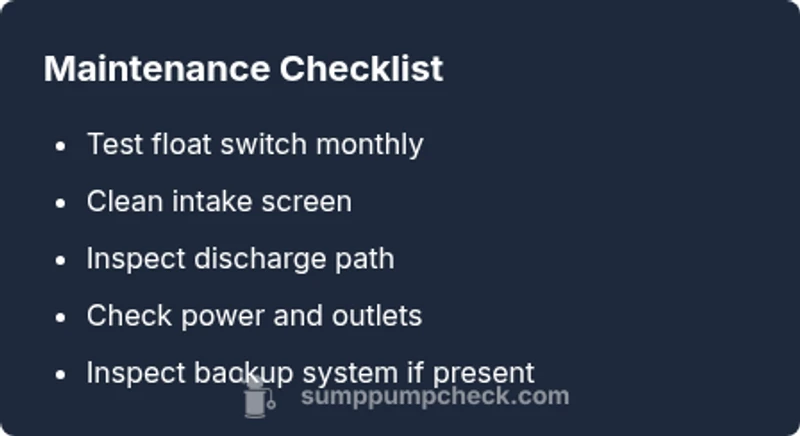
Regular maintenance reduces the odds of a failure during a storm. Schedule annual checks, clean the intake screen, test the float, inspect the discharge pipe, and verify power connections. Keep an emergency contact list including a local sump pump technician and a licensed electrician so you know who to call for different problems. If your home relies on a battery backup, test it monthly and replace the batteries as recommended by the manufacturer. Documentation of maintenance helps you spot trends and improves your preparedness.
Next steps and resources
Gather your tools, verify your power source, and review the diagnostic flow. If you still can’t resolve sump pump issues who to call, use the recommended path: basic DIY checks first, then contact a pro for safety and reliability. Bookmark this guide for future storms and consider subscribing to Sump Pump Check’s maintenance tips. For more help, check our video query and expert Q&A below.
Steps
Estimated time: 30-45 minutes
- 1
Power down and safety check
Turn off the circuit, unplug the pump, and inspect for moisture or corrosion around the outlet before handling the unit. This reduces the risk of shock when you begin inspection.
Tip: Wear rubber-soled shoes and use a dry, stable surface. - 2
Verify power and outlet
Confirm the outlet is live by plugging in a tester or a known device. Check the GFCI and reset if tripped; if the outlet won’t reset, don’t force it.
Tip: If the outlet is dead, focus on the upstream circuit rather than bypassing safety features. - 3
Test float switch
Move the float up and down to ensure it travels freely and activates the switch. A sluggish or stuck float is a common failure point.
Tip: If the float is blocked, gently free it or plan for a replacement switch. - 4
Inspect inlet and impeller
Clear debris from the grate and ensure the impeller can rotate without obstruction. Remove sediment that could block water intake.
Tip: Use a soft brush; avoid metal tools that could damage fins. - 5
Check discharge path
Inspect discharge pipe for kinks, clogs, or freezing. Ensure the outlet remains above grade and not buried under debris or snow.
Tip: Pour a little water down the line to test flow and catch hidden blockages. - 6
Re-test and plan next steps
Power the unit back on and observe operation for several minutes. If issues persist, call a pro for advanced diagnostics.
Tip: Document symptoms, times, and steps taken to expedite professional help.
Diagnosis: Sump pump not running or not pumping water
Possible Causes
- highPower issue
- highTripped breaker or GFCI
- mediumClogged inlet or impeller
- mediumFrozen or stuck float switch
- lowDischarge line obstruction
Fixes
- easyCheck outlet, reset GFCI, and verify circuit breaker is on
- easyEnsure pump is plugged in and the float moves freely
- easyClean inlet screen and check impeller for obstruction
- mediumFree or replace a stuck float switch; test after adjustment
- mediumInspect discharge line for kinks or clogs and clear obstructions
FAQ
What are common signs my sump pump needs service?
Common signs include the pump not turning on, unusual noises, frequent cycling, reduced water removal, or alarms. If you notice any of these, perform basic checks and consider a professional evaluation.
Common signs are no power, noises, frequent cycling, and alarms—start with basic checks, then call a pro if unresolved.
Do I need to hire a licensed plumber or a sump pump technician?
For electrical components and major pump repairs, hire a licensed sump pump technician or electrician with pump experience. Plumbers handle piping, but electrical work should be done by a qualified pro.
For electrical work or major pump repairs, hire a licensed sump pump technician or an electrician with pump experience.
What should I do if my sump pump is beeping?
Beeping usually indicates an alarm or a backup battery issue. Check power, outlets, and the float switch, then consult the manual or a pro if the beeping continues.
If it beeps, check power and the float switch; consult the manual if you’re unsure what the alarm means.
How often should I test my sump pump?
Test monthly during non-flood seasons and before heavy rain, and schedule an annual professional inspection for peace of mind.
Test it monthly and get an annual professional check.
When is replacement more cost-effective than repair?
If the pump is old, corroded, or requires expensive repairs, replacement is often more cost-effective than ongoing fixes.
Sometimes replacement is cheaper, especially for older units.
What is the typical cost to fix sump pump issues who to call?
Costs vary by problem and region; expect a diagnostic visit and part costs. A professional can provide an estimate after assessment.
Prices vary; you’ll get a diagnostic visit and a detailed quote after the assessment.
Watch Video
Top Takeaways
- Check power sources first and reset breakers.
- Inspect float and inlet for debris regularly.
- If DIY steps don’t fix it, call a pro promptly.
- The Sump Pump Check team recommends professional evaluation if uncertain.