Sump Pump is Tripping GFCI: Troubleshooting Guide
Practical, safety-first guide to diagnosing and fixing a sump pump that trips GFCI outlets. Step-by-step checks, common causes, and prevention tips for homeowners.


A sump pump tripping the GFCI outlet is usually due to a ground fault or moisture-related issue in the pump or cord. Start with safety: unplug the unit, switch off the circuit, and dry surrounding areas. Most fixes are simple checks you can do yourself, but stop and call a pro if the GFCI continues to trip.
Why a Sump Pump Trips a GFCI
If your sump pump is tripping the GFCI, you're not alone. According to Sump Pump Check, a GFCI-protected setup trips to protect you from electric shock when moisture or faults are detected in the pump. The most common drivers are ground faults caused by water contact with electrical components, a damaged power cord, or a compromised outlet. Understanding these triggers helps you prioritize checks quickly and safely. In basements, where humidity and damp conditions are common, the risk of moisture intrusion into the electrical connection rises. Before you start, ensure you have dry hands and a dry work area, and never work on energized components. With careful inspection, you can usually identify the culprit in a few simple steps. In many cases, the problem is not the pump itself but the environment around the pump—the outlet, the cord, and the pit area.
Safety First: Immediate Actions You Should Take
Safety is the first priority whenever a sump pump trips a GFCI. Start by unplugging the pump from the outlet and, if accessible, switching off the circuit at the breaker. Do not touch wet metal parts or any exposed wiring. Keep children and pets away from the sump area. If the outlet is difficult to reach safely, shut off the main service panel to eliminate all voltage in the area before proceeding. Once power is off, visually inspect for obvious hazards such as standing water, damp walls, or frayed cords. Do not attempt any repair while power is present. After the initial safety check, you can begin a methodical inspection of the cord, plug, and outlet to determine whether moisture, damage, or miswiring is the root cause. If you smell burning insulation or see melted components, call a licensed electrician immediately.
Common Causes (Most to Least Likely)
Ground faults stand out as the leading cause of GFCI trips when moisture touches the pump’s housing or cord. A damaged or frayed power cord is another frequent trigger; even a small nick can provide a pathway to ground. Water intrusion around the outlet, moisture on the circuit board, or damp storage can elevate the risk of false trips. An overloaded or shared circuit can cause the GFCI to trip if the sump pump runs for extended periods alongside other devices. Finally, a faulty or worn GFCI outlet itself can trip even with a healthy pump. While backflow from the discharge line is less likely to trigger a GFCI by itself, improper drainage and pit flooding can create conditions that stress the pump and increase trip risk. The key is to test each cause with controlled checks and replace any compromised components.
Diagnostic Flow: Symptom → Diagnosis → Fixes
Symptom: The GFCI trips as soon as the sump pump starts, or after a short run time. Diagnosis: The three most common culprits are a ground fault, a damaged cord, or a faulty outlet. Fixes: Start with the simplest checks (visual inspection, cord test, outlet test) and proceed to replacements if needed. If moisture is present around the outlet, dry the area and seal gaps. If the problem persists after cord and outlet replacement, re-test on a dedicated circuit. Finally, if the GFCI continues to trip, consider replacing the outlet or upgrading the circuit to reduce interference. Use a tester to confirm the GFCI is functioning properly after each repair. If in doubt, halt work and contact a licensed electrician.
Preventive Maintenance to Reduce Trips
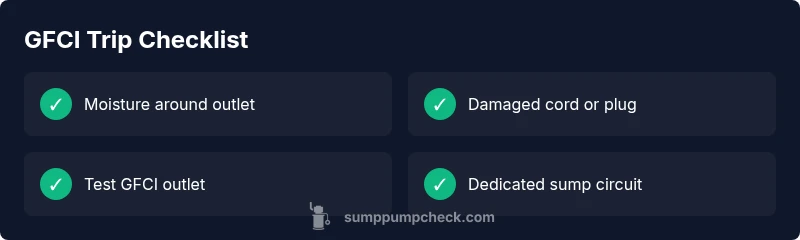
Regular maintenance helps prevent GFCI trips and protects both your home and family. Keep the sump pit area clean and dry; seal concrete gaps that allow moisture to reach outlets. Inspect the power cord and plug at least every season for cracks or fraying, and replace damaged components promptly. Ensure the sump pump has a dedicated circuit or is on a ground-fault-protected circuit with minimal shared loads. Test the GFCI monthly using the built-in test button and verify the reset works smoothly. Consider installing a secondary alarm or float switch so you know when the pump starts running abnormally. Document any trips and repairs to identify recurring patterns that require professional attention.
When to Call a Pro
If a GFCI continues to trip after performing the basic checks described here, it’s time to consult a licensed electrician or a sump-pump professional. Persistent trips can indicate a more serious ground fault, a hidden wiring issue, or a misconfigured circuit that requires code-compliant wiring. A pro can perform detailed electrical testing, measure leakage currents, and verify the integrity of the GFCI device itself. If your sump installation is older or was installed without a proper check valve or backflow prevention, a pro can recommend compliance upgrades to reduce future risk. For safety, never bypass a GFCI or attempt risky repairs in a damp basement.
Steps
Estimated time: 30-60 minutes
- 1
Power down and unplug
Shut off the sump pump at the outlet and unplug it. If possible, switch off the circuit at the main panel. This removes any risk of electric shock while you inspect.
Tip: Always start with power off and dry hands. - 2
Inspect cord and plug
Look for cuts, nicks, or scorch marks on the power cord and plug. Any damage means the cord should be replaced before re-testing.
Tip: Use a flashlight to check for hairline cracks you might miss with dim lighting. - 3
Check for moisture around the outlet
Dry the area thoroughly and look for signs of water intrusion. Seal gaps in the wall or sump pit to reduce future moisture exposure.
Tip: Moisture is a leading cause of ground faults; moisture-blocking measures help long-term reliability. - 4
Test the GFCI outlet
Use the test button on the outlet. If it doesn’t trip or reset smoothly, the outlet may be faulty and require replacement.
Tip: If testing reveals a defective outlet, replace it with a new unit. - 5
Re-seat connections and re-energize
Reconnect the pump to a clean, dry outlet and restore power. Observe the pump’s startup and ensure the GFCI resets properly.
Tip: Don’t rush the initial startup; give the system time to stabilize. - 6
Assess circuit load
Ensure the sump pump has a dedicated circuit or minimal shared loads. Avoid plugging other high-draw devices into the same outlet.
Tip: Dedicated circuits reduce nuisance trips and improve safety. - 7
Final test
Run the pump for several minutes in dry conditions and monitor the GFCI. If it trips again, stop and call a professional.
Tip: Document results for future reference.
Diagnosis: Sump pump stops and GFCI trips during operation
Possible Causes
- highGround fault due to moisture contact with pump or cord
- mediumDamaged or frayed power cord or plug
- lowOverloaded/shared circuit
- lowFaulty/miswired GFCI outlet
Fixes
- easyPower down and unplug the pump; inspect for moisture and damage
- easyDry and replace damaged cord or plug; reseal connections
- easyTest the GFCI outlet and reset; move to a dedicated circuit if needed
- mediumIf still tripping, rewire or replace the outlet/circuit with professional help
FAQ
Why does my sump pump trip the GFCI outlet?
A GFCI trips when it detects a current imbalance, often due to water contact with electrical parts, a damaged cord, or a faulty outlet. Check moisture, inspect the cord, and test the outlet.
A GFCI trips to protect you from shock. Look for moisture or damage around the outlet, replace components if needed.
Is it dangerous if a sump pump trips the GFCI?
Tripping indicates a safety mechanism is working. It can be dangerous if wiring is damaged or the outlet is wet; avoid contact with water and have it inspected.
It’s a safety signal—avoid contact with water and get it inspected.
Should I replace the GFCI outlet or the sump pump first?
Start with testing the GFCI outlet; if it shows a fault, replace the outlet. If the outlet is fine, inspect the pump and cord for ground faults.
Test the outlet first; if it’s good, check the pump.
What are common causes of GFCI trips around sump basins?
Moisture around the outlet, damaged cords, miswiring, or an overloaded circuit are common causes. A professional can help pinpoint the exact issue.
Moisture, damaged cords, miswiring, or an overloaded circuit.
When should I call a professional?
If the GFCI keeps tripping after basic checks, or you notice burning smells or water leaks, call a professional for safety and code-compliant fixes.
Call a pro if it keeps tripping after checks.
Watch Video
Top Takeaways
- Unplug and inspect power components first
- Dry and reseal areas prone to moisture
- Test and confirm GFCI functionality after each fix
- Use a dedicated circuit to reduce future trips
- Call a pro if the GFCI keeps tripping after basic checks