Is My Sump Pump Too Small? Troubleshooting Guide
Find out if your sump pump is too small, learn the signs of undersizing, and follow practical fixes to prevent basement flooding with our urgent, step-by-step troubleshooting guide from Sump Pump Check.


The most likely reason is that your sump pump is undersized for your home's flood risk and drain capacity. If the pump is too small, it will run constantly during rain and still not keep the basement dry. According to Sump Pump Check, upgrading to a pump with higher flow and a proper basin size can dramatically reduce overflow risk.
Is my sump pump too small? Why sizing matters
If you’re wondering, is my sump pump too small, you’re not alone. A pump that’s too small can struggle to remove water fast enough during heavy rainfall or rapid snowmelt, leaving your basement vulnerable. The sizing process isn’t just about the pump’s horsepower; it’s about matching the entire system to your home’s particular flood risk, the size of the sump basin, and the height the water must be pumped. According to Sump Pump Check, proper sizing combines a pump’s flow rate with the pit size and the discharge path to create reliable water removal. When sizing is done correctly, you reduce run time, lower energy use, and minimize the chance of basement flooding. In practice, a small mismatch shows up as long run times, nuisance beeps from the alarm, or water pooling after a heavy rain.
How to estimate the right size for your home
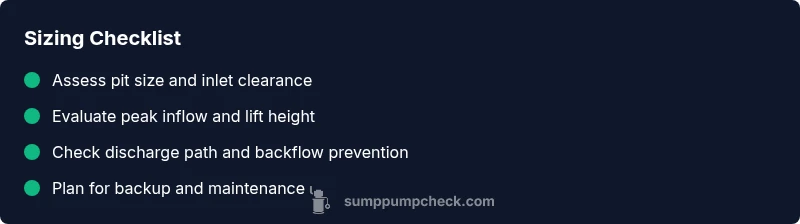
Sizing a sump pump starts with three questions: how much water enters the pit during peak events, how high water must be pumped (lift height), and how far water must travel to exit the home. Begin by checking the sump pit capacity and the pump’s stated flow rate at the expected lift height. Compare that to your flood risk level—areas with frequent heavy rain or poor drainage require higher flow. Consider future needs as well: adding a dehumidifier, more drainage, or a second pump for backup. Don’t forget the discharge path and check valve health, which influence overall performance. A properly sized system isn't just about raw power; it’s about how all parts work together to move water efficiently, even under stress.
Signs your pump may be undersized
Watch for symptoms that point to undersizing: the unit runs for long periods or cycles frequently without clearing the basin, water rises in the pit during storms, you hear the alarm or watch the discharge line vibrate or gurgle, and you notice higher electricity usage during wet seasons. If floods occur despite the pump running, your system likely needs a larger pump or a redesigned discharge path. Regular maintenance can help you spot these issues early. For homeowners, these signs are a clear call to reassess capacity and flow rather than assuming the current unit is adequate. The goal is a dependable, quietly efficient system that keeps water out of living spaces.
Diagnostic-flow overview (symptom-to-diagnosis-to-fix)
The diagnostic flow helps you quickly move from observation to action. Start with symptoms such as continued basement moisture after rainfall. If the pump runs continuously or can’t keep up, the likely cause is insufficient flow or an oversized lift. Check for clogged intakes, dirty impellers, or a blocked discharge line, as these can masquerade as capacity issues. If power is unreliable, fix the outlet or circuit. If you confirm a capacity problem, the fix is to upgrade the pump or add a backup pump and ensure the pit and discharge can handle the new load.
Safety, maintenance, and prevention
Safety first: work with the power off when inspecting electrical components. Use a GFCI outlet for pump power and never handle wet components without proper gloves and footwear. Prevent future undersizing by conducting annual checks of the pump curve, pit size, and discharge path. Clean the basin, clear debris from the inlet screen, and verify the check valve is seating properly. Consider a battery backup for extended outages and install a float switch guard to prevent skewed readings. Regular maintenance reduces the risk of a sudden failure during a storm.
When to call a professional
If you’re unsure about sizing, or if upgrades require electrical or plumbing changes (discharge piping, check valves, or a new pit), contact a licensed professional. A pro can confirm your home’s flood risk, calculate the required flow rate, and ensure compliance with local codes. Professional help is especially important if you notice persistent flooding, persistent beeping from the alarm, or the system fails to start after power restoration. The Sump Pump Check Team recommends scheduling a sizing assessment when your basement flood history or drainage configuration changes.
Prevention strategies for the long term
Invest in regular maintenance and proactive upgrades. A larger, properly configured system paired with a reliable battery backup can dramatically reduce flood risk. Plan a maintenance calendar that includes yearly testing of float switch operation, discharge line clearance, and alarm checks. Use a check valve that’s compatible with your pipe diameter and install backflow prevention if needed. By treating sizing as an ongoing process—especially in changing weather patterns—you can prevent undersizing from becoming a recurring problem.
Steps
Estimated time: 60-90 minutes
- 1
Power down and inspect the pit
Turn off the sump pump at the switch and unplug if accessible. Remove debris from the pit and check for cracks or damage on the basin. Look for signs of wear on the float and wiring harness.
Tip: Wear rubber-soled shoes and use a flashlight to see inside the pit clearly. - 2
Test the pump in place
Fill the pit with water to trigger the float and observe the pump kick on and pump water out. Note the time it takes to empty the pit. Listen for unusual noises.
Tip: If the pump doesn’t start or runs continuously, document the exact behavior for the next steps. - 3
Check the discharge line and valve
Inspect the discharge pipe for kinks, clogs, or frost. Verify the check valve seats correctly and does not allow backflow. Remove blockages if present.
Tip: Mark the discharge line so you can reassemble the path consistently after any repair. - 4
Inspect electrical components
Examine the outlet, plug, and any extension cords for wear or moisture intrusion. Ensure the outlet is GFCI-protected and that the circuit has no signs of tripping during operation.
Tip: If you see scorched plugs or melted insulation, stop and call an electrician. - 5
Evaluate pit size and pump capacity
Compare the pump’s flow rating with the expected water inflow during peak events. If you consistently see water pooling, plan for an upgrade and possibly a backup pump.
Tip: Document inflow estimates based on historical rainfall or pooling to support the upgrade decision. - 6
Upgrade or add backup
If testing confirms inadequate capacity, install a higher-capacity pump or add a secondary backup to reduce flood risk during power outages.
Tip: Choose a backup solution that matches your basin size and discharge requirements.
Diagnosis: Basement remains wet after rain and the sump pump runs for long periods or fails to keep water levels down
Possible Causes
- highInsufficient pump capacity for peak inflow (too small)
- mediumClogged inlet or discharge line
- lowFaulty float switch or wiring
- lowPower supply issues or tripped breaker
- lowInadequate check valve causing backflow
Fixes
- hardEvaluate current pump curve and compare with basin inflow; upgrade to higher capacity model if needed
- easyClear inlet screen, remove debris, and ensure discharge path is unobstructed
- mediumTest and repair or replace float switch; check wiring for damage
- easyInspect power outlet and circuit; install dedicated circuit or GFCI if necessary
- easyInstall or replace check valve to prevent backflow
FAQ
Is my sump pump too small if it runs constantly during rain?
Constant running often indicates the pump can’t keep up with water inflow. It’s a strong sign that you may need a higher-capacity unit or an additional pump. Always verify the basin size and discharge path before upgrading.
If your pump runs non-stop during rain, it’s likely undersized. Consider upgrading and checking the discharge path to be sure water is moving away properly.
What size pump do I need for my basement?
Size depends on inflow volume, pit size, and discharge height. Instead of guessing horsepower, compare the pump’s flow rating with the expected peak water, and consult charts from the manufacturer or a pro to determine the right match.
Sizing depends on how much water you expect to move and how far you must push it. Check manufacturer charts or ask a pro to size it correctly.
Can a backup pump help if my main pump is undersized?
A backup pump can provide protection during power outages or flood surges, but it’s not a substitute for correct primary sizing. Pair backup with a properly sized main pump for best results.
A backup pump helps during outages, but you still want the main pump sized correctly for reliable protection.
Should I hire a professional to size my sump pump?
If you are unsure about inflow calculations, pit size, and discharge routing, a licensed professional can size and install correctly, ensuring code compliance and long-term reliability.
If you’re unsure about sizing, it’s wise to hire a professional for accurate calculation and safe installation.
What maintenance keeps my sump pump from becoming undersized?
Regular inspection, cleaning of the inlet and discharge, and testing the float switch are essential. Schedule annual checks and address any wear promptly to prevent performance declines.
Keep it clean, test the float, and check the discharge path every year to avoid sizing issues later.
Can weather changes affect pump sizing?
Yes. Heavier rainfall and rapid snowmelt raise water inflow, which can overwhelm a smaller pump. Plan for upgrades or backups when you notice recurring, seasonally timed flooding patterns.
Weather changes can push a small pump beyond its comfort zone, so consider upgrades or backups if you see seasonal flooding.
Watch Video
Top Takeaways
- Assess if your pump is undersized for your flood risk
- Upgrade capacity and verify the discharge and pit sizing
- Add backup options and perform regular maintenance
- Call a professional when sizing or electrical work is uncertain