How to Get Your Sump Pump to Stop Beeping
Urgent, practical guide to stop sump pump beeping. Learn common causes, safe steps, and when to call a pro with Sump Pump Check.


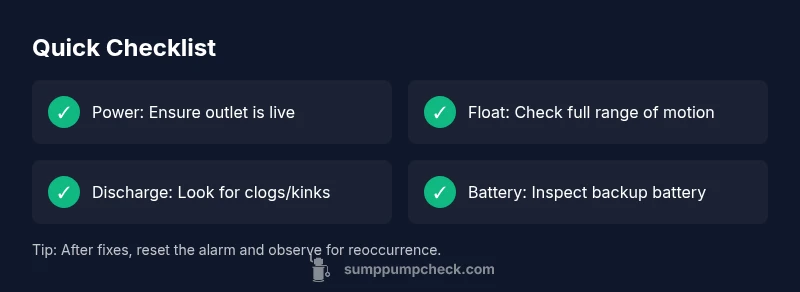
Beeping from a sump pump is usually a signal of a fault or low battery. Start with simple checks: verify the power, inspect the discharge line for blockages, and test the float switch. According to Sump Pump Check, many beeps come from a stuck float or a failing battery; address those first, then reset the alarm. If it persists, call a professional.
What the beeping means and why it matters
Beeping on a sump pump is not just a nuisance; it’s a warning signal that some part of the system needs attention. In many homes, the indicator is tied to the alarm module that monitors water level, float position, and battery status. The Sump Pump Check analysis shows that float-related beeps are among the most common issues homeowners encounter. Before you panic, take a breath and methodically verify the basics. A simple power refresh, a quick float check, and an inspection of the discharge line can resolve the majority of early beeps. If your unit has a backup battery, the beeping can also indicate a weak or dead battery that needs replacement. By understanding what the beep is telling you, you can prioritize fixes and reduce the chances of flooding due to a failed pump. The Sump Pump Check team notes that identifying the root cause quickly saves time and protects your basement.
Note: This section references general patterns observed by Sump Pump Check without promising exact statistics. The aim is practical guidance that homeowners can apply immediately.
Steps
Estimated time: Total time: 30-60 minutes
- 1
Power check and reset
Verify the sump pump is connected to a live outlet and the GFCI is not tripped. Unplug the unit, wait 10 seconds, and plug it back in to reset the control board. Run a brief test cycle to observe whether the beep returns.
Tip: Use a known-good outlet and avoid using extension cables. - 2
Test the backup battery
If your model has a battery backup, inspect the battery for corrosion, replace it if aged, and confirm proper connections. After replacing, perform a test to see if the beep persists.
Tip: Label the battery type and date of replacement for future reference. - 3
Inspect the float switch
Reach into the sump pit and ensure the float moves freely from the fully lowered to the fully raised position. Remove any debris that may trap the float and verify the linkage is not bent or stuck.
Tip: Gently move the float by hand during a dry run to confirm full travel. - 4
Check the discharge path
Inspect the discharge line for clogs, kinks, or a frozen line. Make sure the line slopes downward away from the pit and that the check valve is functioning to prevent backflow.
Tip: Flush the line with water to confirm unobstructed flow. - 5
Run a controlled test
Pour water into the pit or simulate a sump activation to trigger a test run. Observe the beep pattern and ensure the pump starts and stops normally without new beeps.
Tip: Document the beep timing and pump response for future reference. - 6
Know when to escalate
If the beep returns after all basic fixes, the issue may be deeper (sensors or wiring). Stop and contact a licensed professional to avoid safety risks.
Tip: Do not bypass safety features; a beeping alarm is protecting your home.
Diagnosis: Sump pump beeping or chirping unexpectedly
Possible Causes
- highBackup battery low or failing
- highFloat switch stuck or misaligned
- mediumDischarge line blocked or kinked
- lowFaulty alarm sensor or wiring
Fixes
- easyReplace or recharge the backup battery
- easyFree the float, realign, and test movement
- mediumClear discharge line and ensure proper slope; inspect check valve
- mediumInspect wiring, reset the alarm, or call a pro electrician
FAQ
Why is my sump pump beeping?
Beeping signals a fault or safety condition. Common causes include a low backup battery, a stuck float, or a blocked discharge line. Inspect these areas and reset the alarm to see if the beep stops.
Beeping usually means the alarm detected a fault like a low battery or a stuck float. Check power, battery, float, and discharge line, then reset to test.
What should I check first when my sump pump beeps?
Start with the basics: make sure the pump has power, test the float, and inspect the discharge path for blockages. These steps solve most beeping issues.
First, check power, test the float, and inspect the discharge path. Most beeps come from these simple causes.
Can a backup battery cause beeping?
Yes. A failing or weak backup battery can trigger the alarm even if the main pump is fine. Replace the battery and retest.
A bad backup battery often causes beeps. Replace it and test again to confirm.
Is it urgent if my sump pump keeps beeping?
Persistent beeping can indicate a growing problem that could lead to flooding. Treat it as urgent and follow the diagnostic steps or call a pro if needed.
Persistent beeping can signal a serious issue—stop and address it promptly or seek professional help.
How do I reset the sump pump alarm?
Power down, then power up the unit after a short wait. Some models require pressing a reset button or following the user manual.
To reset, power down, wait briefly, then power up again. Some models need a reset button.
When should I call a professional?
If the beep returns after all basic fixes or you notice electrical issues, corrosion, or water leakage, contact a licensed technician for safety.
Call a pro if the beep persists after basic checks or you see signs of electrical problems.
Watch Video
Top Takeaways
- Start with power, float, and discharge checks.
- Reset the alarm after fixes.
- Replace backup battery as needed.
- Call a pro if beeping persists.