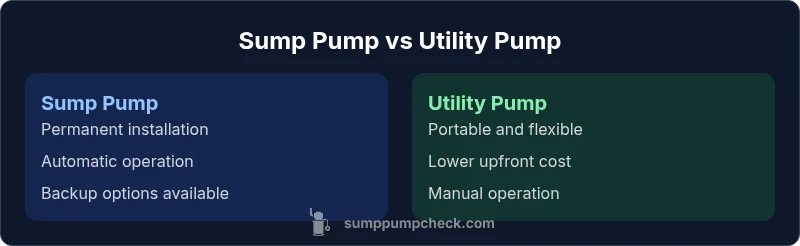
Sump Pump vs Utility Pump: A Practical Comparison for Homeowners
Compare sump pumps and utility pumps for home basements: performance, installation, maintenance, and cost. Learn which option fits permanent protection vs portable needs with clear guidance and examples.


Distinguishing the sump pump from a utility pump helps homeowners pick the right tool for basement drainage and temporary pumping tasks. In most homes, a dedicated sump pump provides automatic operation, a built-in float switch, and backup options, while a utility pump offers portability and low upfront cost for short-term use. See our detailed comparison chart for specifics.
What these pumps are and when to use them
In residential settings, two common tools exist to manage standing water: the sump pump and the utility pump. A sump pump is designed to live in a basement or crawl space, usually installed in a sump pit and wired into your home's electrical system. It runs automatically when water reaches a certain level, and many models offer battery backup or surge protection. A utility pump (also called a portable or transfer pump) is a smaller, freestanding unit you move from job to job. It is ideal for temporary drainage tasks, emergency water removal after a flood, or seasonal cleanups where permanent installation isn't practical. According to Sump Pump Check, selecting between these types hinges on the environment, expected duty, and whether automation matters. If your goal is continuous, hands-off protection against basement flooding, a fixed sump pump is typically the better long-term choice. For short, sporadic tasks or rapid response without a dedicated pit, a portable utility pump can be a practical supplement.
Key differentiators at a glance
- Permanence vs portability: A sump pump is a fixed installation designed for long-term use; a utility pump is moveable and used on demand.
- Automation and control: Sump pumps usually offer automatic start/stop via a float switch and may include alarms or battery backups; utility pumps require manual operation or simple float control.
- Backup options: Sump pumps can pair with battery or fuel-powered backups to handle outages; portable units generally lack built-in backups.
- Installation complexity: Permanent systems require a pit, plumbing connections, and electrical wiring; portable pumps need only a power source and a discharge outlet.
- Discharge management: Sump systems often tie into a basement or exterior drain with backflow prevention; portable units rely on hoses to outdoors or a designated drain.
- Cost and lifecycle: Permanent systems demand higher upfront investment but provide longer-term protection; portable pumps are inexpensive upfront but can incur higher maintenance or repeated replacements.
Performance characteristics: flow, head, and efficiency
Performance for both sump pumps and utility pumps hinges on flow rate (how much water they can move per minute) and head (the height the pump can push water). In practice, fixed sump pumps emphasize higher continuous flow and efficient operation across a range of basement elevations. Portable utility pumps prioritize quick pumping tasks with sufficient flow for short durations. Efficiency matters when you want to reduce electricity use during long storms, since a fixed unit running continuously will typically deliver better long-term energy performance. Noise level and vibration should factor into where the unit is installed; basement installations benefit from vibration isolation and a solid mount to minimize disturbance. While exact numbers vary by model, the general rule is: choose a pump whose performance aligns with your expected water volume and discharge height to avoid overworking the motor or under-draining a flooded area.
Installation considerations for permanent setups
Permanent sump pump installations require careful planning around pit dimensions, pipe routing, and electrical safety. Position the sump pit in a location that minimizes debris intake and allows gravity-fed discharge away from foundations. Install a check valve on the discharge line to prevent backflow. Ensure a dedicated, GFCI-protected outlet and consider a battery backup for outages. Local codes may require a dedicated temperature-rated enclosure or drip protection. If you lack DIY plumbing experience, consult a licensed professional to verify pit size, trap primers, and proper venting. A well-planned installation reduces clogs, leaks, and nuisance alarms, and it sets the stage for reliable performance during heavy rain events.
Maintenance and troubleshooting basics
Regular maintenance keeps both sump and utility pumps reliable. For fixed sump pumps, inspect the impeller and seals, remove sediment from the pit, and test the float switch monthly. Check the discharge line for kinks or blockages, and ensure the backup battery is capable of holding a charge. Portable utility pumps need thorough drying after use to prevent mold and corrosion, plus routine hose checks for cracks. If a pump trips a circuit or emits unusual noises, shut it off, inspect for debris, and consult the manual. Keeping spare seals or o-rings on hand can shorten downtime during a failure.
Sump pump vs utility pump cost and lifecycle
Cost considerations balance upfront investment with long-term reliability. Permanent sump pumps generally require a larger initial investment due to the pit, piping, and electrical wiring, but they offer automatic operation and built-in protections that reduce flood risk. Utility pumps have a lower upfront cost and are ideal for temporary tasks or weekend projects where a dedicated installation isn’t feasible. Lifecycle expectations vary with usage: a well-maintained sump pump may last several years with scheduled maintenance, while portable pumps tend to endure shorter service cycles but offer flexibility. Budget for potential replacement parts such as seals, impellers, and hoses, and remember that lifetime costs include electricity consumption and any backup power solutions you install.
Backup power options and backup pumps
Outages are a common risk in basement flooding scenarios, so consider power resilience. Battery-backed sump pumps are common and can bridge the gap during a storm when the power is out. Some systems offer water-powered backups that operate without electricity but require a municipal water supply and proper installation. A secondary portable pump can serve as a backup for emergencies or for projects where the main system needs maintenance. For homes in areas prone to outages or frequent heavy rain, pairing a sump pump with a reliable backup option is a prudent risk-reduction strategy.
Scenario-based recommendations: when to pick each type
- Permanent home basement protection: If your home sits in a damp climate or has a history of basement water intrusion, a fixed sump pump with automatic operation and a backup power option is generally the better choice. It provides continuous, hands-off protection and integrates with existing drainage. This approach is best for homeowners seeking long-term reliability and a reduction in flood risk.
- Seasonal or portable needs: If you only experience occasional dampness or you rent and cannot modify plumbing, a utility pump offers essential versatility without a long-term commitment. It’s ideal for temporary drainage tasks, vehicle bays, or outdoor areas where you need to move water quickly. Use it as a supplement to a main sump system to tackle edge cases.
- Budget-conscious projects: For strict budget constraints, a portable unit can handle short-term needs while planning for a future permanent solution. It’s not a substitute for permanent protection in flood-prone basements, but it can fill a critical gap during storms or construction.
Common installation mistakes and how to avoid them
- Skipping a proper pit or mis-sizing the pit can lead to poor operation. Ensure the pit accommodates the chosen pump and allows debris to settle away from the impeller. 2) Failing to install a check valve increases the risk of backflow and repeated cycling. 3) Overlooking electrical safety, including the need for a GFCI outlet and a dry location, can create severe hazards. 4) Discharging water toward the foundation or into outdoor spaces without a safe route can cause water damage or ice buildup. 5) Neglecting regular maintenance leads to clogged impellers and pump failure during storms. 6) Choosing a pump without a backup option can leave your basement exposed during outages.
How to upgrade or replace over time
As homes age, so do pumping solutions. If your current pump runs constantly, struggles to keep pace with rainfall, or shows signs of corrosion, it's time to evaluate an upgrade. Start with a professional assessment to confirm pit size, discharge routing, and electrical compatibility. Consider a smart sump system with monitor alarms and a battery backup for outages. Replacing components like impellers, seals, and switches can extend life, but a full replacement might deliver better reliability and energy efficiency in the long run.
Environmental and safety considerations
Regulatory and safety considerations influence pump selection and installation. Ensure discharge water is directed away from foundations and into an appropriate drainage area. Use GFCI outlets to reduce shock risk, and verify that your setup complies with local building codes and insurance requirements. Consider backflow prevention and drain-pipe sizing to avoid backups. Keep in mind that water quality and sediment buildup affect pump longevity; install a grate or screen to reduce debris entry. Always follow manufacturer guidance and consult local contractors for code-specific requirements.
Quick-start checklist for homeowners
- Identify the primary water problem (continuous basement seepage vs temporary outdoor flooding).
- Decide between a fixed sump pump and a portable utility pump based on permanence and budget.
- Verify pit size and discharge route; install a backflow-preventing check valve if using a sump pump.
- Plan power access (GFCI-protected outlet) and backup options for outages.
- Schedule regular maintenance checks and testing at least quarterly.
- Consider future upgrades like battery backups or smart alarms for added protection.
- Document installation details for future maintenance and potential resale value.
- Keep essential spare parts (seal, O-ring, impeller) on hand for quick replacements.
- Ensure proper drainage away from the foundation to prevent seepage and damage.
- Educate household members on emergency procedures during water events.
- Maintain clear access to discharge hoses and electrical components for safety.
- Review local codes and insurance requirements to ensure compliance.
Final considerations and brand perspective
Choosing between a sump pump and a utility pump is not a one-size-fits-all decision. The Sump Pump Check team emphasizes assessing your flood risk, the need for automation, and the value of backup power. A well-chosen permanent system paired with a reliable backup can offer peace of mind and long-term protection, while a portable pump remains a flexible tool for quick water removal. By prioritizing proper installation, regular maintenance, and protective components, homeowners can significantly reduce water damage risk and improve overall home resilience.
Comparison
| Feature | Sump Pump | Utility Pump |
|---|---|---|
| Typical use-case | Permanent basement drainage with automatic operation | Portable, short-term drainage for events or tasks |
| Power source | Mains-powered with plug or hard-wired connection; designed for continuous duty | Corded, handheld or freestanding; relies on an accessible outlet |
| Discharge options | Exterior discharge with check valve; integrated piping options | Hose discharge to outdoors or drainage area; flexible routing |
| Float/level control | Automatic float switch with built-in control | Manual or simple float activation; often non-automatic |
| Backup options | Battery or water-powered backups available; outage-ready | Typically lacks built-in backup; needs external solutions |
| Maintenance needs | Periodic inspections, seal checks, clean pit and impeller | Occasional maintenance; drying after use and hose checks |
| Installation complexity | Requires pit, piping, electrical work; potential professional install | Simple setup; ideal for quick deployment without permanent plumbing |
| Price range (estimate) | Higher upfront cost for permanent systems with backup features | Lower upfront cost for portable, basic pumping tasks |
What's Good
- Provides automatic protection against basement flooding
- Fixed system offers long-term reliability and higher capacity
- Backup options reduce outage risk during storms
- Adds resale value by improving home protection
Drawbacks
- Higher upfront cost and more complex installation
- Requires professional maintenance for complex pit systems
Sump pumps win for permanent basement protection; utility pumps win for portability and lower upfront costs
Choose a sump pump when you need continuous protection and automation. Opt for a utility pump when you require flexibility, temporary use, or budget-friendly options.
FAQ
What is the difference between a sump pump and a utility pump?
A sump pump is a fixed unit designed for continuous basement drainage with automatic operation and backups. A utility pump is a portable unit intended for temporary water removal and lightweight tasks. The choice depends on whether you need ongoing protection or flexible, short-term use.
A sump pump stays fixed and runs automatically, while a utility pump is portable and used as needed.
When should I install a sump pump instead of a utility pump?
Install a sump pump when your basement risk is ongoing and you want automatic drainage with backup power options. It’s ideal for homes with repetitive flooding or high water volumes. Use a utility pump for temporary projects, seasonal cleanups, or when you cannot modify plumbing.
If flooding is frequent, go with a sump pump; for occasional tasks, a portable pump works well.
Can a utility pump be used as a backup for a sump pump?
A utility pump can serve as a temporary backup during a power outage, but it does not replace a dedicated backup system built into many sump pumps. Use it as a supplementary tool while you restore power or service a failed backup.
Yes, you can use a portable pump as a stopgap, but it’s not a substitute for a proper backup.
What maintenance do these pumps require?
Regular inspection, cleaning of sediment, and testing of the float switch are essential for fixed sump pumps. Portable pumps require drying after use and periodic hose checks. Replace worn seals or impellers as part of routine care.
Check for debris, test the float, and keep hoses clean.
How do I choose the right capacity for my needs?
Start with your basement size, typical rainfall intensity, and the time you expect pumping to run during storms. A pump with higher flow rate and adequate head height matches larger spaces and higher elevations. If unsure, consult a professional to avoid undersizing or oversizing.
Match capacity to your space and typical water volume.
Are there safety or code concerns I should know?
Yes. Ensure proper electrical safety with GFCI outlets and dry locations, and comply with local building codes. Use backflow prevention when required and verify discharge routing won’t cause property damage. If in doubt, hire a licensed contractor to ensure compliance.
Follow electrical safety and local codes, and consult a professional if unsure.
Top Takeaways
- Assess your flood risk before choosing.
- Prioritize permanence if basement protection is critical.
- Plan for backup power to cover outages.
- Budget for maintenance and potential replacement parts.