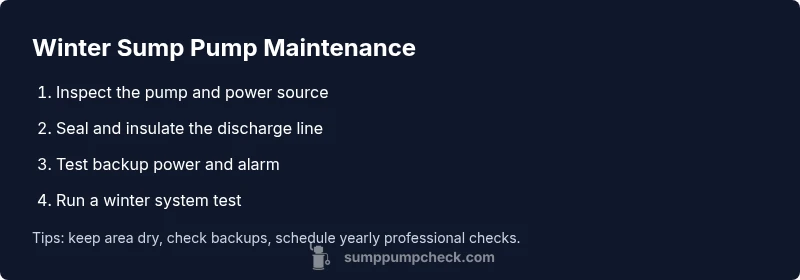
Sump Pump in Winter: Practical Guide for Homeowners
Learn how to prepare, protect, and test your sump pump in winter to prevent basement floods. This practical guide covers cold-weather checks, backup power, and maintenance for reliable operation.


By following these steps, you will successfully prepare and protect your sump pump in winter. You’ll learn cold-weather checks, freezing prevention, backup readiness, and a quick test routine to confirm reliable operation during spring thaws. This plan helps prevent basement flooding when winter storms hit. It emphasizes safe operation and energy efficiency, with practical tips homeowners can implement today.
Winter Sump Pump Basics and Why It Matters
Winter is a high-risk period for basement flooding due to frozen ground, rapid snowmelt, and power outages. According to Sump Pump Check, winter readiness reduces emergency calls and insurance claims associated with basement flooding. The Sump Pump Check team found that many winter failures start with a neglected discharge line, a dead battery, or a loose lid. Understanding the risks helps you prioritize a simple, repeatable winter prep routine. With a proactive mindset, you’ll view winter maintenance as protection for your home and peace of mind for your family. Practical prep reduces water damage, mold growth, and costly repairs, while potentially extending the life of your pump. Start with a lightweight winter readiness checklist and work through each item methodically.
Key winter risk factors include blocked discharge lines from ice, backflow during heavy precipitation, and reduced pumping efficiency as temperatures drop. Address these early with safe, practical steps that fit a typical weekend project schedule. This section sets the stage for the actionable steps that follow, and it links to the deeper maintenance details later in the guide.
Inspecting the Sump Pump System Before Winter
Before temperatures drop, perform a thorough inspection of the sump pump system. Check the power cord for cracks, ensure the outlet is properly grounded, and verify the backup power source is charged or ready. Inspect the sump basin lid for cracks or gaps and confirm the float switch moves freely without sticking. Look at the discharge line for any kinks, obstructions, or leaks, and confirm it routes water away from the foundation. This pre-winter check helps identify failure points before a storm, reducing the chance of a flooded basement. Remember to clear debris from the area around the pump so airflow and cooling are not impeded, and re-secure the area with a tidy, accessible setup.
Protecting Pipes and Discharge Lines from Freezing
Freezing discharge lines are a common winter pitfall. Insulate exposed sections of the discharge pipe with foam sleeves or pipe insulation, especially where the line travels through unheated spaces. If the discharge line runs above ground or through a cold crawl space, consider heat tape or a heated conduit to prevent freezing. Ensure the discharge ends at a sump drainage point that remains unfrozen during snow storms. Keeping the line warm reduces back pressure and prevents the pump from cycling excessively. A well-insulated system also minimizes energy waste and protects the exterior surroundings from ice buildup.
Battery Backup and Power Resilience for Cold Weather
Power outages are more likely during winter storms, so a reliable backup battery is essential. Check the battery health in your backup system and replace any aging cells. Store backup power in a dry, cool location and ensure it can be easily connected when needed. If you use a generator, test it with the sump pump connection to confirm fuel supply and compatibility. This step reduces the risk of a dry basement when the grid goes down and ensures you have a working pump during emergency conditions. Maintain clear access to the backup power source so you can switch gears quickly when storms hit.
Alarm Systems and Monitoring for Winter
An audible alarm or smart monitoring setup can provide early warning of pump failure or water backflow. Verify all alarm components are functioning: the float switch, the watchdog alarm (if installed), and any dial or app-based notifications. Pair the system with a mobile alert so you’re notified even when you’re not home. This proactive approach allows you to respond quickly to a fault, potentially preventing major water damage. If you have a rental property or a multi-story home, consider zoning alarms for more precise location-based alerts. The right monitoring setup gives you peace of mind through long winter nights.
Testing the Pump in Winter Conditions
Create a controlled test to verify the pump operates as intended in cold conditions. Slowly fill the sump basin with water until the float activates, and observe the pump’s response. Confirm that discharge water flows freely through the pipe and away from the foundation. If you notice a slow discharge or air locks, pause the test and inspect for clogging or dripping seals. Document the test results and repeat monthly during winter to catch issues early. This step is essential for confidence that your system will perform during a real flood event.
Maintenance Schedule for Winter Months
Establish a winter maintenance cadence to keep the system reliable. Weekly quick checks can be paired with a deeper monthly inspection, and a more thorough seasonal review before the coldest weather arrives. Maintain a simple log documenting dates of inspections, battery checks, and test results. This schedule helps you stay consistent and makes it easier to identify trends or recurring issues over multiple winters. The goal is steady performance, not rushed fixes during storms.
- Weekly checks: Visual inspection of the basin area, listen for unusual noises, ensure the cover is secure.
- Monthly checks: Verify power, test the pump and float switch, inspect discharge line, confirm alarm works.
- Seasonal check: Full pump test, backup power readiness, and system tuning before the first freeze.
Common Winter Scenarios and Quick Responses
Winter brings scenarios that require calm, methodical responses. If a storm dump overwhelms the drainage system, ensure the backup battery is charged and switch to backup power quickly. For a frozen discharge line, pause pumping and reassess insulation and line routing, then apply heat tape where appropriate. If the basement shows signs of dampness, dry the area and re-evaluate the sump location to optimize drainage. Preparedness means you can handle these events without panic, minimizing potential damage and downtime.
Cost, Energy Efficiency, and Value of Winter Prep
Winter prep has upfront costs, but the value comes from reduced flood risk, lower repair costs, and better energy efficiency. When evaluating upgrades, consider components that improve reliability and ease of maintenance, such as a modern float switch, a reliable backup battery, or an insulated discharge line. Focus on long-term savings and reliability rather than just initial price. If you’re unsure which upgrades are most cost-effective, consult a Sump Pump Check guide or a local professional for a tailored plan.
Optional Upgrades to Consider
If you want extra resilience, explore options like a higher-capacity pump for heavy inflows, a sealed lid to minimize evaporation and humidity, or a secondary pump as a true dual-backup system. Battery chemistries vary, so choose a battery with proven cold-weather performance. A monitored alarm that pushes alerts to your phone can also reduce emergency response times. Weigh potential benefits against installation costs and local climate needs to decide what makes sense for your home.
Seasonal Upkeep Checklist (Printable)
Create a printable winter checklist you can post near the sump pit. Include items such as: (1) verify power and backup, (2) inspect discharge line and insulation, (3) test float switch and alarm, (4) perform a monthly water-fill test, (5) review the maintenance log, and (6) schedule a professional inspection if issues arise. A written checklist helps you stay accountable and ensures nothing slips through the cracks over a busy season.
Final Notes: Staying Proactive About Winter Readiness
Winter readiness is an ongoing practice, not a one-time task. Stay aware of weather forecasts and plan ahead for storms. A small, consistent routine over the season reduces risk and provides a safe, dry home environment. By combining inspections, insulation, backups, alarms, and regular tests, you’ll minimize the chance of a winter flood and protect your investment.
Tools & Materials
- Sump pump manual(Keep for model-specific guidance and troubleshooting steps)
- Safety gloves(Protect hands during inspection and handling of wet components)
- Non-conductive flashlight(Inspect dark corners and the discharge area safely)
- Multimeter or non-contact voltage tester(Verify outlet grounding and power availability)
- Pipe insulation foam sleeves(Cover exposed discharge piping to reduce freezing risk)
- Heat tape or heated conduit (optional)(Useful for long, exposed discharge runs in unheated spaces)
- Bucket and towels(Clean up minor spills during testing)
- Backup power source (battery or generator)(Charge regularly and test with the sump pump)
- Alarm tester or smartphone with alerts(Verify notification delivery and volume)
Steps
Estimated time: 60-90 minutes
- 1
Power down and unplug
First, unplug the sump pump from the power outlet and switch off any switches in the circuit to ensure complete de-energization. This prevents electric shock while you inspect or handle the unit. Use a non-conductive tool if you need to move components.
Tip: Always test the outlet with a tester after plugging back in to confirm power is live. - 2
Inspect the basin and lid
Check the sump basin for cracks or signs of wear. Inspect the lid to ensure a tight seal and prevent debris from entering the pit. Look for any trapped moisture that could indicate a leaking seal.
Tip: If you find cracks, replace the lid or seal promptly to maintain proper containment. - 3
Check float switch and impeller
Move the float up and down to confirm it triggers the switch at the appropriate level. Listen for smooth operation and check that the impeller turns freely without obstruction. A sticking float can cause delayed pumping.
Tip: Lubricate moving parts lightly if the manufacturer recommends; avoid oily residue on the mechanism. - 4
Inspect discharge line and clean
Trace the discharge line from the pump to the exterior outlet. Look for kinks, cracks, or clogs and remove any debris. Ensure the exterior termination point is clear of ice and snow.
Tip: Run a brief water test after cleaning to confirm clear flow. - 5
Insulate pipes and consider heat tape
Wrap exposed discharge lines with foam insulation sleeves and seal where needed. If the line passes through unheated areas, consider heat tape or a heated conduit to avoid freezing.
Tip: Do not cover heat tape with insulation that traps heat; allow for heat dissipation. - 6
Test backup power readiness
Charge your backup battery and verify connections to the sump pump. If using a generator, perform a safe test with the pump connected and ensure fuel supply is adequate.
Tip: Keep a simple fuel plan and test routine to avoid last-minute scrambling during a storm. - 7
Set up and test an alarm
Install or verify alarm sensors that alert you to failures or backflow. Test the alarm by simulating a fault and confirm that alerts reach your phone or monitoring system.
Tip: Position the alert device where you will hear it above typical noise levels. - 8
Winter water-test the system
Carefully pour water into the sump basin until the float activates. Observe the pump’s response and ensure drainage is continuous and unblocked. Document the test results for future reference.
Tip: Do not fill beyond the float’s activation point to avoid overloading the system. - 9
Create a winter maintenance calendar
Establish a schedule for weekly visual checks, monthly deeper inspections, and seasonal full tests. Keep a log of findings to spot trends and catch deterioration early.
Tip: Set reminders on your phone or calendar to stay consistent.
FAQ
Do I need a backup power source for winter?
Yes. Winter storms increase the risk of power outages, so a backup power plan helps ensure your sump pump runs when you need it most. Consider a charged battery backup or a generator with a safe connection to the pump.
Yes—backup power helps your sump pump run during winter outages, protecting your basement from floods.
Can a frozen discharge line cause damage?
A blocked or frozen discharge line prevents water from leaving the basin, which can force the pump to work harder or fail. Insulate exposed lines and clear obstructions early.
A frozen discharge line can cause backflow and pump strain, so insulate and check it regularly.
How often should I test my sump pump in winter?
Test monthly during winter, and perform a full functional test before the coldest period. Regular testing catches issues early and ensures readiness for storms.
Test your sump pump monthly and before the coldest weather hits to stay prepared.
Is a battery backup necessary in cold climates?
A battery backup is strongly recommended in cold climates to maintain operation during power outages. Check battery health and replace aging units promptly.
Yes, a battery backup keeps the pump working when power goes out in winter.
What are signs my discharge line is blocked?
Signs include slow drainage, water pooling around the sump pit, gurgling sounds, or water backup into the pit. Inspect and clear any obstruction promptly.
Look for slow drainage or water backing up into the pit—clear the line if you notice it.
Should I install a sump pump cover?
A cover helps prevent debris and moisture from entering the pit, which can affect performance. Ensure the cover allows air and float operation.
A cover helps keep the pit clean and protects the float mechanism.
Watch Video
Top Takeaways
- Prepare with a winter maintenance checklist.
- Protect discharge lines to prevent freezing.
- Test both primary and backup power systems.
- Use alarms and monitoring to detect failures early.