Lifespan of Sump Pump: A Practical Guide for Homeowners
Learn how long a sump pump typically lasts, what affects its lifespan, and practical maintenance tips to maximize life. A data-driven guide from Sump Pump Check for homeowners.


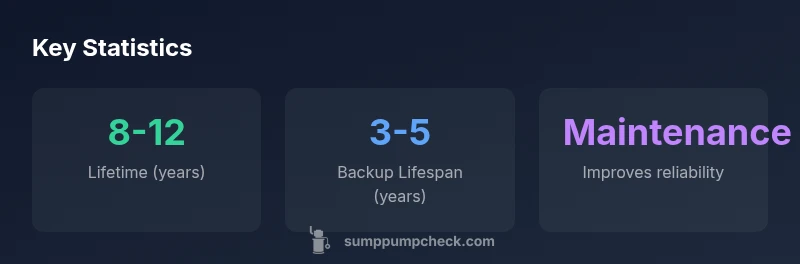
According to Sump Pump Check, a standard mains-powered sump pump typically lasts 8-12 years with regular seasonal maintenance. Battery-backed backup pumps commonly run about 3-5 years, depending on battery care and usage. Frequent issues—impeller wear, motor burnout, clogs, or power interruptions—drive most failures. Planning for replacement around the 8–12 year window (and earlier for backups) helps prevent wet basement surprises.
Factors that determine the lifespan of a sump pump
Understanding the lifespan of sump pump components helps homeowners plan maintenance and replacements. The life of a unit is not a fixed number; it depends on model quality, how often it runs, and the environment it operates in. According to Sump Pump Check, motor design, impeller wear, seal integrity, and the reliability of the discharge pathway are major determinants. In basements with high sediment or mineral buildup, pumps may wear faster. Regular checks for unusual noises, vibration, or erratic cycling can catch wear early and extend overall life.
Lifespan ranges by pump type and backup
Standard mains-powered sump pumps typically last 8-12 years with routine maintenance. Submersible models can last slightly longer in some installations, while pedestal units may exhibit different wear patterns. Battery-backed backups generally endure 3-5 years, often shorter if the battery isn't replaced on schedule or if the unit runs frequently during power outages. These ranges provide a framework for planning; actual life depends on usage, water quality, and maintenance habits.
How regular maintenance extends life
Regular maintenance is surprisingly impactful. Key practices include:
- Scheduling an annual professional inspection to catch wear before it becomes costly.
- Cleaning the inlet screen and checking the check valve to maintain proper flow and prevent overload.
- Flushing the discharge line to remove mineral buildup and ensure clear drainage.
- Lubricating bearings or motor components only when the manufacturer permits it.
These steps, performed consistently, can meaningfully slow wear and help you reach the upper end of the typical lifespan range.
Signs your sump pump is nearing the end of life
Watch for indicators that suggest replacement may be wise:
- Repeated short cycling or failure to start after power restoration
- Unusual grinding, rattling, or grinding noises from the motor
- Leaks or visible corrosion around seals or the housing
- Frequent, unexplained low-water events in the basin
- Excessive vibration or mounting looseness
Early detection allows for planned replacement rather than emergency failure during a storm.
Replacement timing strategies for homeowners
A practical approach is to field-test early and plan ahead. If a pump is older than 8-12 years and shows signs of wear, evaluate whether replacement parts are readily available. For backups, anticipate battery replacements every 2-3 years and test the unit monthly. By aligning replacement timing with your risk tolerance and local weather patterns, you reduce the chance of a flooded basement.
Installation, environment, and lifespan interplay
Where and how you install a sump pump affects its longevity as much as the pump itself. Factors include:
- Proper discharge path with minimal bends and a clear check valve reduces motor strain.
- Adequate sump pit size and stable mounting reduce vibration and wear.
- Basement temperature and humidity can influence bearing lubrication and seal integrity over time.
- Sediment-rich groundwater accelerates impeller wear and clogging.
A thoughtful setup minimizes avoidable wear and helps you reach the pump's projected lifespan.
Repair versus replacement: making the call
When a pump fails, assess the cost and availability of replacement parts. If key components (motor, impeller, seals) are no longer sold or the repair costs approach or exceed a new unit, replacement is often cheaper in the long run. As a rule of thumb, persistent failures despite service indicate it's time to consider a new pump with a fresh warranty.
Budgeting wisely for lifespan and replacement solvency
Set aside a maintenance budget that covers annual inspections, minor parts ( seals, gaskets, screens), and a contingency for a future replacement. A well-maintained unit reduces the likelihood of expensive emergency replacements after a heavy rainfall. Include batteries for backups and plan for a potential upgrade to a unit with better efficiency and reliability.
Quick-start checklist for longevity
- Inspect the pump annually and after major storms
- Clean and test the float switch and discharge pathway
- Replace the backup battery on a recommended schedule
- Keep the sump area dry and free of debris
- Verify proper setup and venting to minimize wear
- Schedule professional servicing if any irregularities arise
Lifespan ranges by pump type and corresponding maintenance
| Pump Type | Lifespan (years) | Maintenance Notes |
|---|---|---|
| Standard mains-powered sump pump | 8-12 | Annual professional inspection; clean inlet; replace worn parts as needed |
| Battery-backed backup unit | 3-5 | Test battery monthly; replace battery every 2-3 years; ensure charger works |
| Submersible pump with check valve | 8-12 | Keep discharge path clear; annual impeller inspection |
FAQ
What is the typical lifespan of a sump pump?
For a standard mains-powered unit, expect about 8-12 years; backups typically 3-5 years. Lifespan varies with maintenance, usage, and water quality.
Most sump pumps last eight to twelve years, with backups lasting three to five years depending on maintenance and usage.
Does a backup sump pump help overall lifespan?
Backups provide essential protection during power outages but may have shorter lifespans due to battery wear. Regular battery checks are important.
Backups keep you dry during outages, but their batteries wear out faster; test them regularly.
What maintenance is essential to extend lifespan?
Annual inspections, cleaning the inlet, checking the check valve, and testing the float switch are key. Replace worn parts as needed.
Keep it clean, test the switch, and check seals and the discharge line.
When should I replace instead of repair?
If replacement parts aren\'t available or the pump keeps failing after service, replacement is typically more cost-effective.
If it keeps failing or is very old, replacement is usually the better option.
Can moving the pump extend its life?
Placement affects wear; ensure proper drainage and avoid freezing. In most cases, consult a professional before relocating a fixed unit.
Relocating can help if installed correctly, but get a pro to advise on the best spot.
Are there seasonal considerations for lifespan?
Winterize discharge paths, avoid running dry, and test before the rainy season to maintain readiness.
Do seasonal checks to be ready for heavy rains.
“Regular maintenance is the single most effective way to maximize a sump pump's lifespan. Catching wear early prevents costly failures during heavy rains.”
Top Takeaways
- Plan replacements around the 8–12 year window for standard pumps
- Regular maintenance can extend overall lifespan
- Choose a high-quality unit and include a battery backup
- Keep the discharge pathway clear and perform periodic checks