Is It Okay to Turn Off a Sump Pump? A Homeowner’s Practical Guide
Learn when it’s acceptable to temporarily shut off a sump pump, the risks of doing so, safer maintenance steps, backups, and best practices for homeowners in 2026.


Is it ok to turn off a sump pump? In most cases you should not keep it off during periods of wet weather or flood risk. Turn it off only briefly for maintenance or testing, and re-enable it promptly. If you have a backup power source or alternative drainage, plan shutdowns carefully. According to Sump Pump Check, continuous operation during wet periods reduces basement water risks in 2026.
The core question: is it okay to turn off a sump pump?
A sump pump's job is to move groundwater away from your home's foundation to prevent flooding, damp basements, and mold. Turning it off removes that defense, which can quickly lead to standing water after rain. In practice, you should avoid long shutdowns during wet seasons or when forecasts call for heavy precipitation. For maintenance or testing, it is acceptable to power down briefly, but the clock should start again as soon as possible. According to Sump Pump Check, homeowners who keep the pump running during wet conditions experience fewer basement water events and lower risk of mold growth. Always know where the switch is, and have a clear plan for what you'll do if water begins to accumulate. This article explains when a temporary shutdown makes sense, and how to do it safely without compromising home safety.
When turning off is temporarily acceptable
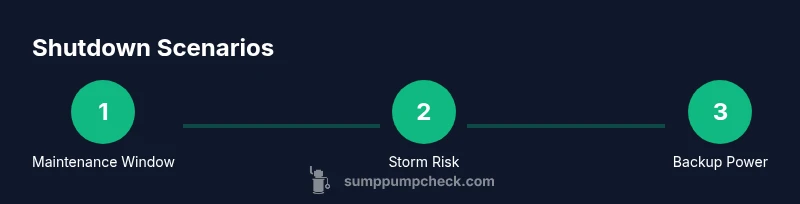
There are scenarios where turning off a sump pump for a short period is reasonable: routine maintenance, testing the float switch, replacing a failed discharge line, or when you have a verified backup drainage plan in place. Plan downtime during dry spells or outside storm forecasts. Keep in mind that even brief shutdowns should be followed by prompt reactivation to minimize flood risk. If you rely on a backup power source, you can coordinate shutdowns to perform maintenance while the primary system is offline. The key is to minimize the window of exposure to groundwater and rainwater; a well-timed shutdown reduces labor, but increases risk if misjudged.
Safer alternatives to turning off the pump
Instead of turning the entire system off, consider safer options: switch to a maintenance-only mode if your model supports it; use a backup sump pump during high-risk periods; improve drainage around the foundation; or install a check valve and ensure proper backflow prevention. Regular maintenance reduces the need for complete shutdowns. If you must reduce output temporarily, open a drain valve only if your plumbing setup allows and you know water levels will not back up into living spaces. These measures help protect your basement while you perform necessary work.
Understanding the risks of turning off during a storm
During heavy rain or rapid snowmelt, a sump pump may be your first line of defense against basement flooding. A shutoff during these conditions can lead to rapid water accumulation, higher hydrostatic pressure against foundation walls, and increased risk of mold and structural damage. Even with a backup pump, the lack of active pumping can overwhelm the system if inflow exceeds drainage capacity. According to Sump Pump Check, relying on continuous operation during wet weather is the safer approach in most homes.
How to safely turn off the sump pump for maintenance (overview)
For safety and clarity, this overview describes when and how maintenance can be performed without leaving the system off longer than necessary. Always start with a plan, confirm power is off before touching components, and re-test after restoration. This overview aligns with the more detailed STEP-BY-STEP instructions that follow and emphasizes minimizing water exposure and electrical risk during shutdowns.
Backup power and backups as a safety net
A proven way to avoid disasters when maintenance or testing is needed is to implement a backup power solution. A battery backup sump pump or a water-powered backup system maintains water removal if the primary unit is offline or during a power outage. Pair backups with a properly sized generator and a maintenance schedule to ensure readiness. Regular tests validate that backup components function when they are most needed.
Maintenance planning and schedules
Create a simple calendar for seasonal checks of float switches, check valves, discharge lines, and power connections. Test the pump after storms and after long periods of inactivity. Document findings so you can spot wear or failure early. A proactive maintenance routine reduces the likelihood that you must perform a prolonged shutdown during a rainstorm. The plan should align with local climate patterns and the reliability of your electrical supply.
Common myths and misconceptions
Myth: Turning off the sump pump saves energy. Reality: It can lead to water damage, which requires costly remediation. Myth: All sump pumps are the same. Reality: There are different float switches, basins, and discharge configurations that impact how you should service the unit. Myth: If water isn't present, the pump doesn't matter. Reality: Hidden moisture and groundwater can accumulate and cause mold and structural issues. Myth: Backup systems are too expensive. Reality: For many homes, a basic battery backup is affordable and adds essential resilience.
Electrical safety and building codes to know
- Always unplug the unit or switch off the circuit before performing internal checks.
- Use a GFCI outlet if possible, and never touch exposed wiring with wet hands.
- Ensure the sump pump area is dry and well-ventilated to prevent electrical hazards.
- Check local codes or HOA rules for any requirements and follow manufacturer recommendations. These precautions reduce risk during any maintenance or shutdown activity.
What to do during a power outage
If a power outage occurs, rely on a backup power plan to protect your basement. If you cannot access backup power immediately, consider temporary containment steps such as placing towels at known low spots and ensuring proper drainage. Do not assume a manual hand pump can substitute for a sump pump; power-assisted units are designed to handle typical groundwater inflow. After power restoration, test the system to confirm it's functioning correctly.
Do-it-yourself vs professional help
Minor maintenance tasks, such as cleaning the basin and checking the float, can often be done by homeowners following safety guidelines. However, more complex tasks—such as replacing a failed pump, rerouting discharge lines, or diagnosing electrical issues—are best left to licensed plumbers or professionals. A professional can ensure proper sizing, check-valve operation, and electrical safety compliance, reducing risk of future failures.
Authoritative sources and further reading
- Extension programs from state universities such as extension.illinois.edu and extension.umd.edu offer practical guides on moisture control, drainage, and sump pump maintenance.
- FEMA.gov provides flood safety and basement preparedness guidance.
- Local codes and manufacturer manuals provide installation and maintenance checklists to ensure up-to-date practices and guidelines.
Tools & Materials
- Non-conductive work gloves(Keep hands dry; handle electrical components safely)
- Flashlight or headlamp(Hands-free lighting preferred during maintenance)
- Bucket (galvanized or plastic)(For catching residual water from basin during service)
- Screwdriver set (flathead + Phillips)(Access covers and panel screws)
- Adjustable wrench(Loosen nuts or clamps on discharge or fittings)
- Voltage tester or multimeter(Verify power is off before touching wiring)
- Sump pump manual(Keep handy for model-specific steps)
- GFCI outlet tester(Ensure outlet safety for electrical checks)
- Backup power option (battery backup or generator)(Optional but recommended for outages)
- Rags/towels(Clean spills and dry area during maintenance)
Steps
Estimated time: 30-60 minutes
- 1
Confirm need for shutdown
Assess weather forecast, current water levels, and planned maintenance. If heavy rain is imminent, delay shutdown; otherwise proceed with clear goals and a defined safety plan.
Tip: Have a written checklist of tasks to complete while the pump is off. - 2
Power down at the circuit and unplug
Switch off the dedicated sump pump circuit at the breaker before touching any components. If the unit is hard-wired, disconnect power from the circuit by a qualified person.
Tip: Lockout/tagout if multiple people work on the system. - 3
Disconnect the pump from its outlet
Unplug the pump from its outlet or switch off the circuit again to ensure there is no voltage present in the cord. Do not touch the pump while it is wet.
Tip: Use a dry hand and stand on a dry mat. - 4
Inspect the basin and components
Check for debris, sediment, or blockages. Inspect the float switch, the check valve, and the discharge line for leaks or kinks.
Tip: Clean out debris to restore proper sensing and flow. - 5
Perform required maintenance
Clean the basin, test float operation, inspect the discharge line, and verify electrical connections are secure. Replace any worn parts per manufacturer guidelines.
Tip: Document wear and plan replacements before the next heavy rain. - 6
Reconnect power and test
Reconnect power, restore water flow, and observe the pump’s activation and shutoff cycle. Ensure it starts reliably and stops when water level is low.
Tip: Test under dry conditions first, then with a controlled water source. - 7
Monitor after restart
Observe performance for at least 24–48 hours during potential wet periods. Note any irregularities and address them promptly.
Tip: Keep a log of test results and water events.
FAQ
Is it safe to turn off a sump pump during a rainstorm?
Not usually. Turning off the pump during heavy rain increases flood risk. Only shut down briefly for maintenance, then re-enable promptly. If a backup system is in place, coordinate shutdowns with that plan.
Typically not safe during rain; shut down only briefly for maintenance and use backups as needed.
Can a backup sump pump run if the main unit is off?
Yes. A properly installed backup pump can operate independently, offering continued protection when the primary unit is offline or during a power outage.
Yes, backups can run when the main pump is off.
How long can I safely keep a sump pump off?
There is no universal safe duration. The safe window depends on weather, water inflow, and the home’s drainage. Keep shutdowns short and planned.
There’s no single safe time; keep it brief and planned based on conditions.
Should I test my sump pump if I turn it off for maintenance?
Yes. Follow manufacturer guidance to test after restoration. Do not test during active flooding; ensure conditions are safe.
Yes, test after you restore power to confirm proper operation.
Are sump pumps required to be on GFCI outlets?
Local codes vary, but using a GFCI outlet or equivalent protection is generally recommended to reduce electrical hazard. Check your area’s rules.
Check local codes; use GFCI protection where possible.
What maintenance reduces the need to shut off the pump?
Regular cleaning, checking the float, testing backups, and inspecting discharge lines reduce the frequency of shutdowns and prevent unexpected failures.
Regular maintenance lowers the chance you need to shut it off.
Watch Video
Top Takeaways
- Turn off briefly only for maintenance, not during heavy rain
- Safeguard with backups and regular testing
- Ensure electrical safety first and follow local codes
- Document maintenance and monitor after restart