How to Remove Pipe From Sump Pump: Step-by-Step Guide
Learn how to safely remove the discharge pipe from a sump pump, inspect connections, and prepare for reattachment or replacement with practical, homeowner-friendly steps.


Learn how to safely remove the discharge pipe from a sump pump, inspect fittings, and prepare for reattachment or replacement. This step-by-step guide covers safety, pipe types (PVC, ABS, or flexible hoses), and common mistakes to avoid, helping you prevent leaks and backflow during maintenance. Whether you're replacing a damaged section or cleaning a clogged line, follow these instructions carefully.
Why removing the discharge pipe matters
A sump pump discharge pipe directs water away from your foundation. If the path is blocked, misaligned, or damaged, backflow can occur, damp basements, and reduce pump efficiency. Removing the pipe is sometimes necessary to clean debris, inspect fittings, replace a damaged section, or adjust the discharge path to meet local drainage rules. According to Sump Pump Check, regular inspection of the discharge line is a cornerstone of dependable basement drainage and long-term pump health. In many homes, the hose or PVC pipe runs through a crawl space or along a wall to a sump pit or exterior discharge. Taking the pipe off the outlet briefly enables you to check for cracks, wear, or missing clamps. This step-by-step task should be performed with care, following safety guidelines to avoid injury and water damage. Always ensure you have a plan to restore proper drainage and prevent backflow after maintenance.
Sump Pump Check analysis underscores that a neglected discharge line is one of the most common sources of avoidable leaks. By understanding why this pipe exists and how it connects to the pump, you’ll make smarter decisions when maintenance becomes necessary. If you notice unusual damp spots near the discharge area or dripping at joints, plan a check sooner rather than later to protect your basement and foundation.
In short, removing the pipe is not about erasing a part of the system; it’s about gaining access for cleaning, inspecting, and ensuring the discharge path remains clear and correctly oriented. This reduces the risk of backflow and helps your sump pump run reliably when you need it most.
Tools & Materials
- Pliers or adjustable wrench(Used to loosen clamps and fittings without damaging plastic or metal components.)
- Bucket or tray(Contains any residual water to minimize spills.)
- Gloves and eye protection(Protects hands and eyes from sharp edges and splashes.)
- Measuring tape or ruler(Helpful to verify pipe lengths if replacement is needed.)
- Marker or tape(Label parts to aid reassembly.)
- Replacement pipe or extensions (optional)(Have on hand if you find damage or corrosion.)
- PVC primer and cement (only if pipe removal leads to re-gluing)(Use only if you are replacing joints and plan to glue PVC components.)
Steps
Estimated time: 40-60 minutes
- 1
Power down and secure the area
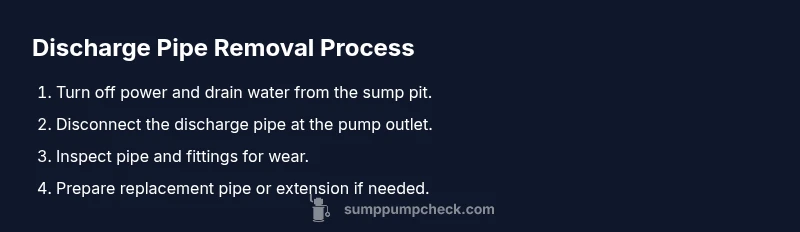
Before touching the sump pump, switch off the circuit breaker for the unit and unplug it if possible. This prevents accidental activation and reduces shock risk while you work. If water is present in the pit, drain it safely away from your body and nearby electrical outlets.
Tip: Tag the breaker to prevent someone from turning it back on while you work. - 2
Clear the work zone and gather materials
Move any stored items away from the sump pit and lay towels or a drop cloth. Place your bucket under the discharge area to catch any drips. Having everything ready reduces rushing and potential mistakes.
Tip: Having a plan reduces the chance of dropping parts down the pit. - 3
Loosen clamps and disconnect the pipe
Using the appropriate tool, carefully loosen the hose clamps or fittings at the outlet. Do not tug aggressively; disconnect incrementally to avoid cracking the pipe or damaging the pump outlet.
Tip: Support the pipe as you loosen fittings to prevent it from snapping back toward you. - 4
Label and set aside components
As you disconnect, label each piece (outlet, elbow, pipe length) with a marker. Keep clamps organized and arrange parts in the order you’ll reassemble. This step reduces errors during reattachment.
Tip: A quick photo with your phone can be a helpful reference. - 5
Inspect pipe and fittings for damage
Check for cracks, warping, or corrosion on the pipe and at each joint. If you see damage, plan to replace the affected section rather than forcing a connection. Damaged components are common causes of leaks and backflow.
Tip: If you’re unsure about a joint, set it aside and review your replacement options later. - 6
Decide on replacement or extension
If the pipe shows wear or you need to reroute drainage, decide whether to replace the segment or extend the discharge line. Use compatible materials (PVC with PVC, or approved flexible hose adapters).
Tip: Always use compatible connectors to avoid leaks. - 7
Clean and dry all connection points
Wipe down the outlet and pipe ends before reassembly. Remove any old sealant or debris that could prevent a tight seal. Allow time to dry if you’ve used solvent or primer.
Tip: Residual primer dries quickly; don’t rush the final connection. - 8
Reconnect and test the system
Slide the pipe back onto the outlet, secure with clamps, and restore power. Run water through the system or simulate sump pump operation to verify there are no leaks and that water is directed away from the foundation.
Tip: Observe all joints closely for the first minutes of operation.
FAQ
Do I need to unplug the sump pump before removing the pipe?
Yes. Power off the unit and unplug if possible to avoid the risk of electric shock while you handle water and metal components.
Yes. Power off the sump pump and unplug it before removing any pipe to stay safe.
What if the pipe is glued to the pump outlet?
If the pipe is glued, you should not force it free. Cut and replace the glued section or consult a professional to avoid damaging the pump outlet.
If it’s glued, don’t force it loose—cut and replace the section or call for help.
Can I reuse the same pipe after maintenance?
You can reuse if there’s no damage, but inspect for cracks and ensure joints seal properly. Replace any questionable parts.
Yes, reuse is possible if the pipe is undamaged and joints seal well.
How often should I inspect the discharge pipe?
Inspect the discharge pipe during routine sump pump maintenance, especially after severe weather or basement work.
Check the pipe during regular maintenance and after heavy rain events.
Is it safe to extend the discharge line outside my home?
Extending the line can be safe if done correctly with approved materials and proper slope away from the foundation; check local codes.
Extending is okay if you follow code and use the right materials.
What signs indicate I should replace the entire discharge system?
Look for persistent leaks, cracks at multiple joints, or reduced flow; these signs often mean replacing segments or the entire discharge path.
If you see repeated leaks or damage, replace the affected parts.
Watch Video
Top Takeaways
- Shut off power before touching the pump.
- Inspect all joints for wear and leaks.
- Use compatible pipe materials and fittings.
- Test the system after reassembly for leaks and proper drainage.