How to Remove Old Sump Pump: A Homeowner's Guide
A practical, safety-focused step-by-step guide to remove an old sump pump, prepare the pit for a new unit, and handle disposal and next steps with confidence.


Removing an old sump pump is a straightforward, safety-first project that clears space for replacement. Start by cutting power at the circuit breaker, then disconnecting the discharge line and wiring, and finally lifting the unit from the sump pit. This guide covers step-by-step actions, safety checks, and disposal tips to complete the removal confidently.
Overview: Why remove old sump pump and when to do it
If your sump pump is loud, leaks, or fails to keep the basement dry during heavy rain, it’s time to consider removing the old unit and planning a replacement. Removing an outdated pump reduces the risk of sudden flooding and simplifies renovations, especially when prepping for a battery-backup system or a modern submersible pump. The phrase how to remove old sump pump is common in DIY forums, and with proper precautions it’s a doable weekend project for a competent homeowner. According to Sump Pump Check, aging pumps are more prone to clogging and inefficiency, which can drive up energy use and maintenance costs. Before you begin, ensure you have a clear path to the pit, a place to store the old unit, and a plan for disposal or reuse. This guide emphasizes safety, organization, and clear labeling so you can remove the old pump and move on to installation of a modern, more reliable unit.
In addition to the physical removal, consider future-proofing your setup. A responsible upgrade often involves confirming you will replace the unit immediately or have a backup plan (such as a battery backup or water-powered backup) in place to protect against power outages. By planning ahead, you avoid gaps in basement protection and unnecessary downtime.
Safety first: power, water, PPE, and codes
The removal of a sump pump involves electrical, plumbing, and potential water hazards. Always prioritize safety to prevent electric shock, flooding, or accidental injuries. Start by turning off power at the circuit breaker dedicated to the sump pump, and verify there is no voltage present before you touch any cables. Wear eye protection, waterproof gloves, and sturdy footwear. Keep a dry work area and have towels or a bucket ready in case of minor leaks. If your system is hardwired rather than plugged, you may need to disable the circuit at the service panel and consult a licensed electrician. Local codes may require a permit for certain installations or replacements; check with your municipality before removal if you plan to replace the unit or modify the pit. The Sump Pump Check team emphasizes adherence to safety practices and proper disposal rules to protect both people and property.
With power secured and PPE in place, you’ll be prepared to proceed with confidence and minimize the risk of shock or water exposure during the removal.
Planning and pit assessment: measure clearance, plan disposal, and check local rules
A successful removal starts with a clear plan. Inspect the sump pit for clearance around the pump, check for corrosion on mounting hardware, and note the routing of the discharge line to ensure the new unit will fit in the same space. Confirm the unit’s diameter and height so it can be removed without damaging the pit walls. Review the discharge pipe layout to determine if any changes are needed for the replacement pump. If you intend to recycle or dispose of the old pump, verify local electronics recycling rules or municipal waste guidelines. Sump Pump Check’s analysis shows disposal options vary by region, so plan accordingly and avoid placing the old pump with regular trash. Prepare a dedicated workspace, have garbage bags for small components, and arrange for a partner to help with lifting heavy parts.
A well-planned removal reduces surprises during the process and ensures you’re ready to install a new pump right away or schedule a replacement service.
Tools and PPE you'll need
Before you start, assemble the essential tools and safety gear in a dedicated container near the pit. The right tools reduce time and effort and help prevent damage to pipes or electrical components. Typical items include a screwdriver set, adjustable wrench, channel-lock pliers, utility knife, socket wrench, and a hand saw if you need to trim any piping. Non-slip footwear, rubber gloves, and safety goggles should be worn at all times. A flashlight or headlamp helps you see inside the pit, especially if the space is dim. Have a bucket and towels handy for minor leaks, and a trash bag or container for disposing of old components. If your setup uses a check valve, you may need to replace or bypass it during removal. Having these tools ready keeps the process smooth and minimizes the risk of accidents.
Step-by-step: preparing to remove old sump pump
The following steps guide you through a safe, thorough removal. Each step is designed to minimize water exposure, protect electrical connections, and keep components organized. The process assumes a typical basement sump pump with an accessible pit and a discharge line routed to an exterior drain. If your installation differs (concrete pit, crawl space, or a battery backup system), adapt the steps accordingly and consult a professional if you encounter obstacles.
Step-by-step: power down and unplug
- Locate the circuit breaker that feeds the sump pump and switch it off, then unplug the pump from its outlet if it is plug-in. 2) If the pump is hardwired, contact a licensed electrician to safely disconnect the power. 3) Use a non-contact voltage tester to confirm no electricity is present at the pump, its outlet, and the wiring near the pit. 4) If the area is damp, dry the surface and keep children and pets away. 5) Label the wires or disconnect using color-coded tape to avoid confusion during disposal or replacement. This step reduces shock risk and ensures you can proceed safely with the removal.
Tip: If you’re unsure about electrical disconnection, pause and consult a professional. Safety comes first, and it’s better to delay than risk injury.
Step-by-step: disconnect discharge line and electrical connections
- Trace the discharge line from the pump to its exit point. 2) Undo any clamps or fittings attaching the pipe to the pump flange. 3) If a check valve is present, remove or set it aside for reuse with the new unit. 4) Keep the discharge line accessible and note any changes you’ll need to make for the replacement pump. 5) IfFlexible hose or PVC piping is used, cut only as needed and avoid damaging the wall or floor. This step prevents water backflow and simplifies installation of the new pump.
Step-by-step: remove the pump from the sump pit and prepare for disposal
- With a second person’s help, loosen and remove the mounting bolts or screws securing the pump. 2) Gently lift the pump from the pit, supporting the weight to avoid dropping it on pipes or walls. 3) Place the unit in a designated container or work surface for transport and disposal. 4) Inspect the pit for any debris, and remove stones or sediment that could obstruct the new pump. 5) Wipe the pit and surrounding area dry and verify you have a clean space to install the replacement.
Step-by-step: post-removal checks and disposal planning
- Check the discharge pipe for cracks or leaks, and plan replacement routing if you will install a new pump. 2) If you’re disposing of the old pump, consult local electronics recycling guidelines or household hazardous waste programs. 3) Review any local disposal restrictions and schedule pickup if required. 4) Compare notes from the removal with your replacement plan to ensure compatibility and proper fit. 5) Store or label removed components for later reuse or recycling. This stage ensures a clean slate for your new pump and avoids cross-contamination or debris in the pit.
Tools & Materials
- Circuit breaker or main power switch(Label and lockout/tagout if possible)
- Non-contact voltage tester(Verify no power present before touching wires)
- Insulated screwdriver set(Different screws may be used on pump housing)
- Adjustable wrench(For loosening bolts on flange and pipes)
- Channel-lock pliers(Use on clamps and fittings)
- Utility knife(Trim insulation or pipe material if needed)
- Bucket and towels(Contain residual water during removal)
- Goggles and gloves(Waterproof PPE for splash protection)
- Trash bag or disposal bin(Contain removed components for transport)
- Flashlight or headlamp(Improve visibility inside the pit)
- Replacement check valve (optional)(Have on hand if the new pump requires it)
Steps
Estimated time: 60-90 minutes
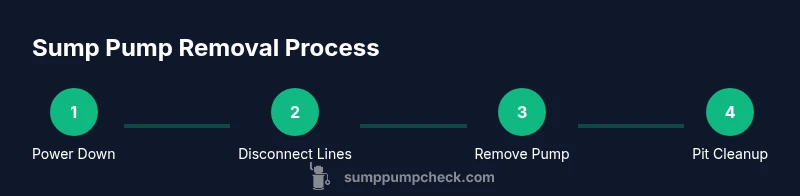
- 1
Power down and unplug
Locate the sump pump circuit, switch off the breaker, and unplug the unit if it is plug-in. If hardwired, arrange for a licensed electrician to disconnect. Confirm no voltage with a tester and keep the area dry.
Tip: Use a lockout/tagout method to prevent accidental re-energizing. - 2
Disconnect the discharge line
Trace the discharge line to its exit and disconnect any clamps or fittings from the pump flange. Remove any check valve if you plan to reuse it with the new pump. Keep track of pipe orientation for easier reinstallation.
Tip: Take photos of the setup before disassembly to guide future installation. - 3
Remove the pump from the sump pit
Loosen mounting bolts or screws, then lift the pump straight up with a partner if it's heavy. Place it in a safe container or on a towel-lined surface to avoid damage to the pit and pump.
Tip: Avoid tilting the pump sideways to prevent spilling water into the pit. - 4
Inspect and prepare for disposal
Check the pit for debris and wipe it clean. Decide disposal method for the old pump according to local regulations and recycle options. Document any found issues for your records and future maintenance.
Tip: If local rules require drop-off, schedule a pickup or drop-off time ahead of disposal.
FAQ
Do I need to drain the pit before removing the pump?
Draining helps keep the work area dry and reduces splashing. If water remains, use a bucket or siphon carefully to remove excess water while protecting electrical components.
Yes, drain the pit if possible to reduce splashing; use caution around electricals.
Can I remove the sump pump without turning off the power?
No. Always shut off power at the breaker and verify no voltage before handling wiring or the pump. This prevents shock and damage.
Always power off first; never touch live components.
What should I do with the old discharge pipe after removal?
Cap or seal the pipe to prevent debris from entering the system and plan its routing for the replacement pump.
Seal the pipe and plan replacement routing.
Is it safe to disconnect electrical wiring myself?
Only if you are confident and understand the wiring. If in doubt, hire a licensed electrician to avoid shock and code violations.
If unsure about wiring, hire a licensed electrician.
How should I dispose of an old sump pump?
Check local electronics recycling or hazardous waste programs. Many municipalities accept old pumps for proper recycling.
Recycle the old pump per local rules.
Should I replace with a battery backup pump right away?
Upgrading to a battery backup pump is a wise choice, especially in outage-prone areas. It provides protection during power failures.
A battery backup is a smart upgrade for outages.
Watch Video
Top Takeaways
- Power down before handling any pump components.
- Label and photograph connections for future reference.
- Dispose of the old pump following local electronics recycling rules.
- Inspect the pit for debris and plan for a proper replacement.