Can You Pour Water in Sump Pump? A Practical Testing Guide
Discover whether you can pour water into a sump pump, and learn safe testing methods plus maintenance tips to keep your basement dry and flood-free.


Yes—pouring water into a sump pump is a legitimate test to confirm activation and proper discharge. Use clean water and only when the sump pit and its power are safe to access. This test checks the float switch, the pump, and the discharge line; stop if you hear grinding, see leaks, or water backs up.
What pouring water into a sump pump demonstrates
For homeowners asking can you pour water in sump pump, the answer is generally yes—it's a controlled test rather than everyday use. The goal is to confirm the pump engages when water reaches the sump, the float switch triggers, and the discharge line carries water away from the foundation. Use only clean water and do not overfill. This test helps verify several moving parts work together: the float, the switch that starts the motor, and the check valve that prevents backflow. Observing a smooth start, steady flow, and no unusual noises provides reassurance that your system will respond during a real flood event. If anything seems off—delayed activation, grinding sounds, or water staying in the pit after the pump runs—treat it as a warning sign and stop the procedure to inspect or call a professional. Document the outcome, especially before heavy rain seasons, so you can compare performance over time.
Core components that influence this test
A sump pump system is a small powerhouse with several key parts that determine how pour-water tests behave. The float switch senses rising water and triggers the motor; a failing float may not start the pump. The primary pump moves water from the pit to the discharge pipe, and the check valve prevents backflow from the discharge line into the pit. The discharge pipe and any elbows should be clear and directed away from walls or windows. In addition, the power supply and, ideally, a GFCI outlet protect against shocks. If you notice a loose power cord, damaged cord insulation, or a corroded check valve during inspection, address those issues before attempting a test. Understanding how each component works helps you interpret the results accurately and decide whether a repair is needed.
Safety considerations before you start
Working with water and electricity requires caution. Always ensure the area is dry, the sump lid is in place, and there are no kids or pets nearby during testing. Use a GFCI-protected outlet and keep a nearby dry towel or bucket to catch minor spills. Wear eye protection and gloves, especially if you handle the sump cover. Never reach into the pit while the pump is energized. If you notice damaged wiring, scorch marks, or a burning odor, stop immediately and unplug the unit. After the test, store tools away and ventilate the basement to minimize humidity. Following these precautions reduces the risk of electric shock or water damage.
Tools, environment, and pre-checks you need
Before pouring water, confirm your environment is suitable for a test. The area should have adequate lighting, a stable surface, and room to move around the sump pit. Ensure the discharge area is clear and the exterior outlet is weather-protected. Gather basic tools: a flashlight, gloves, a bucket or pitcher of clean water, and a non-contact voltage tester. Keep a spare towel or absorbent pads handy for any splashes. If your sump is on a timer or connected to other equipment (dehumidifier, heater), note their operation to avoid conflicting signals during testing. Having everything ready saves time and reduces environmental risk.
Step-by-step overview of the water test
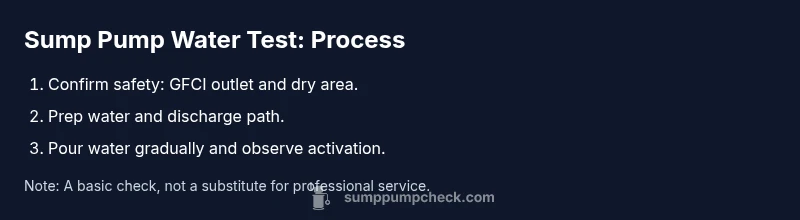
This overview frames the procedure so you can follow the formal step-by-step guide in the next section. The process involves a controlled pour, close observation of the float switch and motor, and verification that water exits via the discharge line without backflow. Plan for a 20–30 minute session and avoid rushing the pour. By keeping water quantity modest and the pit calm, you can pinpoint where issues may arise—whether the switch sticks, the pump hums without lifting water, or the discharge line leaks.
Common mistakes and how to avoid them
Common mistakes include using hot or dirty water, pouring too quickly, or overlooking safety steps. Always use room-temperature, clean water and pour slowly in small increments. Don’t ignore the lid—leaving it off can slow drainage or invite debris. Never test with power off if you need to confirm activation; however, always perform inspections with appropriate safety precautions. Document any odd noises, stalls, or backflow for reference and maintenance.
Interpreting results and next steps
If the pump activates smoothly and discharges within the expected path, the test confirms baseline operability. If activation is delayed or water backs up, inspect the float alignment, clean the discharge path, and check for blockages. If issues persist, consult the manual or a professional plumber. For a basement prone to moisture, compare test results seasonally to detect gradual changes over time.
Maintenance after testing
After testing, wipe down the sump area, reseal the lid, and inspect the discharge line for leaks. Schedule a periodic maintenance check every 6–12 months, or after major rainfall. Keep a log of test outcomes and any parts that were adjusted. A small routine now can prevent big flood problems later.
Tools & Materials
- Clean water(Room temperature; use a clean container; avoid additives)
- Bucket or pitcher(To transport water to the sump pit without spilling)
- Gloves(Protect hands from sharp edges and moisture)
- Flashlight(Inspect pit, float, and discharge path clearly)
- Non-contact voltage tester(Check for safe power during setup)
- Towels or absorbent pads(Clean spills and keep area dry)
- Sump pump manual(Reference for model-specific instructions)
- Safety glasses(Additional eye protection if splashes are expected)
Steps
Estimated time: 20-30 minutes
- 1
Prepare area and safety gear
Clear the space around the sump pit. Put on gloves and safety glasses, and have a towel handy. Ensure the area is dry and free of clutter to prevent slips during testing.
Tip: Have a helper if possible and keep a dry path to the exit. - 2
Verify power and safety devices
Plug the sump pump into a GFCI outlet and confirm the outlet trips are functional. Avoid touching metal parts while the system is energized.
Tip: Keep a non-contact tester nearby to confirm live status before touching anything. - 3
Check discharge path clearance
Ensure the discharge line is clear, properly directed away from walls, and free of kinks. A blocked discharge prevents testing from meaningfully simulating a flood.
Tip: If you notice backflow, inspect the check valve for proper sealing. - 4
Pour water into the pit gradually
Begin with 1–2 gallons and observe how the float responds. Stop if the water level rises too quickly or if you hear odd noises.
Tip: Pour slowly and watch the float rise smoothly. - 5
Observe activation and discharge
Watch for the float triggering the motor and the water leaving through the discharge pipe. Note any delayed activation or stalling.
Tip: If there’s no activation within a minute, pause and recheck power and connections. - 6
Return to normal and verify dryness
Unplug if you need to inspect, then reset the area and test again in a controlled manner or proceed with regular operation.
Tip: Document the outcome and compare with future tests.
FAQ
Can I pour water into a sump pump to test it?
Yes. Pouring water into the sump pit is a common testing method to confirm activation and discharge. Use clean water and follow safety steps to avoid shocks or spills.
Yes. This is a common testing method, but use clean water and follow safety steps.
How much water should I pour for the test?
Start with 1–2 gallons and observe the float and pump response. Add more gradually if needed, but never overwhelm the pit.
Start with 1–2 gallons and add more gradually if needed.
What should I do if the pump doesn’t activate?
Check power at the outlet, ensure the float is free to move, inspect the discharge path for blockages, and verify the check valve isn’t stuck. If unresolved, consult a professional.
Check power, float, and discharge path; if it still fails, contact a pro.
Is it safe to pour hot water or dirty water?
Avoid hot or dirty water; use clean, room-temperature water to prevent damage to seals and minimize debris in the pit.
No—use clean, room-temperature water to avoid damage.
How often should I test my sump pump maintenance?
Seasonally or after heavy rainfall; more frequent checks help catch wear and potential failure early.
Test seasonally or after heavy rain to catch wear early.
Can testing replace professional maintenance?
Testing is a diagnostic step, not a substitute for professional service. Schedule pro inspections for complex issues or unusual noises.
Testing helps diagnose, but professional service may be needed for complex problems.
Watch Video
Top Takeaways
- Test with clean water and safe power setup
- Watch float switch and discharge flow closely
- Address any signs of failure quickly
- Document results for future reference
- Schedule regular maintenance checks