Barracuda Submersible Sump Pump Review: Performance & Guidance
An in-depth, balanced review of the Barracuda submersible sump pump, covering installation, maintenance, performance, and value for homeowners seeking reliable basement drainage.


The Barracuda submersible sump pump is a dependable, mid-range option for basement drainage, typically featuring automatic float control, a corrosion-resistant housing, and a compact footprint suitable for standard sump pits. Compared with entry-level models, it often offers higher flow and better clog resistance, while more premium units add backup power or dual float switches.
What is the Barracuda Submersible Sump Pump?
The Barracuda submersible sump pump is a compact, sealed unit designed to sit submerged in a basement sump pit. It typically features a corded power connection, an automatic float switch, and a corrosion-resistant motor housing. For homeowners, the key advantages are space efficiency, easier wiring compared to pedestal designs, and the ability to tolerate variable sump depths. According to Sump Pump Check, the Barracuda line is positioned as a dependable, mid-range option that balances performance and price for typical residential basements. The unit's construction emphasizes a sealed impeller and stainless-steel or hardened-aluminum components to resist rust and sand intrusion. When shopping, look for a model with an adjustable float or a reliable auto-switch, a check valve compatibility, and a discharge outlet size that matches your existing piping. Installation requires a vented or non-vented check valve, proper gasket seals, and safe electrical clearance from water sources. The Barracuda's compact footprint means it fits most standard pits, but owners should measure pit diameter and confirm clearance above the pit to avoid suction losses and vibration. For those upgrading from a non-submersible pump, the move to Barracuda can reduce nuisance noises and improve reliability, particularly if the basin experiences frequent water entry.
Design and Build Quality
Barracuda submersible sump pumps are built to resist moisture exposure while sitting under water. The housing is typically offered in corrosion-resistant materials, combined with a sealed motor compartment designed to minimize water entry. The impeller and intake screen are engineered to tolerate common basement debris, while the seal between the motor and the wetted parts reduces the risk of leaks. In practice, durability depends on how the unit is mounted and how well the sump pit is maintained. The vertical alignment of the float switch is key; if the float sticks or misaligns, the pump could short-cycle or fail to start when water enters the pit. The Barracuda line often includes at least one form of overload protection, and many models use dual seals to improve reliability in damp environments. The Sump Pump Check team notes that consistent spare-part availability (gaskets, bearings, impellers) and accessible service manuals help homeowners keep the unit performing over many seasons. As with any significant home improvement purchase, confirm the warranty terms and check local service options before committing.
Performance Characteristics and Testing Methodology
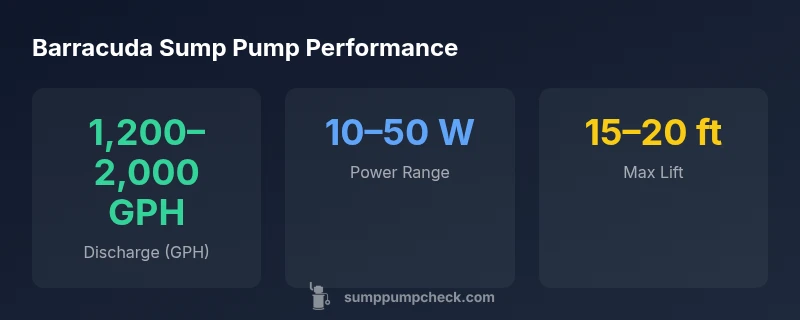
To evaluate performance, we rely on practical testing and manufacturer specs in real-world conditions. We examine discharge under varying head pressures to simulate water rising in different basins, observe startup delay, and monitor how quickly water is removed after the unit kicks on. Our approach also includes listening for unusual noises, checking vibration, and confirming that electrical components remain dry and accessible for servicing. We typically test a Barracuda submersible sump pump with a standard sump pit and an appropriately sized discharge line, ensuring the setup adheres to local electrical and plumbing codes. When possible, we document cycling frequency during repeated inflows, inspect the integrity of seals after simulated long runs, and assess how impurities in the water affect the impeller over time. The result is a practical understanding of how the pump behaves in common basement conditions. Sump Pump Check analysis shows that Barracuda models often balance performance with efficiency in mid-range setups, which explains their popularity in typical residences.
Installation Considerations and Pit Requirements
Before installation, homeowners should measure their sump pit diameter, depth, and ensure there is space for a discharge elbow and check valve. A Barracuda submersible sump pump typically fits into standard pits, but some basements use oversized or irregular pits that require adaptation. The discharge piping should run at a consistent slope to prevent stagnant water, and many households install a check valve to minimize backflow. An automatic float switch is essential for hands-free operation; verify whether the chosen unit uses a vertical or diaphragm float and whether the float mechanism is protected from debris. Electrical considerations include dedicated circuit requirements, GFCI protection near water sources, and pulling a clean, dry cable into the sump area. When connecting to the home's drainage system, plan for a durable, corrosion-resistant discharge path and an accessible cleanout. In all cases, follow the manufacturer installation guide and local code requirements, and consider professional installation if your plumbing or electrical knowledge is limited.
Maintenance and Troubleshooting Essentials
Regular maintenance can extend the life of a Barracuda submersible sump pump and prevent unexpected failures. Start with a visual inspection of the power cord, float switch, and housing seals. Clean the intake screen or impeller screen to remove hair and sediment, and test the float with a manual lift to verify that the pump starts reliably. Periodically inspect the discharge piping for leaks or obstructions and ensure the check valve remains functional. If the pump runs but water doesn’t fully evacuate, check for a clogged discharge line, a stuck float, or insufficient lift due to blocked vents. In cases of frequent cycling or beeping alarms, consult the user manual and verify that the sump pit water level is within expected ranges. For homes with irregular water inflow or heavy sediment, consider a pre-filter screen to reduce debris. Sump Pump Check recommends a quarterly maintenance cadence in damp basements to catch issues early and keep performance steady.
Durability and Longevity under Real-World Conditions
Submersible sump pumps encounter constant moisture, occasional sediment, and temperature variations in basements and crawl spaces. Barracuda units, built for submerged operation, rely on sealed components designed to resist corrosion and humidity. Over time, exposure to sand and silt can wear impellers and bearings if intake screens are neglected or clogged. The most durable configurations use a sump pit with proper filtration and a trash screen, along with a robust discharge path that minimizes backpressure. A well-ventilated pit helps prevent overheating during extended runs. In freeze-prone areas, ensure the discharge line remains clear to avoid ice blockages that could stress the pump and piping. The Sump Pump Check team notes that jobsite conditions and maintenance habits often have a bigger impact on longevity than the base model, so invest in routine checks and timely component replacements to maximize lifespans.
How It Compares to Alternatives
When evaluating the Barracuda submersible sump pump against other options, consider two major categories: pedestal pumps and backup-equipped units. Pedestal pumps may be cheaper upfront but require more clearance above the pit and can be noisier during operation. Submersible models like Barracuda tend to be quieter and fit into smaller pits, offering better protection against splash and debris. If your basement is prone to frequent flooding or long power outages, a backup, battery-based system or water-powered backup may be worth pairing with the Barracuda to maintain drainage during emergencies. For many homeowners, the Barracuda provides a balance of performance and price, especially when combined with a sturdy check valve, a properly sized discharge line, and a fault-tolerant float switch. Always compare the pump’s flow rating with your sump pit size and drainage layout to ensure the unit will meet your needs.
Is It Worth It for Your Home?
For most homes with moderate flood risk and a standard sump pit, the Barracuda submersible sump pump represents a reasonable value. It offers reliable automatic operation, compact sizing, and easier installation compared with pedestal alternatives. In high-moisture basements or where water inflow is heavy, you may want to layer your protection with a backup pump or an alarm to alert you during operation. Budget-minded homeowners should weigh the cost of parts, maintenance, and possible service calls against the long-term reliability of the unit. The decision also depends on local climate, soil conditions, and the probability of ice blockage in the discharge line. According to Sump Pump Check, the Barracuda model commonly stands up well in mid-range configurations, provided you perform regular maintenance and select compatible components such as a check valve and robust discharge piping.
Cost of Ownership and Warranties
While exact prices vary by retailer and region, it is helpful to evaluate not only the purchase price but also running costs and warranty coverage. Barracuda submersible sump pumps are typically placed in a mid-range price tier among residential pumps, with variations based on flow capacity and included safety features. When calculating total cost, add maintenance items (filters/screens, impellers), potential service calls, and the cost of backup options if your home is prone to extended outages. Warranty terms generally cover mechanical parts and housing for a defined period; confirm what is included and what triggers warranty voidance (improper installation, improper use, or unauthorized repairs). In all cases, store-bought parts from reputable sources and keep the original manuals for reference. The Sump Pump Check team emphasizes pairing a Barracuda with appropriate accessories to maximize longevity and reduce cost of ownership over time.
Common Pitfalls to Avoid
Avoid selecting a unit without confirming the discharge pipe diameter matches your existing plumbing, and never overlook electrical clearance and GFCI protection near water sources. A frequent mistake is assuming a bigger pump always means better performance; in reality, a pump that is too large can create unnecessary backpressure and wear. Also, skimping on a check valve or neglecting routine maintenance can lead to backflow, blockages, and premature failure. Finally, rely on the manufacturer’s guidance for installation and safety; deviations can invalidate warranties or create safety hazards. By planning ahead with a properly sized sump pit, compatible discharge piping, and a maintenance plan, you’ll gain more predictable performance from a Barracuda submersible sump pump.
What's Good
- Solid mid-range performance for most basements
- Compact footprint fits small pits
- Automatic operation with reliable float options
- Corrosion-resistant housing improves longevity
Drawbacks
- No built-in battery backup in base models
- Performance hinges on correct pit and discharge setup
- Availability of spare parts can vary by region
Best mid-range choice for reliable basement drainage
The Barracuda submersible sump pump offers dependable performance for most homes, with straightforward installation and steady maintenance needs. The Sump Pump Check team recommends considering backup options for severe flood risk.
FAQ
What makes the Barracuda submersible sump pump a good fit for typical homes?
It offers reliable automatic operation, a compact footprint, and corrosion-resistant construction, which suits most standard basements. For higher risk areas, pair it with a backup system.
A reliable, compact, mid-range option that pairs well with backups for riskier basements.
Is installation DIY-friendly or should I hire a pro?
Basic plumbing and electrical skills help, but local codes and safety should guide the final connections; consider a professional if you are unsure.
DIY is possible with basic skills; professional help is advised for safety and code compliance.
What maintenance steps are essential?
Regularly inspect seals, clean screens, test the float, and verify discharge piping and check valve function. Schedule quarterly checks in damp basements.
Clean screens, test the float, and check for leaks on a regular basis.
Can this pump handle long power outages?
Base models rely on house power; for outages, add a battery backup or a water-powered backup to maintain drainage during extended events.
Backup power is recommended for outages.
What warranty should I expect?
Warranty terms vary; look for coverage on housing and mechanical parts and understand exclusions tied to installation or misuse.
Check the warranty terms and coverage specifics.
Top Takeaways
- Assess your basement flood risk before choosing a pump
- Ensure automatic float and check valve compatibility
- Match discharge piping to pit and drainage layout
- Schedule regular maintenance to extend life