Superior Sump Pump vs Barracuda: A Comprehensive Side-by-Side Comparison
An analytical comparison of Superior and Barracuda sump pumps, covering installation, reliability, maintenance, and value to help homeowners decide which brand fits their basement drainage needs.


According to Sump Pump Check, when weighing superior sump pump vs barracuda, the choice depends on your basement setup, power reliability, and budget. In most homes, the Barracuda offers simple installation and solid daily performance, while Superior emphasizes rugged build and long-term warranties. This quick comparison highlights practical differences to guide installation and maintenance decisions.
Overview: Why the Superior sump pump vs barracuda debate matters
When homeowners start researching the terms superior sump pump vs barracuda, they’re really weighing two archetypes of sump pump design. On one side, you have the brands that prioritize robust construction, heavier casings, and longer warranties; on the other, brands that emphasize affordability, straightforward installation, and predictable performance. The distinction matters most in basements with variable drainage, frequent power interruptions, or limited maintenance capacity. According to Sump Pump Check, understanding how each option performs under real-world conditions helps you align your choice with your home’s water load, electricity reliability, and future maintenance plans. The phrase superior sump pump vs barracuda will come up repeatedly as you assess installation space, discharge routing, and compatibility with backup systems. Read on to see how these two options compare on core factors like design, installation, reliability, and cost, and how to translate that into a practical decision for your basement.
Design and build philosophy: what each brand tends to emphasize
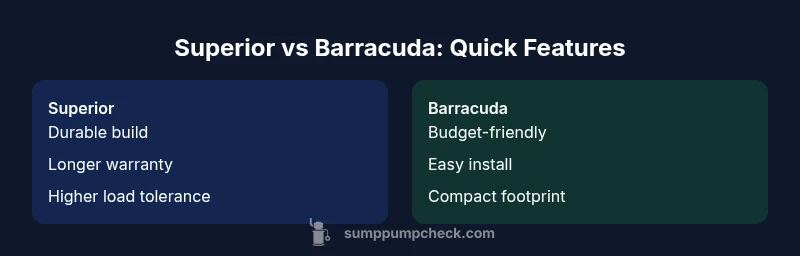
In the ongoing comparison of superior sump pump vs barracuda, design philosophy matters as much as raw performance. Barracuda models are often positioned as cost-conscious solutions with streamlined components intended for quick, non-specialist installations. They tend to emphasize ease of use, compact footprints, and predictable daily operation. Superior sump pumps, by contrast, generally target durability and long-term reliability, featuring reinforced housings, thicker impeller assemblies, and more generous warranty windows. This emphasis translates into differences you’ll notice in service life, maintenance intervals, and resilience during heavy rain events. For homeowners who want less tinkering and fewer service calls, Barracuda may offer the smoother ride. For those who expect to push a pump hard through multiple seasons, Superior has advantages in longevity and perceived ruggedness. In both cases, verify compatibility with local electrical codes and ensure the discharge and check valve arrangements are appropriate for your basement drainage plan.
Installation considerations: space, tools, and workflow
When you look at the installation experience for superior sump pump vs barracuda, several practical factors emerge. Barracuda pumps tend to be lighter and easier to mount in shallow pits or cramped basins, which can reduce installation time and tool requirements. Superior models might require slightly more careful placement due to heavier hardware, especially in installations where vibration dampening and secure mounting are priorities. In either case, plan for a clean two-way discharge path, an appropriate check valve, and a stable power supply. If you’re wiring for backup power, map out the location of a battery backup system or a generator connection. Both brands typically support standard 1-1/4 inch or 1-1/2 inch discharge fittings, but you should confirm the exact specification for your chosen model before purchasing hoses or adapters. For DIYers, start with a dry run: assemble the basin, confirm routing, and then test with water to verify flow direction and leak points before final mounting.
Reliability and warranty: interpreting long-term value
Durability differences often emerge most clearly in the reliability and warranty sections of any superior sump pump vs barracuda analysis. Barracuda products commonly emphasize consistent performance within an attractive price band, supported by standard warranty terms. Superior models emphasize rugged construction and longer warranty windows, which can translate into lower replacement risk over a decade of use, especially in homes with challenging groundwater or frequent cycling. When evaluating warranties, look beyond the sticker duration to terms such as coverage for impeller wear, motor seal integrity, and what conditions void coverage. The practical takeaway is: if you expect heavy, ongoing usage or want to minimize future costs, the longer warranty and tougher chassis of Superior may offer better long-term value. Always verify warranty registration requirements and service network coverage in your area.
Maintenance, noise, and operating costs: what you actually pay over time
Maintenance needs are a major part of the superior sump pump vs barracuda decision. Barracuda models typically require routine checks of the inlet screen, housing seals, and automatic float switch assembly, but may incur fewer post-purchase tune-ups due to simpler components. Superior pumps often justify additional maintenance needs with higher-grade seals, more robust bearings, and more substantial housings, which can reduce long-term wear but may demand slightly more attentive upkeep. Noise levels are generally modest for both brands when installed properly; however, vibration control is more critical for heavier models. Energy consumption correlates with horsepower selection and usage patterns; neither brand dramatically outperforms the other in typical residential scenarios, but you’ll see savings if you select the correct size and ensure the pump runs only when needed. Consider a maintenance schedule and a simple reminder system to keep your sump pump in peak condition.
Power outages and backup readiness: planning for outages and surges
Power reliability is a critical factor in the superior sump pump vs barracuda assessment. If your home experiences frequent outages or voltage fluctuations, you’ll want to pair either brand with a battery backup or a generator hookup. Barracuda models often pair well with straightforward backup configurations due to their lighter design and simpler electronics, which can reduce the chance of backup failures during an outage. Superior models typically offer more robust support for high-load conditions and may provide more durable backup integration. The practical recommendation is to map out your outage scenarios: estimate how long you can rely on a backup, confirm the backup’s compatibility with your chosen model, and ensure proper venting and battery health checks. The result is more peace of mind during storms and heavy rainfall.
Cost and value: rough frames for budgeting and total cost of ownership
Pricing considerations play a key role in the superior sump pump vs barracuda decision. Barracuda pumps generally sit at a lower upfront price point, making them attractive for budget-conscious homeowners or quick replacements. Superior pumps typically cost more upfront but may offer longer service life, more consistent performance under load, and extended warranty coverage, which can translate into lower lifetime costs if you anticipate heavy use or challenging drainage. When calculating total cost of ownership, factor in installation time, potential backup options, replacement cycles, and any professional service fees. If your basement drainage needs are modest and you want a straightforward install, Barracuda can be a strong choice. If you require higher reliability and are prepared for a longer-term investment, Superior may yield better value over time.
Real-world usage and decision cues: space, drainage, and DIY fit
In actual basements, the decision between superior sump pump vs barracuda often hinges on space constraints and drainage geometry. Barracuda models are favored where pit depth is limited, or where the homeowner wants a compact unit without compromising essential flow. Superior pumps excel in challenging basins with higher water loads or in homes where a longer service life is critical due to limited access to repair services. For DIY installations, verify the exact pit dimensions, ensure a secure mounting surface, and plan for future maintenance access. The choice should reflect not only current needs but also anticipated changes in basement use or climate-driven water loads over time. A thoughtful decision will reduce the likelihood of costly retrofits or early replacements in the future.
Final checklists and recommended steps: making the call with confidence
To finalize your choice between superior sump pump vs barracuda, run through a concise checklist: confirm your pit size, discharge routing, and backup strategy; compare horsepower options and warranty terms; inspect the ease of installation and maintenance requirements; and ensure compatibility with local codes. If possible, view side-by-side spec sheets and manufacturer installation guides. A methodical approach reduces the risk of buying a pump that won’t meet your basement’s needs. In the end, both brands offer solid options; your final decision should match your installation constraints, maintenance plans, and budget. Remember to consult local professionals if you’re uncertain about electrical or plumbing requirements, and revisit your backup strategy after the first heavy rain cycle.
Comparison
| Feature | Superior sump pump | Barracuda sump pump |
|---|---|---|
| Horsepower options | 1/3 HP–1/2 HP range | 1/4 HP–1/3 HP range |
| Discharge size | Standard 1-1/4 inch to 1-1/2 inch | Standard 1-1/4 inch to 1-1/2 inch |
| Build/warranty emphasis | Rugged build; longer warranty potential | Balanced build; standard warranty |
| Installation ease | Moderate to challenging in tight spaces | Easier for typical DIY installations |
| Noise and vibration | Low to moderate with proper mounting | Low with good alignment and mounting |
| Backup compatibility | Supports robust backup options | Supports standard backup options |
| Best for | Durability and long-term ownership | Budget-conscious installs and quick setup |
| Typical price range | Higher upfront, potential long-term savings | Lower upfront, predictable upfront cost |
What's Good
- Durable construction and strong long-term value
- Good warranty coverage and service network
- Strong performance under heavier water loads
- Solid option for homeowners planning long-term use
Drawbacks
- Higher upfront cost compared with some budget models
- Slightly more complex installation in tight pits
- Maintenance expectations may be higher for peak longevity
Superior is best for durability and long-term reliability; Barracuda is best for upfront value and easier installation.
If you prioritize longevity and reduced risk of early replacement, choose Superior. If you want a cost-effective, straightforward install with reliable performance, Barracuda is a sound pick. Pair either with a proper backup and discharge strategy for best results.
FAQ
What is the core difference between Superior and Barracuda sump pumps?
The core difference lies in design emphasis: Superior tends to emphasize rugged durability and longer warranties, while Barracuda focuses on affordability and straightforward installation. Both can perform well in standard basements if sized correctly and installed with proper discharge and backup plans.
Superior emphasizes durability; Barracuda emphasizes affordability. Size and install with a backup plan for best results.
Which is easier to install, Superior or Barracuda?
Barracuda models typically offer a simpler installation path due to lighter components and compact footprints. However, both brands can be installed effectively with basic mechanical skills if you follow the manufacturer’s mounting, wiring, and discharge guidelines.
Barracuda is usually easier to install, but both can be DIY-friendly with careful planning.
Do both brands support battery backup and generators?
Yes, both brands generally support battery backup systems and, in many cases, generator compatibility. The exact backup solution depends on model specifications, so verify with current product sheets and plan for the worst-case outage scenario.
Both usually work with backups; check the exact model for compatibility.
Which brand offers better long-term value?
Superior may offer better long-term value due to durability and longer warranty options, especially in tough drainage scenarios. Barracuda provides strong value upfront if your loads are typical and you want a quick, cost-effective install.
Superior for durability and longer warranty; Barracuda for upfront value.
Are there installation code considerations I should know?
Yes. Ensure correct pit size, discharge routing, check valve installation, and electrical code compliance. Both brands can meet common residential codes when installed with proper components and professional guidance if needed.
Check pit size and codes; follow local regulations for discharge and wiring.
What should homeowners verify before buying a pump?
Verify pump type (submersible vs pedestal if relevant), horsepower needs, discharge size, backup compatibility, warranty terms, and installation space. This helps prevent mismatches between expectations and performance in your basement.
Check size, power, and backup options before buying.
Top Takeaways
- Prioritize durability for long-term ownership
- Evaluate backup options for outages
- Consider pit size and space before choosing
- Balance upfront cost against long-term maintenance needs
- Match the pump to your basement drainage load