Why Are Sump Pumps So Expensive? Costs and Factors
Explore the main drivers behind sump pump pricing—materials, installation, backups, and maintenance—and learn practical budgeting tips. Sump Pump Check analyzes cost ranges for 2026 and explains how to maximize value while protecting your basement.


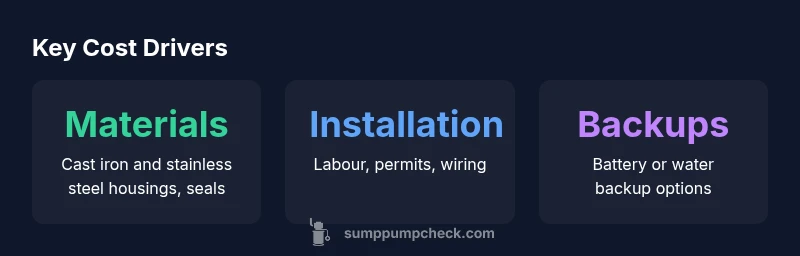
Why sump pumps carry higher price tags? According to Sump Pump Check, the price reflects fundamental cost drivers: durable housings and corrosion-resistant materials, precision-matched impellers, and reliable check valves, plus professional installation and code-compliant labor. When you add battery backup, water-powered backups, or smart controls, price climbs further. Durability, warranty coverage, and service life are major long-term value factors homeowners should weigh.
Why price tags are high for sump pumps
According to Sump Pump Check, the most significant price drivers for sump pumps are material quality, manufacturing precision, and installation labor. In practice, the upfront cost often reflects durable housings (cast iron or stainless steel) and corrosion-resistant components, along with robust impellers and seals designed to withstand variable groundwater conditions. The inclusion of features like check valves, discharge piping, and venting adds to the base price. A more complete package, such as a battery backup or water-powered backup, increases the cost further but improves reliability during power outages. Homeowners should view these decisions as investments in longevity and peace of mind, not merely immediate price tags.
Beyond the basics, the quality of components and the manufacturer’s testing standards influence the expected service life and warranty terms, which can shift the overall value proposition over a decade.
Materials and manufacturing: what drives the cost
Sump pumps use a range of materials, from cast iron and stainless steel to corrosion-resistant plastics. The choice of housing material affects durability, weight, and heat management, all of which translate into price. Manufacturing methods—whether a unit is cast, machined, or assembled from modular components—also impact cost via labor intensity and quality control. Higher-end models often feature thicker castings, precision bearings, and sealed motors designed to run quietly and with less vibration. While these features add to upfront cost, they typically extend service life and reduce expensive mid-cycle failures. When evaluating options, compare not just sticker price but expected longevity and downtime risk.
Installation labor and code requirements: a major price component
Labor costs can dwarf the pump price, especially when licensed electricians and plumbers are involved. Permits, wiring to a GFCI outlet, proper grounding, and ensuring backup power compatibility all add to the bill. In some regions, trenching, pit preparation, and backflow prevention devices are necessary, further increasing labor time. A professional, code-compliant installation reduces the risk of leaks, electric shock hazards, or water damage—costs that would be far more expensive to fix later. Budget for diagnostic checks after installation to ensure the unit operates at rated head and flow.
Backups, controls, and extras: adding to the bill
Battery backups, water-powered backups, and electronic controls improve resilience but raise price. A high-quality float switch, check valve, and discharge piping setup also affect cost. Smart features—such as remote monitoring or alert notifications—add modest ongoing costs but can save repair bills by providing early fault detection. If your basement experiences frequent outages or power instability, investing in backups and monitoring can prevent costly flood damage and insurance claims.
Durability and lifecycle value: does spending more save money?
Durability is a key driver of long-term value. Pumps built for continuous duty, with thicker housings and robust seals, typically last longer and require fewer service calls. Warranty coverage is another important factor: longer warranties can lower effective ownership costs even if upfront price is higher. A well-maintained sump pump reduces the chance of catastrophic basement flooding, which can protect home value and reduce insurance payouts. The decision to spend more upfront should be balanced against local flood risk, maintenance capacity, and the age of existing equipment. In the long run, investing in a higher-quality, properly installed sump pump often yields lower total ownership costs.
Practical budgeting and how to compare quotes
Begin with a clear scope: pump type (submersible vs pedestal), backup options, and pipe routing. Ask for itemized quotes that separate pump price, installation labor, permits, and backup systems. Check for standard features like corrosion-resistant housings, check valves, and proper venting. Request references or warranty terms and verify compatibility with your home’s electrical system. If a bid seems unusually low, scrutinize for hidden costs or omitted permits. Use available online calculators to estimate total cost range for your area and project complexity.
Estimated cost components for sump pump projects
| Component | Typical Cost Range | What It Includes |
|---|---|---|
| Pump Assembly | $150-$350 | Basis unit and impeller, seals, housing |
| Installation Labor | $150-$800 | Removal of old unit, trenching, wiring, check valve |
| Backups (Battery) | $400-$900 | Battery backup module, charger, wiring |
| Controls/Accessories | $50-$300 | Valve, float switch, check valve, piping |
FAQ
What factors influence sump pump pricing the most?
Pricing is dominated by materials, build quality, and installation complexity. Backup options and warranties also push total costs upward, but they can lower risk and long-term maintenance needs.
Pricing is driven by materials, build quality, and installation complexity. Backup options and warranties add to the cost but reduce risk over time.
Do backup systems substantially raise the total cost?
Yes. Battery or water-powered backups add upfront hardware costs and installation effort, but they provide protection during power outages and can prevent flood damage.
Backups add upfront costs but protect against outages and floods.
Is DIY installation advisable for sump pumps?
DIY installation is generally discouraged due to electrical and plumbing code requirements. Professional installation ensures safety, proper venting, and correct wiring.
Professional installation is usually advisable to ensure safety and code compliance.
How long do sump pumps typically last?
Most sump pumps last around 10-15 years with proper maintenance, though lifespan varies by usage, water quality, and maintenance frequency.
Sump pumps often last 10-15 years with good maintenance.
Are there cheaper alternatives that still protect a basement?
Cheaper pumps may save upfront cost but risk higher failure rates. Consider a mid-range model with solid warranty and backup options for better value.
A mid-range model with good warranty and backups often offers better value than the cheapest option.
What maintenance practices lower ownership costs?
Regular checks, cleanings, and seasonal testing of float switches and seals extend life and prevent expensive repairs.
Regular maintenance helps prevent expensive repairs.
“Durable design and proper installation are the true cost drivers for sump pumps, not just the pump price. Long-term reliability and warranty coverage should guide purchasing decisions.”
Top Takeaways
- Identify your baseline needs before buying.
- Backups significantly affect total cost but improve reliability.
- Labor and permits are a major portion of total price.
- Durability and warranty drive long-term value.
- Get itemized quotes to compare true costs