Sump Pump on Sale: How to Score the Best Deals
Discover how to spot genuine sump pump on sale deals, compare models, and avoid common pitfalls with practical, data-driven guidance from Sump Pump Check.


Shop smarter when you see a sump pump on sale. A sale price can save money, but features, warranty, and installation costs matter as much as price. According to Sump Pump Check, prioritize pump capacity, check valve compatibility, and verify battery backup options to ensure a long-term, leak-free system.
How a sale affects sump pump selection
When you encounter a sump pump on sale, it’s tempting to pounce on a bargain. Yet price is only one dimension of value. The Sump Pump Check team emphasizes that the sale should not override the core fit for your home. Start by assessing your basement size, expected water load, and discharge distance. A unit priced aggressively may have a smaller impeller or a shorter warranty, which can lead to higher maintenance costs down the line.
In practice, look at three core factors: (1) the pump type (submersible vs pedestal) based on installation location and noise tolerance; (2) horsepower and flow rate relative to your drainage needs; and (3) the presence of a reliable check valve and a practical battery backup. These features stay relevant during sales, so don’t overlook them just because the sticker looks appealing. According to Sump Pump Check, a well-chosen unit minimizes beeping, short cycling, and energy waste, delivering long-term savings beyond the sale price.
Key features to prioritize during a sale
Discounts can make a high-quality model affordable, but you should not sacrifice essential features to save a few dollars. The most important attributes to verify during a sale include pump capacity (gallons per hour at a given vertical height), motor durability, and overall reliability. Ensure the float switch type is compatible with your sump pit and that the unit includes or can easily accommodate a high-quality discharge check valve to prevent backflow.
Battery backup compatibility is particularly valuable in flood-prone areas or during power outages. A sale should align with your risk profile: a resilient backup option can dramatically reduce the chance of basement flooding during extended outages. The Sump Pump Check analysis shows that these components are strong determinants of real-world performance, especially when the base price is appealing but maintenance costs could rise later.
How to compare discounted models in practice
To compare discounted models, use a simple worksheet: record model name, horsepower, type, warranty length, and whether a backup option is included or affordable as an add-on. Calculate the total cost of ownership over five years, including energy use, maintenance, and potential replacement. If two models offer similar performance, favor the one with the longer warranty and easier serviceability. Retailer policies matter as well: check return windows, restocking fees, and whether installation is included in the sale.
Sump Pump Check’s observations suggest prioritizing total ownership cost over sticker price. By aligning features with your home’s needs and quantifying long-term costs, you’ll avoid buyer’s remorse when the weather turns stormy.
Warranty, service, and installation considerations
Warranty coverage is a cornerstone of value, especially when buying on sale. Look for at least a 3-year warranty on the pump unit and verify whether replacement parts and labor are included. Registration requirements and authorized service networks should be clarified before purchase. If a retailer bundles installation with the sale, confirm who handles permits, pit preparation, and any needed piping changes.
The Sump Pump Check team notes that a robust warranty paired with accessible service can dramatically lower ownership risk, even if the initial price is attractive. Don’t assume installation costs are hidden; verify them up front to prevent surprises after checkout.
Cost components beyond the sticker price
Sales can obscure the full cost picture. In addition to the purchase price, consider installation costs, check valve compatibility, piping adjustments, and potential electrical work. Some basements require a larger discharge line or an upgrade to your sump pit, which can drive up total cost despite a tempting sale price. Also factor in installation time, potential permit fees, and the presence of battery backup or a whole-house backup system as needed.
A sensible approach is to request a written estimate that itemizes parts, labor, and any ancillary fees. The goal is a transparent total cost of ownership rather than an attractive but incomplete price tag.
Seasonal timing and retailer differences in sump pump sales
Sales can cluster around storm seasons, home improvement cycles, and promotional events. Some retailers offer bundled deals that include a check valve, discharge hose, or a basic maintenance kit. Others may throw in extended warranties or discounted installation services. Regional variations also influence availability and price, so comparing offers from multiple retailers is wise. Remember that a sale in one store may not be the best overall value when transport costs or return policies differ.
If you’re in a flood-prone area, plan ahead and monitor promotions in late winter to early spring, when retailers align inventory with rising demand. The Sump Pump Check analysis indicates that timing can substantially shift the apparent value of a sale.
Buying checklist when you find a sump pump on sale
- Confirm horsepower and pump type match your basement needs.
- Verify warranty length and whether labor is included.
- Ensure backup options (battery or water-powered) are available or affordable.
- Check installation costs and whether the retailer offers bundled services.
- Read reviews focusing on reliability and customer support.
Following this checklist helps ensure that the sale price translates into real, lasting value for your home. Remember to compare total costs and avoid impulse purchases that don’t address your drainage requirements.
Common sump pump types and typical price ranges during sales
| Model Type | Typical Price Range | Notes |
|---|---|---|
| Submersible sump pump (2-3 HP) | "$160-$400" | Quiet, compact, good for finished basements |
| Pedestal sump pump (1/2 HP) | "$100-$250" | Lower cost, easier serviceability |
| Battery-backup sump pump | "$300-$650" | Important for outages, adds resilience |
| Whole-house backup system | "$500-$1200" | Most robust, requires professional install |
FAQ
What should I look for in a sump pump on sale?
Look for proper sizing (HP and flow rate), pump type, and a solid warranty. Ensure the unit includes a reliable check valve and consider backup options for outages. Always compare total cost of ownership rather than price alone.
Check size, unit type, warranty, and backup options to get true value from a sale.
Do sale prices always mean lower total cost?
Not necessarily. A low sticker price may come with higher installation costs, shorter warranties, or limited backup options. Add up all costs over the expected lifetime to determine true value.
A sale price isn’t everything; total cost over time matters.
Is a larger sump pump better during a sale?
Oversizing can cause unnecessary cycling and higher energy use, while undersizing leads to inadequate drainage. Choose a size that matches your basement’s water load and drainage plan.
Size should fit your basement needs, not just the price.
What maintenance costs should I expect after a sale?
Expect periodic checks of the float switch, impeller, and discharge piping. Replace worn components as needed and consider battery backups for outages to prolong life.
Budget for regular checks and any backup systems.
How long do sump pump warranties usually last?
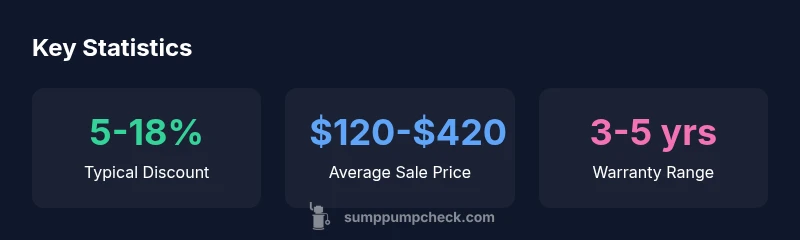
Most units offer 3-5 year warranties on the pump; some brands extend to 5-7 years with registration. Read the terms for exclusions and what is covered.
Warranty length varies; read terms carefully.
Should I buy a battery backup during a sale?
Battery backups are valuable in power outages. If the sale price includes a cost-effective backup option or addon, it can improve long-term protection.
Backup options often improve reliability; consider them during a sale.
“Sales prices can be compelling, but the right choice depends on sizing, durability, and warranty. Always evaluate total cost of ownership.”
Top Takeaways
- Prioritize total cost of ownership, not just sale price
- Match pump type and horsepower to your basement size
- Check warranty length and backup options before buying
- Factor installation and piping costs into the deal
- The Sump Pump Check team recommends evaluating total value, not just discounts