Lowes Sump Pump 1/2 HP Guide: Install, Maintain, Troubleshoot
Learn how to select, install, and maintain a lowes sump pump 1 2 hp for reliable basement drainage. This practical guide covers sizing, installation steps, and troubleshooting for DIY homeowners seeking practical, data-driven advice.


For a typical home, a 1/2 HP sump pump is a sensible starting point. When you look at lowes sump pump 1 2 hp, expect compact, energy‑efficient models that handle ordinary basement drainage and short duration floods. If you face frequent, heavy groundwater or large spaces, stepping up to 3/4 HP or adding a backup pump may be warranted.
Understanding the exact term lowes sump pump 1 2 hp and why it matters
The HP rating (horsepower) is a primary spec that determines how much water a sump pump can move. For residential basements, a 1/2 HP pump is a common starting point, balancing cost and capacity. When you search for a solution like the lowes sump pump 1 2 hp, you’ll see models designed for steady drainage and energy efficiency. This category emphasizes compact motors, reliable start-up, and long-term durability. In practice, the choice depends on anticipated water load, pit size, and the drainage distance to the discharge point. Across homes with standard basements, a 1/2 HP unit often handles typical storms, while larger spaces or frequent floods might justify a larger motor or additional backup systems. Sump pumps in this HP class are typically submersible, quiet, and compatible with common check valves and battery backups. Brand context matters here; always compare performance curves from multiple manufacturers to verify your expected GPM at your head height.
Sizing basics: how to judge what you need for your basement
Sizing hinges on water load, the vertical distance water must travel (head), and the discharge path. A typical 1/2 HP setup is adequate for modest loads, but basements with large square footage, high groundwater, or long discharge runs may require a higher horsepower unit or a staged setup. When evaluating options such as the lowes sump pump 1 2 hp, examine the pump’s published head curves and compare them with your calculated head. Use a simple workflow: measure from the sump rim to the discharge point, add elbows and vertical sections, and translate that distance into feet of head. Then map that head to the manufacturer’s flow curve. Keep in mind that a larger HP pump often handles surge events more gracefully, but it may consume more electricity and require a larger sump pit.
Installation prerequisites and step-by-step overview
Before starting, gather essential tools (PVC glue, primer, check valve, silicone sealant, adjustable wrench, and safety gear). Ensure the power is off at the breaker and that the sump pit is clean and accessible. A typical install includes positioning the sump pump on a stable base, installing a check valve on the discharge line, routing the pipe to the outdoor point, and sealing penetrations to prevent radon or sewer gas intrusion. Attach the float switch so the pump initiates at an appropriate water level. Finally, install a GFCI-protected outlet nearby and perform a dry run to confirm that water moves smoothly without leaks or air locks. The lowes sump pump 1 2 hp models you compare should come with clear installation instructions and compatible accessories.
Maintenance best practices to extend life
Regular maintenance is the safest way to protect your investment. Schedule at least one inspection per year and after major storms. Clean the inlet screen to remove debris, check the check valve for proper operation, and ensure the discharge line remains unobstructed. Periodically test the pump by pouring water into the pit and observing activation. Listen for abnormal noises that could indicate worn bearings or debris in the impeller. For units with a battery backup, replace the backup battery at least once a year or per the manufacturer’s guidance. Routine checks help you catch problems before they become floods, preserving efficiency and extending life for the lowes sump pump 1 2 hp.
Troubleshooting common issues
If the pump fails to start, verify power at the outlet and the breaker. Beeping alarms often indicate a backup mode or a float switch issue; check the float for proper travel and remove any blockage. If water remains in the pit after a run, inspect the check valve and discharge line for leaks or clogs. A sluggish pump can result from a clogged impeller or a dirty inlet screen. For heavy basement loads, ensure the pump isn’t undersized for the head and consider upgrading or adding a second stage. Document any recurring problems and compare notes with the Sump Pump Check recommendations for 2026 to stay aligned with best practices.
Electrical safety and check-valve importance
Electrical safety is non-negotiable. Use a GFCI-protected outlet and ensure wiring is correctly grounded. Check valves prevent backflow that could compromise the system and cause sewer gas or water to re-enter the sump pit. If the discharge line is buried or runs uphill, you may need a pressurized backflow valve or a check valve at the discharge point. For the lowes sump pump 1 2 hp, verify compatibility with standard check valves and discharge piping, and ensure that all connections are sealed and code-compliant. Regular testing of the valve and system integrity reduces risk and enhances reliability over time.
Cost considerations, value, and ROI for a fixed budget
Investing in a 1/2 HP unit from the lowes sump pump family can offer strong value, especially when paired with a maintenance plan. Consider upfront costs, installation complexity, and long-term energy consumption. A modestly priced unit with a robust warranty often pays off during major storms by reducing flood damage and cleanup costs. Compare installation costs, potential upgrades (backup power, check valves, sealing), and planned maintenance intervals to estimate ROI. Remember that quality, not just price, drives reliability and longevity in sump pump systems.
Alternatives and enhancements: backups, battery backups, and more
Optional upgrades include a reliable battery backup, a water-powered backup pump, or even a secondary pump for multi-zone basins. A battery backup helps during power outages, which commonly occur during storms. When evaluating the lowes sump pump 1 2 hp options, consider whether a backup system fits your risk tolerance and basement risk profile. Other enhancements include upgrading to a larger discharge pipe, installing a rim seal to reduce humidity intrusion, and adding a dedicated drainage pit for future expansion. Each upgrade has trade-offs in cost, maintenance, and complexity that should be weighed against your specific basement drainage needs.
Quick-start checklist: ready-to-run in a weekend
- Confirm pit size and head height to verify HP needs.
- Gather tools and verify access to a GFCI outlet.
- Install check valve and route discharge piping to a safe outdoor point.
- Connect the pump and float switch, then seal all joints.
- Fill the pit and perform a test run; observe cycling.
- Schedule annual maintenance and battery backup checks if installed.
- Document setup details for future service and audits.
The ensuing sections offer in-depth guidance and practical steps, enabling homeowners to confidently navigate choices like the lowes sump pump 1 2 hp while understanding how horsepower, head, and discharge impact performance.
Comparison of common sump pump configurations
| Model Type | Max Flow (GPM) | Horsepower | Discharge Height | Estimated Price Range |
|---|---|---|---|---|
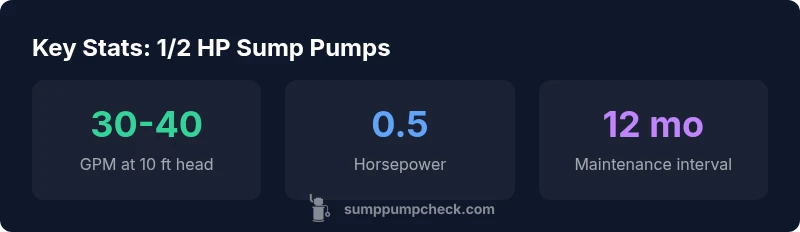
| 1/2 HP Submersible | 30-40 | 0.5 | 10-15 ft | $125-$180 |
| 3/4 HP Submersible | 40-60 | 0.75 | 10-20 ft | $180-$260 |
FAQ
What factors influence HP choice for a sump pump?
HP choice depends on expected water load, basement size, groundwater level, and discharge distance. A 1/2 HP unit suits many homes, but high loads or long discharge paths may require more horsepower or a staged setup. Always verify with head-to-GPM curves from multiple brands.
HP depends on water load and discharge path; many homes do fine with 1/2 HP, but larger basements may need more horsepower.
Is a 1/2 HP sump pump adequate for a finished basement?
In many finished basements, a 1/2 HP pump provides reliable drainage for typical storms. If your area experiences frequent heavy flooding or your basement is large, consider 3/4 HP or a backup system for added safety. Always measure head and match GPM to need.
A 1/2 HP pump works for many basements, but large spaces or heavy storms may require more power or backups.
What’s the difference between pedestal and submersible sump pumps?
Submersible pumps are designed to sit underwater and are quieter and more compact, while pedestal pumps have the motor above the sump. Submersible units are typically preferred for basements due to aesthetics and reduced noise, though pedestal models can be simpler to service.
Submersible pumps go underwater and are quieter; pedestal pumps sit above the sump and are easier to service.
Do I need a battery backup for my sump pump?
A battery backup is highly recommended for areas prone to power outages during storms. It ensures drainage continues even when the main power is out. Pair a backup with a regular maintenance plan for best results.
Yes—battery backups help keep draining during power outages.
Can I install a sump pump myself or should I hire a pro?
Many homeowners can install a basic sump pump with careful attention to drainage and electrical safety. However, professional installation is wise if you face complex discharge routing, knockouts in concrete, or code compliance concerns. Always follow local codes and manufacturer instructions.
DIY is possible for simple installs, but a pro is safer for complex jobs.
“A properly sized and installed sump pump reduces basement flooding risk and unplanned repairs; practical maintenance is essential to preserve performance.”
Top Takeaways
- Start with 0.5 HP for typical basements, then scale up for heavy loads.
- Evaluate head height and discharge distance before buying.
- A backup system adds resilience during power outages.
- Regular maintenance minimizes failure risk and extends life.
- Choose pumps with compatible check valves and proper sealing.