Are Sump Pumps Hard to Replace? A Practical DIY Guide
Discover whether sump pump replacement is a DIY task or requires a professional. This comprehensive guide covers pump types, safety, costs, and maintenance to keep your basement dry.


Are sump pumps hard to replace? The answer depends on your basement setup, electrical access, and the discharge piping connected to your drainage system. This guide walks you through key checks, the typical steps, and safe practices. With careful planning, you can decide whether to DIY or hire a professional, reducing the risk of a failed installation.
Are you wondering how hard it is to replace a sump pump? Are sump pumps hard to replace? The answer depends on your basement setup, electrical access, and the discharge piping connected to your drainage system. According to Sump Pump Check, homeowners frequently underestimate how these elements affect the effort and outcome of a replacement. In this section, we break down the core factors you should evaluate before buying a replacement and how each factor changes the effort required. With this knowledge, you can decide whether to tackle the job yourself or hire a licensed professional. The goal is a reliable, code-compliant discharge that keeps your basement dry during heavy rains. A common question people ask is 'are sump pumps hard to replace' and the answer depends on the specifics of your installation.
Types of sump pumps and how replacement differs
Sump pumps come in several designs, most notably pedestal and submersible models. Pedestal pumps are easier to service because the motor sits above the pit, while submersible pumps live entirely in the pit. Replacement challenges differ: pedestal units may require less pit clearance, but wiring can be more exposed; submersible models demand careful sealing and proper float-switch alignment. Consider your pit dimensions, the head height (vertical distance the pump must push water), and the diameter of the discharge pipe. If your current unit uses a vertical discharge that feeds into a tight elbow, you might need longer piping or a different fitting. Matching the new pump’s horsepower, flow rate, and electrical requirements to your home reduces risk of overheating or insufficient drainage.
Assessing your current setup before buying a replacement
Start by measuring your pit width and depth, and check the discharge pipe diameter. Inspect the float switch mechanism: is it stuck or slow to respond? Examine the electrical inlet and the GFCI protection—basement outlets must be protected and properly grounded. Look at the check valve on the discharge line; a faulty valve can cause backflow that overwhelms the pump. If you notice corrosion, unusual noises, or frequent cycling, these signals indicate an aging unit that may require replacement sooner than later. Write down the model, horsepower, and any issues observed so you can compare with available replacements. According to Sump Pump Check analysis (2026), the process varies widely due to installation specifics.
Safety and code considerations you should know
Working with water and electricity in a confined pit requires respect for safety. Always shut off the circuit breaker before handling the pump, and use a voltage tester to confirm there’s no live current. In many areas, sump pumps in basements are required to be on a GFCI-protected circuit and to have a vented, properly sloped discharge to avoid backflow into living spaces. If your home is connected to a municipal stormwater system, verify local codes for discharge and backflow prevention. When in doubt, contact a licensed plumber or electrician and request a permit if required by your jurisdiction. Following these precautions helps ensure a safe, compliant installation.
Planning and budgeting for a replacement
Create a rough budget that includes the cost of the new unit, any necessary check valve upgrades, piping adjustments, and potential labor if you hire a pro. Consider the complexity of your existing setup: replacing in a tight pit, rerouting a long discharge line, or upgrading to a battery backup system will add time and cost. Availability and supply chain factors can affect lead times for parts, so inventory plans ahead. Finally, weigh the value of a completed, code-compliant installation against the risk and inconvenience of a DIY approach that fails or leaks. This planning reduces surprises when you’re ready to install.
Replacement process overview (high-level)
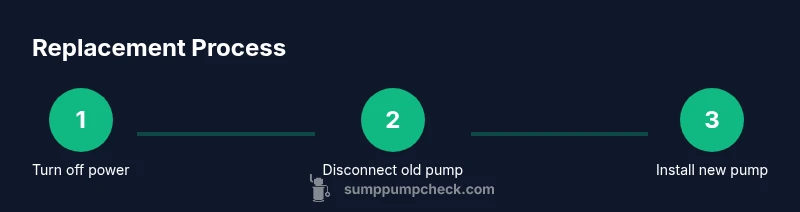
Below is a high-level outline of the typical replacement flow. It is not a substitute for a detailed, step-by-step guide. 1) Turn off power and drain the pit; 2) Disconnect and remove the old pump; 3) prep the pit and install the new unit; 4) attach the discharge piping and check valve; 5) reconnect power and test the system; 6) inspect for leaks and clean the area. Each step requires attention to the fit, seal, and alignment to prevent leaks and ensure proper cycling.
Common mistakes and how to avoid them
Rushing installation can lead to leaks, improper sealing, or misaligned float switches. Using the wrong discharge pipe size can cause pressure loss. Skipping a test run when introducing new piping can hide leaks until heavy rainfall. Reusing an old check valve on a new pump may fail. Take your time to verify each connection and perform a full dry-run before filling the pit.
Maintenance after replacement to extend life
Schedule periodic checks every 3–6 months to verify the pump turns on and off correctly, and test the float manually. Keep the pit clean and free of debris, and confirm the discharge line remains clear. Inspect electrical connections and GFCI function after storms. A simple battery backup or water-powered backup system increases resilience if power fails during a flood.
When to call a professional and final thoughts
Consider a pro if you have an unusual pit size, nonstandard discharge routing, or outdated electrical wiring that requires rewiring or permits. A professional can ensure code compliance, optimize the pump curve, and install a back-up system to improve reliability. The Sump Pump Check team recommends assessing the risk of DIY replacement against potential water damage, especially in flood-prone areas.
Tools & Materials
- New sump pump (match horsepower & float switch)(Choose submersible or pedestal to fit your pit height and space)
- Check valve for discharge line(Ensure correct orientation to prevent backflow)
- PVC pipe and fittings (1-1/2" or 1-1/4" as needed)(Include elbows, couplings, and a proper discharge elbow)
- PVC cement and primer(For secure connections and leak prevention)
- Teflon tape and silicone sealant(Sealing of joints and threads)
- Pipe wrench and adjustable wrench(Tighten connections without damaging fittings)
- Screwdrivers (Phillips and flathead)(Mounting and disassembly)
- Voltage tester(Verify power is off before handling)
- GFCI-protected outlet and weatherproof cover(Basement safety and code compliance)
- Bucket, towels, and rags(Contain spills and keep area clean)
- Flashlight or headlamp(Illumination inside the pit)
- Battery backup system (optional)(Adds resilience during power outages)
Steps
Estimated time: Total time: 60-120 minutes
- 1
Power down and safety check
Locate the circuit breaker for the sump pump and switch it off. Unplug the unit if accessible. Use a voltage tester to confirm there is no live current in the cord or the pit area. This prevents shock and ensures a safe replacement.
Tip: Have a partner nearby in case you need help lifting the unit out of the pit. - 2
Disconnect the old pump
Loosen clamps or fittings on the discharge pipe and detach the fittings from the pump. Unthread electrical connections and carefully pull the unit from the pit. Keep the old discharge hardware handy for reference when wiring the new pump.
Tip: Take photos of each connection before removal to guide reassembly. - 3
Inspect and clean the pit
Remove debris and sediment from the sump pit. Check the pit walls for cracks or corrosion and scrub as needed. Confirm the pit dimensions accommodate the new unit with space for vibration and maintenance.
Tip: A clean pit reduces vibration and noise after installation. - 4
Install the new pump
Place the new pump in the pit in the same orientation as the old unit. If you’re using a pedestal model, ensure the base is secure. For submersible pumps, verify the power cord routing avoids sharp corners and the float switch has full range of motion.
Tip: Leave a small gap between the unit and any pit wall to allow airflow. - 5
Attach discharge piping and check valve
Connect the discharge pipe to the pump collar and install the check valve in the correct direction to prevent backflow. Use PVC cement or solvent weld as required and seal threaded joints with Teflon tape. Ensure there are no leaks at joints.
Tip: Test-fit piping before final cementing to confirm alignment. - 6
Secure the pump and restore power
Mount any brackets or supports, then plug the pump into the GFCI outlet. Route the cord away from moving parts and water. Restore power at the breaker and perform a dry run to verify operation without water in the pit.
Tip: Keep a bucket ready to catch any initial spills during testing. - 7
Test the system with water
Pour water into the pit to simulate a full basin and observe the pump cycle. Confirm the float activates correctly and the discharge line remains leak-free. Listen for unusual noises or vibrations during operation.
Tip: If the pump fails to start, recheck the float switch position and electrical connections. - 8
Final checks and cleanup
Inspect all connections for leaks, tidy the area, and replace any inspection covers. Verify that the discharge line exits away from the foundation and drains properly. Document model numbers for future reference.
Tip: Keep a maintenance log with installation date and part numbers.
FAQ
What tools do I need to replace a sump pump?
Common tools include a screwdriver set, pipe wrench, adjustable wrench, pliers, a voltage tester, PVC cement, primer, Teflon tape, silicone sealant, and a bucket for cleanup. Having a backup battery is optional but helpful.
You’ll need basic hand tools, PVC supplies, and a tester to ensure safety.
Can I replace a sump pump myself, or should I hire a pro?
Simple pits with straightforward piping can be DIY, especially with a submersible unit. Complex discharge routes, long piping, or old wiring may require a licensed professional to ensure code compliance and avoid water damage.
DIY is possible for simple setups, but call a pro for complex installations.
Do I need to replace the check valve when replacing the pump?
Replacing the pump is a good time to install a new check valve, ensuring proper backflow prevention. Reusing an old valve can lead to leaks or backflow.
Yes, install a new check valve if possible.
How long does a typical sump pump replacement take?
A straightforward replacement typically takes about an hour or two, depending on pit access and piping changes. More complex routes can extend the time.
Most replacements take a couple of hours.
Are permits ever required for sump pump work?
Permits are not always required, but local codes vary. If wiring or drainage changes are involved, check with your city or a licensed professional about permits.
Check local codes; permits may be required for electrical work.
What are signs my sump pump is failing?
Frequent cycling, unusual noises, slow drainage, or alarms/beeps indicate a failing pump or faulty float switch. If you notice these, plan replacement promptly.
Watch for cycling, noise, and drainage issues.
Watch Video
Top Takeaways
- Understand your pit and pump type before buying.
- Follow safety and code requirements to protect your home.
- Test thoroughly to prevent leaks and failures.
- Plan for maintenance to extend pump life.