Sump Pump Grinding Noise: Quick Diagnosis & Fix for Homeowners
Urgent guide to diagnose and fix a sump pump making grinding noise. Learn common causes, safety steps, and a clear repair flow from Sump Pump Check.


Most often, a sump pump making grinding noise is caused by debris in the impeller or a worn bearing. Start by unplugging the pump, removing it, and inspecting the impeller and inlet screen. Clean away debris, reseat parts, and run the unit briefly. If grinding continues, replace the impeller or entire pump and verify mounting and discharge alignment.
What 'sump pump making grinding noise' signals in your basement
Listening to a sump pump that grinds instead of hums is more than a nuisance; it's a warning sign not to ignore. A grinding sound often points to mechanical wear, foreign material, or misalignment that can lead to a failure if ignored. In many homes, a quick, methodical check can determine whether you can fix the issue yourself or if professional help is warranted. The Sump Pump Check team emphasizes that safety must come first whenever you work around electricity and water. Before you touch anything, unplug the unit, disconnect from power, and verify the circuit is de-energized. Then locate the sump pit and the pump body to listen for the source of the noise: is it the motor housing, the impeller area, or the discharge line? By listening carefully, you can narrow down the root cause and prevent needless part replacements. With a methodical approach—observe, test, document—you gain clarity, reduce risk, and protect your basement from potential flood damage.
Common culprits: debris, bearings, and mounting
Debris and sediment in the sump pit are common offenders. Small rocks, grit, or even a loose screw can find their way into the impeller, causing a grinding sensation as the blades try to turn. A worn impeller or failing motor bearing can also produce a distinct grinding or gritty sound that worsens with use. Loose mounting bolts or a misaligned discharge pipe can transmit vibration, turning a normal hiss into a harsh, repeating grind. Inspect the pump mounting and the base; ensure screws are tight and the base is solid. If debris is the culprit, remove the pump, clear the inlet screen and impeller housing, and reinstall. If the impeller is damaged or the bearings feel rough, you will likely need replacement parts or a new pump. In all cases, replace any damaged components with manufacturer-approved parts and avoid improvising with incompatible hardware.
How to safely inspect your pump before disassembly
Safety first. Disconnect power at the outlet and, if possible, shut off the circuit feeding the pump. If you need a helper to hold the pit cover, enlist one. Remove the pump from the pit gently and place it on a dry work surface. Inspect the power cord for cracks, the float switch for proper movement, and the mounting bracket for corrosion. Remove the access panel and carefully clean the impeller area to remove trapped debris. Spin the impeller by hand and feel for rough spots or wobble: a smooth spin with no resistance is a good sign, while stiff or gritty rotation indicates wear. If blades are chipped or cracked, plan for part replacement. Keep a tidy workspace and have a bucket handy for any residual water.
Diagnostic flow: symptom → diagnosis → solutions
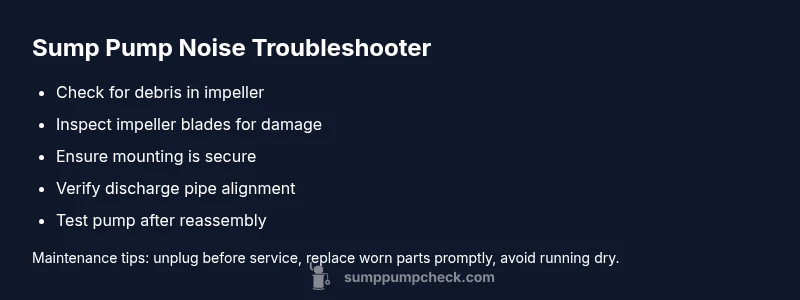
Start with the symptom: grinding noise only occurs during pumping or at startup, or it repeats continuously. Move to diagnosis: check for obvious debris in the impeller, test the impeller’s ability to spin freely, verify mounting tightness, and confirm the discharge line is clear and aligned. If debris is present, your fix is simple: remove debris and test again. If the impeller feels stiff or blades are damaged, plan for part replacement. If the motor bearing sounds worn, you may need to replace the impeller and bearings or the entire unit. For vibration issues, ensure the base is level and secure; adjust the discharge pipe if necessary. If the noise persists after these checks, you likely need a professional evaluation to avoid electrical or structural risks.
STEP-BY-STEP: Fixes for the most common cause
- Power off, unplug, and remove the pump from the pit. Tip: Keep a dry work surface and photograph wiring before disassembly.
- Remove the cover and inspect the impeller and inlet; clear any debris. Tip: Use a soft brush to avoid blade damage.
- Clean the impeller blades and check for damage; replace if bent or chipped. Tip: Check for signs of water intrusion in seals.
- Inspect the bearings; if you can’t turn the impeller smoothly, consider bearing replacement or pump replacement. Tip: Bearings often require professional handling due to electrical risks.
- Reassemble the pump, reseat the seals, and tighten mounting bolts. Tip: Ensure the base sits flat on a solid surface.
- Reinstall at the pit, restore power, and run a test cycle with water to confirm quiet operation. Tip: Test with a small water amount first.
- If noise returns after these steps, evaluate replacement options or call a professional for an in-depth assessment. Tip: Do not delay if there are signs of leakage or overheating.
Safety, Warnings, and When to Call a Pro
Working on sump pumps involves electricity, water, and sometimes sewage lines. Always unplug the unit first and if possible shut off the breaker. Wear protective eyewear and gloves, and keep children and pets away from the work area. Do not bypass safety features or run the pump while disassembled. If you encounter damaged wiring, corroded connections, or suspect the motor bearings are worn beyond simple repair, contact a licensed plumber or pump technician. In many cases, a quick repair is feasible, but a professional should handle electrical testing or when the unit is old and replacement is the safer option.
Preventive Maintenance to Stop Grinding Noises
To reduce the chance of future grinding noises, adopt a simple maintenance routine. Schedule a yearly visual inspection of the pump housing, electrical cord, and mounting hardware. Clean the inlet screen and impeller area every six months or after heavy rainfall when debris is more likely in the pit. Keep the discharge line clear and ensure that the line runs downhill away from the house with no kinks. Replace worn components promptly rather than waiting for the noise to worsen. A small investment in regular maintenance can prevent flood damage and expensive pump replacements later, extending the life of your system.
Steps
Estimated time: 60-90 minutes
- 1
Power down and remove the pump
Turn off power at the outlet and, if possible, switch off the circuit breaker. Gently lift the pump from the pit and place it on a dry surface for inspection.
Tip: Cube the pump with a camera to document wiring before removal. - 2
Open housing and remove debris
Take off the impeller housing cover and clear any debris. Inspect the inlet screen for blockages and wipe clean. Re-seat any loose components before testing.
Tip: Use a soft brush to avoid blade damage. - 3
Inspect impeller blades and replace if damaged
Look for chips, cracks, or bent blades. If damaged, replace the impeller or entire unit per manufacturer guidance.
Tip: Handle blades carefully to avoid injury. - 4
Check bearings and mounting
Turn the impeller by hand to feel for roughness. If it grinds or binds, bearings may be worn or the mounting frame may be loose.
Tip: Tighten or align mounting hardware to reduce vibration. - 5
Reassemble and test
Reinstall seals, reattach the housing, and secure the base. Reconnect power, run a test cycle with water, and listen for unusual noises.
Tip: Test with small amounts of water first. - 6
Decide on repair vs replacement
If the noise persists after all checks, evaluate whether a full replacement is the safer option. Consider age and expected reliability.
Tip: Consult a professional if unsure about electrical safety.
Diagnosis: Machine will not run or makes grinding noise during operation
Possible Causes
- highDebris lodged in impeller or inlet screen
- mediumWorn impeller blades or damaged bearing
- lowLoose mounting or misaligned discharge pipe
- lowSeized float switch or wiring issue
Fixes
- easyPower off, unplug, remove pump, and clear debris from impeller and inlet
- mediumReplace worn impeller or bearing and reseat seals
- easyTighten mounting screws and verify discharge alignment
- hardIf bearings are worn or wiring damaged, replace the unit or call a professional
FAQ
What causes a sump pump to grind?
Grinding is commonly caused by debris in the impeller, a worn impeller, or worn motor bearings. Conduct a careful inspection of the impeller, bearings, and mounting before deciding on repair or replacement.
Grinding is usually debris or worn parts in the impeller or bearings; inspect the impeller, bearings, and mounting to decide repair versus replacement.
Is debris in the impeller common?
Yes. Debris like grit or small stones can lodge in the impeller and cause grinding sounds. Cleaning the impeller and inlet screen often resolves the issue.
Debris is a common culprit; cleaning the impeller usually fixes it.
Can I fix the grinding noise myself?
If you’re comfortable with basic hand tools and water safety, you can perform debris removal, cleaning, and part inspection. For electrical or bearing issues, consider professional help.
You can try basic debris removal and inspection, but electrical or bearing problems should be handled by a pro.
When should I replace the sump pump?
Replace when bearings are worn, the unit is old, or noise persists after repairs. Consider replacement to avoid future failures and water damage.
If the pump is old or still noisy after fixes, replacement is the safer option.
Should I lubricate the bearings?
Most modern sump pumps are sealed and do not require lubrication. Lubricants can attract dirt and void warranties. Check the manual.
Most pumps aren’t lubricated; avoid oiling bearings unless the manufacturer explicitly approves it.
Do safety concerns require calling a pro?
Yes. If you’re unsure about wiring, GFCI protection, or stuck in the pit, contact a licensed technician to avoid electrical hazards or water damage.
If safety concerns crop up, call a professional.
Watch Video
Top Takeaways
- Diagnose by elimination: debris first, then wear.
- Unplug before any inspection to stay safe.
- Tighten mounting and verify discharge alignment to reduce vibration.
- Replace worn parts promptly; avoid running a damaged pump.
- Call a pro for electrical or complex sensor issues.