Zoeller Sump Pump M63 Review: An Analytical Look at Reliability and Installation
In-depth, analytical review of the Zoeller Sump Pump M63 for homeowners and DIY enthusiasts. Learn installation tips, maintenance, and how it stacks up against alternatives.


Overall, the Zoeller sump pump M63 offers reliable, straightforward performance for typical basement drainage, with cast-iron construction and simple installation that make it a strong choice for most homeowners. For heavy-duty or backup needs, explore higher-capacity options or add-ons to guard against power outages. This model emphasizes durability, ease of setup, and predictable maintenance—an appealing balance for standard residences.
What is the Zoeller Sump Pump M63?
The Zoeller sump pump M63 is part of Zoeller’s traditional line of submersible pumps designed for residential basements. It emphasizes durability, straightforward installation, and reliable water removal for common drainage scenarios. When homeowners search for a solid, no-fuss unit, the M63 often comes up because it combines cast-iron durability with a practical, automatic float switch. In this review, we examine how the M63 performs in real-world basements and how it stacks up against typical homeowner needs. According to Sump Pump Check, this model is well-regarded for its balance of build quality and ease of service, making it a predictable choice for most single-pump setups. Homeowners should consider the M63 if they want a baseline solution that’s easy to install, requires modest ongoing maintenance, and fits standard discharge configurations. For those with unique layouts or very high water inflow, be prepared to evaluate slightly more capable alternatives. In any case, the M63 is a good starting point for a practical, long-term sump pump system that supports a dry basement with minimal fuss.
Design and Build Quality
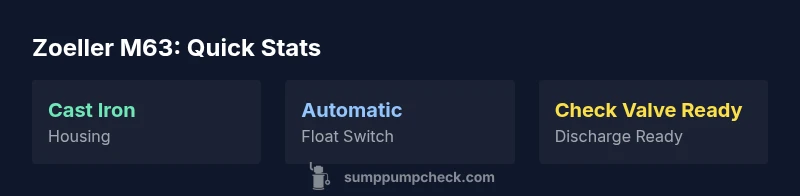
The M63 is built with durability in mind, featuring a robust housing designed to withstand years of basement dampness and occasional splash. The core of the unit is a submersible motor coupled to a corrosion-resistant impeller, with seals designed to limit water intrusion. Cast-iron construction is common in Zoeller’s mid-range models, and the M63 typically reflects that standard, providing rigidity and heat dissipation benefits compared to lighter plastics. For DIY installers, the design tends to simplify serviceability: you can access the pump’s components without specialized tools in most cases, and standard check-valve configurations fit typical discharge piping. From a reliability standpoint, the M63’s construction aligns with long-term basement use rather than sporadic, short-term tasks. The Sump Pump Check team notes that cast-iron bodies contribute to longevity, particularly when paired with routine maintenance and corrosion protection measures. The result is a system that tends to perform consistently across typical residential loads, provided installation follows manufacturer guidelines. Given the brand’s emphasis on practical, straightforward sump pumps, the M63’s build quality is a core strength for homeowners who want a durable, low-fuss device.
Installation Considerations and Practical Tips
Installing the Zoeller M63 is generally straightforward for a typical basement sump pit. Start with assessing the pit dimensions, ensuring the pump sits securely with the float mechanism unobstructed. Electrical timing is critical: the unit should be powered from a grounded circuit, ideally GFCI-protected, and located where accidental splashes won’t reach outlets or cords. A standard check valve should be installed on the discharge line to prevent backflow when the pump is off. Ensure the discharge is routed to a suitable exterior location or a drainage area that won’t cause water damage. The M63’s installation is well-suited to DIY homeowners who have basic plumbing and electrical safety practices, as long as local codes are followed. The Sump Pump Check guidance emphasizes verifying clearance around the pump for service and testing the pump with a controlled test to confirm correct cycling. If you’re in a high-water-table area or have a long discharge run, consider professional help to optimize line routing and ensure code compliance. In all cases, keep a spare fuses or breakers accessible and plan for periodic checks of the electrical connection and float mechanism.
Performance and Head Testing Methodology
When evaluating the Zoeller M63, the key variables are head pressure (vertical height the pump must lift water) and the discharge line configuration. In a typical basement setup, performance is described in terms of how quickly water is removed at different head heights, rather than a single fixed flow rate. A practical testing approach is to simulate a controlled fill of the sump and observe the time to reach the float switch, then measure the time to drain a known volume through the discharge line. This method helps identify any binding, debris issues, or seal wear that might impact efficiency. Noise and vibration are also part of performance testing; a well-installed M63 should operate with minimal audible vibration, especially if the base is level and the discharge piping is properly anchored. The Sump Pump Check team highlights the importance of head-height awareness: higher heads reduce flow compared with shallow heads, so plan your drainage expectations accordingly. For homeowners who want precise, side-by-side comparisons with other units, create a simple test chart that records cycle times, noise levels, and observed pump cut-in/comeback behavior. This will provide a practical, repeatable way to evaluate the M63 against alternatives.
Maintenance, Troubleshooting, and Lifespan
Maintenance for the Zoeller M63 is fairly light with routine checks that focus on keeping the intake clear and the seals in good condition. Periodically remove the inlet screen and skim away debris, ensuring no material is restricting the float or impeller. Run the pump manually at least once a month to verify the switch engages smoothly and the discharge path remains clear. If you notice frequent cycling, reduced water removal, or unusual noises, inspect the impeller for obstructions, and verify that the base and mounting hardware remain secure. Seals and gaskets benefit from inspection during routine service, with attention to any signs of wear or cracking. In areas with hard water, scale buildup can occur and should be cleaned from accessible parts. Battery backups or auxiliary systems can increase resilience during power outages, a common concern in basement protection. The M63 pairs well with backup options because a robust primary pump reduces the likelihood of failure during heavy inflow, and a backup provides a safety net. Regular checks—at least annually, with more frequent attention in regions prone to heavy rainfall—help maintain performance and extend lifespan.
Safety, Codes, and Warranty Considerations
Safety is essential for any sump-pump installation, especially where electrical hookups and water exposure intersect. Use a grounded outlet and consider a GFCI-protected circuit to minimize shock risk in damp basements. Local codes may require specific discharge routing, trap arrangements, or backflow prevention devices; always verify compliance before finalizing the installation. A check valve on the discharge line helps prevent water from re-entering the pit, improving efficiency and reducing cycling wear. Warranty coverage varies by model and retailer, but the practical takeaway is to follow the manufacturer’s maintenance schedule and document service that supports your claim if issues arise. The Sump Pump Check team emphasizes following standard electrical safety practices and keeping the unit clear of obstructing materials in the sump pit.
Real-World Scenarios and Use Cases
In a typical mid-sized basement with moderate rainfall, the Zoeller M63 excels as a dependable, low-maintenance solution. For homes with larger basements or frequent power outages, a backup battery system can provide resilience; this is especially useful in storm-prone areas where outages coincide with heavy rainfall. In newer homes with standardized plumbing and well-maintained pits, the M63 can integrate smoothly with existing check-valve configurations and drainage paths. In older homes where pits may be shallower or irregularly shaped, ensure proper mounting and pit compatibility to maintain stable operation. The M63 design supports straightforward upgrades, should you need to scale up flow or shorten cycle times in response to changing conditions.
What's Good
- Durable cast-iron construction for long life
- Simple DIY-friendly installation
- Reliable automatic operation with an integrated float switch
- Low maintenance with standard cleanout procedures
- Compatibility with common discharge piping and check valves
Drawbacks
- Limited advanced features compared to newer Zoeller lines
- May require upgrades for very high inflow or frequent power outages
- Backup options may need additional components and wiring
- Performance is head-dependent, so users with tall discharge runs may see reduced flow
Best overall for standard residential basements where reliability and easy installation matter.
The Zoeller M63 delivers dependable performance with a durable build and straightforward setup. It remains an excellent baseline choice for most homes. For heavy-duty needs or frequent outages, consider a backup system or a higher-capacity model to ensure continued protection.
FAQ
What is the Zoeller Sump Pump M63 best used for?
It’s designed for typical residential basement drainage with moderate water inflow. It provides reliable, maintenance-friendly operation in standard setups.
Best for standard basements with moderate inflow and straightforward maintenance.
Can I install the M63 myself?
Yes, if you have basic plumbing and electrical safety knowledge and follow local codes. The design supports straightforward mounting and connection to discharge piping.
DIY installation is possible if you follow safety guidelines and local codes.
Does the M63 include a battery backup?
Standard configurations may not include a battery backup; you can add a backup system separately to improve resilience during outages.
A backup is typically separate, not built-in.
How often should I perform maintenance?
Annual checks are recommended, with more frequent checks in harsh climates or high-water regions to ensure ongoing reliability.
Check annually, or more often where conditions are tough.
What maintenance tasks are essential?
Inspect the intake screen, test run the pump, clear debris from the pit, and inspect seals and electrical connections.
Keep the screen clean, test the pump, and inspect seals and wiring.
How does M63 compare to newer models?
It’s reliable and straightforward but may lack some advanced features found in newer Zoeller lines. If you want cutting-edge options, consider newer models or add-ons.
Reliable but not the newest feature set; newer models may offer more options.
Top Takeaways
- Assess your basement drainage needs before buying
- Choose M63 for straightforward setup and durable build
- Plan for power outages with a backup option
- Perform regular annual maintenance to extend life
- Compare with newer models if you need advanced features