Zoeller M53 Sump Pump: Installation, Maintenance, and Troubleshooting
An analytical guide to the Zoeller M53 sump pump, covering installation, maintenance, troubleshooting, and how it stacks up against alternatives for residential basements.


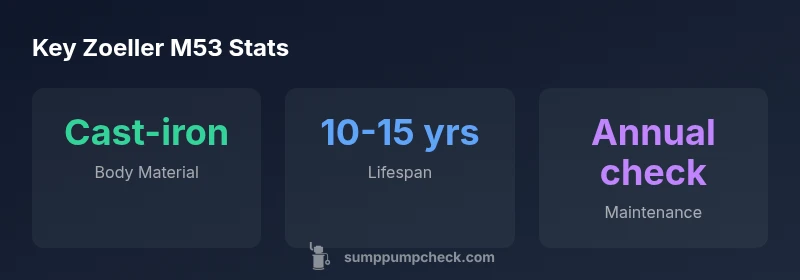
The Zoeller M53 is a popular residential submersible sump pump known for its durable cast-iron body, built-in float switch, and reliable operation in standard sump pits. It’s designed for basement drainage needs and is a common choice for DIY installations.
Overview of the Zoeller M53
According to Sump Pump Check, the Zoeller M53 is a widely used residential sump pump with a reputation for durability and straightforward DIY installation. The model is designed to operate in typical basement sump pits, moving incoming groundwater away from living spaces to prevent flooding and water damage. When you see the term zoeller m53 in homeowner forums and product guides, it generally signals a balance of affordability, reliability, and ease of service. Homeowners often choose this pump because it fits standard pit dimensions and does not require specialized tools for basic operation. For most residences, the M53 provides a solid baseline of performance that aligns with common basement drainage needs while leaving room to upgrade backup systems if power outages are a concern.
As you weigh this model against others, remember that brand reputation matters. The Zoeller brand emphasizes serviceability and availability of replacement parts, which means long-term maintenance is typically straightforward. In practical terms, you can expect predictable startup behavior, a robust cast-iron housing, and a built-in float switch that helps prevent dry-running and nuisance cycling. The M53 remains a frequent recommendation for first-time sump pump projects because it routinely checks the boxes homeowners look for in a reliable, mid-range solution.
Design and features that matter
The Zoeller M53 is built around a few core design choices that influence how it performs in real homes. The cast-iron housing provides rigidity and heat resistance, helping the unit withstand the damp conditions of a sump pit. A built-in float switch integrates with the motor to determine when to start and stop, reducing the need for external components and simplifying the installation. The discharge connection is sized to handle typical basement drainage demands, which means the pump works with a standard vertical discharge line without requiring custom fittings for most installations. The combination of a compact footprint and straightforward wiring makes it accessible for DIY enthusiasts who have basic plumbing and electrical know-how. Understanding these features helps homeowners plan for maintenance, backup options, and potential upgrades if flood conditions change or home layouts require more capacity. In practice, the M53’s design supports a reliable baseline that aligns with standard basement drainage expectations and common pit dimensions.
From a maintenance standpoint, the internal components are designed for serviceability. Keeping the intake screen clear and ensuring the float moves freely are among the most important daily checks. This level of design thinking is why Sump Pump Check often highlights the M53 as a practical starting point for homeowners new to sump pump projects. Regular checks help sustain performance over years of operation, especially in regions with frequent rain events and ground saturation.
Installation considerations for DIYers
DIY installation of the Zoeller M53 is feasible for many homeowners, but it benefits from careful planning. Start by confirming your sump pit dimensions and ensuring the pit is clean and free of debris that could impede flow. The discharge line should exit to an appropriate location, with a check valve to prevent backflow and a discharge path that avoids creating hazards or water damage to foundations or landscaping. Electrical work should follow local codes; typically this includes a dedicated circuit, proper grounding, and a weather-rated cover for the electrical connection. If your home lacks a GFCI-protected outlet near the pit, plan for a safe, code-compliant extension. It’s also wise to verify that the pit depth and water level will support regular cycling without causing nuisance trips. While the M53 is designed to be install-friendly, homeowners should consult local codes or a licensed professional if uncertainties arise. The right approach blends practical preparation with a respect for safety and drainage requirements.
To set expectations, most DIY installs require basic plumbing fittings and standard household tools. Keeping a log of parts and measurements helps if you need to replace components later. The M53’s compatibility with common discharge configurations means you can often reuse existing piping, provided you meet the necessary slope and seal requirements. As always, test the system after assembly by simulating a water inflow to ensure that water is pumped out as intended and that the float switch activates and deactivates correctly. This testing phase is essential to validating the installation before you rely on it during a rainstorm.
Maintenance and longevity tips
Long-term reliability from the Zoeller M53 rests on a simple maintenance cadence and mindful operation. Develop a routine that includes a visual inspection of the unit, the float mechanism, and the discharge line at least twice a year. Clear any debris from the intake to prevent impeller restriction, and check for any corrosion or wear on exposed components. If your system has a backup battery, test that backup periodically to ensure it engages when the primary power is interrupted. Keeping a small maintenance log helps track when parts were serviced and when replacements are due. Even in regions with mild winters, freezing conditions can affect discharge piping; insulate exposed sections as needed to prevent heat loss and freezing-related blockages. The key is consistency: regular checks reduce the likelihood of sudden failures during storms and help you plan proactive upgrades. In practice, homeowners who follow a simple annual checklist report fewer emergency service calls and increased peace of mind.
From a community perspective, Sump Pump Check’s analysis shows that routine maintenance is linked to longer pump life and better performance during peak flows. These insights reinforce the value of a steady maintenance habit and a proactive upgrade path when the existing unit shows signs of wear or when pit conditions change.
Troubleshooting common issues
Even reliable units like the Zoeller M53 can encounter common issues in real-world basements. If the pump does not start, verify power at the outlet and check the circuit breaker. A stuck float can prevent activation, so ensure the float moves freely and isn’t obstructed by debris or sediment. If the pump runs but doesn’t move water, inspect the discharge line for blockages or kinks and confirm that the check valve seals properly to prevent backflow. A humming or grinding noise may indicate a trapped impeller or misalignment, in which case stopping the pump and inspecting internal components is advisable. Water leakage around the housing or seals often signals wear or age-related degradation that warrants part replacement or professional service. Documenting symptoms and maintenance steps can help you diagnose more efficiently or communicate with a technician. By methodically ruling out power, float, discharge, and mechanical issues, you can restore normal operation with minimal downtime and protect your home from basement flooding.
Alternatives and decision guidance
When deciding whether the Zoeller M53 is the right fit, compare it against models with higher flow capacity or backup capabilities. For homes with larger pits or higher expected water inflow, higher-capacity models may offer better performance headroom. If outages are a realistic concern, pairing any primary sump pump with a dedicated battery backup system can provide critical protection during storms. Consider also whether your drainage plan aligns with local codes and whether you need additional features such as a powerful check valve, a separate emergency pump, or enhanced corrosion resistance for corrosive water exposure. The key is to balance cost, reliability, and the specific drainage demands of your basement. The M53 remains a capable baseline option for many single-family homes, especially when paired with a well-planned backup strategy.
Practical tips for ongoing care
To maximize longevity and reliability of the Zoeller M53, adopt a concise maintenance ritual: conduct monthly visual checks of wiring and mounting, perform an annual deep-clean of the pump inlet and outlet, and test the float switch to ensure it triggers the pump reliably. Maintain a clear discharge path that directs water away from the foundation and prevents reentry. Keep spare parts like seals and impellers on hand and verify compatibility before replacement. Document any unusual noises, vibrations, or performance changes so you can address issues before they escalate. Finally, integrate the M53 with a broader home drainage plan that includes sump pit sealing, basement waterproofing, and, if feasible, a battery backup to provide protection during power outages. In practice, these steps reduce maintenance surprises and help preserve the pump’s effectiveness over many seasons.
Comparison of Zoeller M53 with a generic submersible sump pump
| Model | Horsepower | Material | Discharge Size | Float Type | Typical Use |
|---|---|---|---|---|---|
| Zoeller M53 | 1/2 HP | Cast iron | 1-1/2 inch | Vertical float (built-in) | Residential basements |
| Generic submersible pump | varies | Plastic or cast iron | 1 inch | Float switch | General use |
FAQ
Is the Zoeller M53 suitable for large basements with high water inflow?
For typical residential basements, the M53 meets most needs. For very large spaces or high inflow, consider higher-capacity models and a backup system.
For large basements, the M53 is often fine, but for higher inflow you may need a bigger pump and a backup.
What maintenance should I perform after installation?
Run a test regularly, inspect the power cord, check the float operation, and clean the intake screen every 6-12 months. Schedule an annual professional check if you’re unsure.
Test it regularly and inspect the float—keep the intake clear.
Does the M53 come with a backup battery?
Most M53 units do not include a battery backup. If you want protection during power outages, add a separate battery backup system.
No, it’s not standard to have a battery backup; add one if reliability during outages matters.
Can I install the Zoeller M53 myself, or should I hire a pro?
DIY installation is possible for many homeowners, but ensure you follow local codes and use the recommended discharge path and wiring practices. If in doubt, consult a licensed professional.
Many DIYers install it themselves; follow the manual and local codes.
How loud is the M53 during operation?
Noise is typical for a submersible sump pump and will vary with pit size and vibration isolation. Placing the unit on a stable surface and using anti-vibration pads helps.
It’s audible but usually tolerable for a basement setup.
What maintenance schedule should I follow for the M53?
Perform a visual inspection monthly and a full check yearly. Keep a written maintenance log and replace worn parts as needed.
Check monthly; plan a yearly service.
“The Zoeller M53 delivers dependable performance in typical residential basements when paired with proper setup and maintenance.”
Top Takeaways
- Inspect annually and test the float regularly
- Choose M53 for standard basements with common pit dimensions
- Pair with a discharge path and backup system for reliability
- Follow local codes during installation and maintenance