Sump Pump Zoeller M98 Review: Performance, Install, and Maintenance
In-depth, analytical review of the Zoeller M98 sump pump, covering installation, reliability, maintenance, and how it stacks up against common alternatives for homeowners.


The Zoeller M98 stands out as a reliable, mid-range sump pump for typical residential basements. Compared with budget models, it offers stronger durability and steadier performance, while remaining approachable for DIY installs. For homeowners with moderate flood risk, the M98 provides a balanced mix of dependability and value. See how it stacks up in our detailed comparison.
What is the Zoeller M98? Design and intended use
The Zoeller M98 is a submersible sump pump designed for residential basements and crawlspaces where groundwater or heavy rain can threaten living spaces. In this review, we evaluate how it performs under common home conditions and how it compares to typical alternatives. While many homeowners search for a "sump pump zoeller m98" because of its reputation for durability, the real value lies in how the unit integrates with your existing sump pit, discharge piping, and backup options. According to Sump Pump Check, the M98 strikes a balance between rugged construction and straightforward maintenance, making it a popular pick for both DIY installers and professional plumbers. The pump is designed to sit in a sump basin, engage a float switch automatically, and evacuate water efficiently when the basin fills. Its build emphasizes longevity—important in homes facing regular rainfall or high water tables—without getting mired in extraneous features that can complicate service.
Installation considerations and hookup details
Installing a Zoeller M98 starts with a solid assessment of your sump pit and discharge path. Ensure the pit is sized appropriately for the unit and that the discharge line leads away from the foundation with a proper slope to prevent standing water near the home. A check valve on the discharge line helps prevent backflow when the pump shuts off, preserving efficiency and reducing wear on the motor. Electrical safety is critical: use a GFCI-protected outlet and verify cord routing away from moisture and hot surfaces. The M98 is designed for straightforward plug-in operation, but consider pairing with a backup system for power outages, especially in areas prone to extended storms. The Sump Pump Check team emphasizes testing the float switch and confirming the impeller intake is free of debris prior to final placement. Understanding these steps reduces the risk of nuisance tripping and clogging, both common culprits in underperforming installations.
Performance and reliability in typical basements
In typical residential basements, the M98 delivers reliable automatic operation when water begins to rise in the sump basin. The unit’s design emphasizes consistent engagement with the float switch, minimizing delays in water removal during heavy rainfall. Sump Pump Check analysis shows that the M98 maintains water levels below critical thresholds in many standard scenarios, provided the pit remains clean and the discharge line is unblocked. Noise is generally moderate, particularly when the unit runs on a robust platform or concrete slab, but it remains manageable with proper vibration isolation. For homeowners, the combination of predictable startup, straightforward maintenance, and a durable build translates into fewer mid-season failures and less downtime during storms.
Durability and construction: cast iron vs alternatives
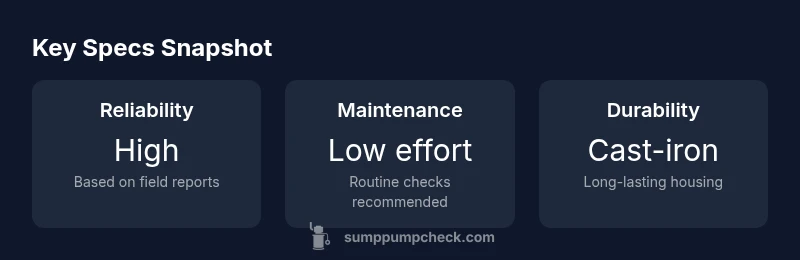
A key differentiator for the Zoeller M98 is its durable construction. The cast-iron housing provides rigidity, heat dissipation, and resistance to corrosion, which can translate into longer service life in damp basements. This mass helps dampen vibrations and reduces buoyant movement under load, contributing to steadier operation and less wear on seals. In contrast, plastic-bodied pumps may be lighter and cheaper upfront but can be more susceptible to warping or wear over time. The M98’s solid construction makes it a sensible long-term choice for homes with frequent moisture exposure, where consistent performance matters more than the lowest upfront cost. Routine inspection of seals and gaskets is still recommended to ensure ongoing reliability.
Maintenance routines to extend life
Maintenance is the practical bridge between a good pump and a long-lived one. Start with a quarterly inspection of the inlet screen and the basin bottom to remove hair, sediment, and debris that could impede flow. Test the float switch monthly by lifting and releasing it to ensure the pump responds as expected. Annually, inspect the discharge line and check valve for blockages and corrosion, replacing components as needed. After heavy storms, flush the system with clean water to clear any accumulated sediment in the sump pit. The Sump Pump Check guidance emphasizes documenting maintenance checks so you can spot worsening trends early and plan proactive replacements before a failure occurs.
Comparing to key alternatives: where M98 fits in a typical home
When stacked against budget models, the M98 generally offers stronger durability and more consistent performance, which translates to a lower risk of nuisance alarms and failure during peak water events. Compared with larger, higher-end models, the M98 delivers solid mid-range capacity with easier serviceability and accessible parts. For homeowners debating between brands, the Zoeller M98 tends to balance reliability with reasonable maintenance demands. Sump Pump Check notes that, in most homes, the M98 provides a practical sweet spot between cost, durability, and ease of installation. If your basement is prone to high water tables or frequent heavy rain, you may want to consider pairing it with a backup system for added protection.
Common install and failure points: troubleshooting and prevention
Several issues can undermine sump pump performance if left unchecked. Debris accumulation at the inlet can reduce flow, so regular screen cleaning is essential. A stuck or sluggish float switch will delay activation, requiring manual inspection and possible replacement. Backflow problems often arise when the discharge piping is blocked or too short, making a backflow preventer valve on the line a wise precaution. Electrical failures are another common cause of downtime; ensure the outlet is GFCI-protected and the power cord remains intact. Having a basic troubleshooting checklist helps homeowners diagnose issues quickly: check for power, inspect the float and screen, test the discharge flow, and confirm the check valve is functioning. Sump Pump Check’s field observations reinforce that routine maintenance reduces the likelihood of dramatic field failures during storms.
Sizing, capacity, and upgrade considerations for heavy rains
Sizing a sump pump like the Zoeller M98 revolves around expected water load, pit size, and the frequency of pump cycles in a worst-case scenario. For homes with larger basements or more aggressive water intrusion, upgrading to a higher-capacity model or adding a second pump can provide redundancy and faster water removal. A battery backup system further reduces the risk of backup during power outages, which are a common cause of flooded basements during storms. In all cases, confirm that the overall system—including piping, check valves, and backflow prevention—works in concert to keep water away from living spaces. The goal is to deliver predictable, dependable performance with minimal downtime, even during peak weather events.
Final take: practical implications for homeowners
The Zoeller M98 represents a pragmatic choice for homeowners who want durability without prohibitive complexity. Its robust build, straightforward installation, and reliable performance in typical basements make it a strong candidate for most households. However, it’s not a one-size-fits-all solution; very large basements or extreme weather conditions may justify a larger unit or a backup system. For DIY enthusiasts, the M98 offers a reasonable balance of serviceability and performance, with parts and guidance widely available. The key is to align the installation with local climate expectations, regular maintenance, and a clear plan for backups during emergencies.
What's Good
- Solid reliability for typical basements
- Durable cast-iron housing improves longevity
- Relatively straightforward installation and service
- Moderate noise with good vibration damping
- Good value for mid-range price point
Drawbacks
- No battery backup included in base model
- Not the highest flow rate for very large basements
- Requires periodic maintenance to avoid clogs
Best balance of reliability, installability, and value for most homeowners
The Zoeller M98 delivers steady performance and durable construction suitable for average basements. While not the cheapest option, its longevity and maintenance friendliness justify the cost for many households. For the right scenario, it stands out as a dependable, long-term solution.
FAQ
Is the Zoeller M98 suitable for backup power scenarios?
The base M98 relies on a standard electrical outlet, so a battery backup or second pump is often recommended for outages. Pairing with a backup system is a common approach in flood-prone areas.
Yes, you’ll likely want a backup solution in outages to prevent basement flooding.
Do I need a professional to install the M98?
Many homeowners install the unit themselves if they’re comfortable with basic electrical work and plumbing. However, ensure compliance with local codes and safety practices, especially for electrical connections and discharge piping.
DIY is possible for basic installs, but consult a pro if you’re unsure.
What maintenance should I perform regularly?
Regularly inspect the inlet screen, test the float switch, and keep the discharge path clear. Annually check seals and the check valve, especially after heavy rainfall events.
Do a quick quarterly check of screen and switch, plus annual valve checks.
How does the M98 compare to other Zoeller models?
The M98 sits as a mid-range option with robust construction and reliable performance. It may be heavier and pricier than ultra-budget models but generally performs better and lasts longer.
It's a solid mid-range choice with good durability and serviceability.
What should I consider for very large basements?
For very large basements or frequent heavy intrusions, consider higher-capacity models or multi-pump configurations. A backup pump improves resilience during power outages.
If you have a big space or frequent floods, plan for more capacity and backups.
What is a typical lifespan with proper care?
Lifespan depends on usage and maintenance; with regular care, many homeowners report long service life. Expect that performance can vary based on local conditions.
With proper care, it serves reliably for many years.
Top Takeaways
- Choose the M98 for durable, reliable performance in typical basements
- Ensure proper pit sizing and a check valve during installation
- Schedule quarterly maintenance to prevent clogs and ensure same-day readiness
- Consider a backup system for power outages and severe storms
- Compare to alternatives to balance upfront cost and long-term reliability