Zoeller Sump Pump Comparison: Which Model Is Right for Your Basement
A detailed Zoeller sump pump comparison to help homeowners select the best model based on head height, drainage needs, and maintenance considerations.


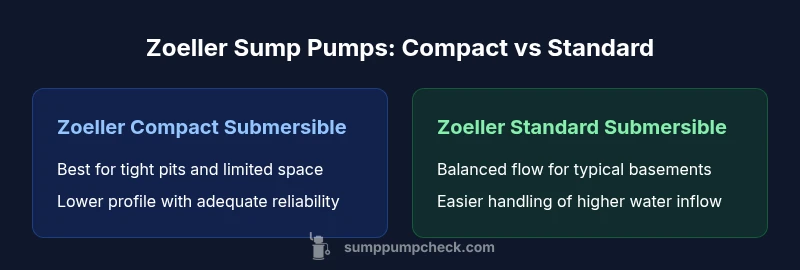
Performing a zoeller sump pump comparison shows that for most homes, the Zoeller Standard Submersible offers a balanced mix of performance and reliability, while the Compact model fits tight pits and limited spaces. The best choice depends on head height and expected water volume, but in general, Zoeller pumps provide durable construction and straightforward maintenance.
Why Brand Reliability Matters
Reliability is the cornerstone of any home pumping system, especially in basements where a failure can cause costly damage. In a practical zoeller sump pump comparison, homeowners learn that brand reputation often translates to longer service life, more available parts, and clearer guidance during maintenance. According to Sump Pump Check, Zoeller's engineering approach emphasizes durable cast-iron housings, rugged motors, and thoughtful seal design, which together reduce the likelihood of premature failure in damp, dirty, or cold environments. When you invest in a sump pump, you are not just buying a motor; you are buying a system that must perform under pressure. A reliable unit minimizes emergency calls, reduces the chance of standing water, and protects the home's foundation. For DIYers and pros alike, it is worth weighing warranty terms, service networks, and the ease of replacing wear parts. The goal of the zoeller sump pump comparison is to align a model with your basement's water load, discharge path, and maintenance willingness.
How Zoeller Sump Pumps Are Built for Durability
Zoeller sump pumps are designed for long life in challenging basement conditions. Core design choices—such as cast-iron housings, sealed motors, and robust impellers—help resist corrosion and sediment wear. Sump Pump Check analysis shows that when these materials are paired with proper installation, the mean time between service calls increases and the risk of clogs decreases. This durability matters most in homes with high groundwater, clay soils, or frequent freeze-thaw cycles. Zoeller also offers multiple float-switch configurations and weather-resistant seals so the same family of pumps performs well across different pits and basements. By focusing on simple maintenance tasks—checking the power cord, testing the float, and clearing the intake—homeowners can maximize uptime. In short, the Zoeller sump pump lineup is built around predictable operation rather than flashy features, which translates into reliability over time.
Common Sump Pump Configurations and What They Do
Understanding configuration matters for a zoeller sump pump comparison, because the baseline choice affects reliability, noise, and serviceability. Submersible models, which sit fully underwater in the sump pit, tend to be quieter and easier to protect from debris. Pedestal pumps keep the motor above the pit, which makes service access straightforward but may expose components to moisture. Battery-backed units add resilience during power outages, an essential consideration in areas with unstable electricity. When evaluating options, consider your pit size, the expected water volume, and the presence of freeze risk. If your space is tight, a compact submersible (the smaller end of the Zoeller family) may fit where a pedestal would not. If you experience strong inflow during storms, a larger-capacity Zoeller model designed for higher head and flow will reduce cycle frequency and wear. The goal is to match the configuration to the basement’s drainage profile and your tolerance for maintenance.
The Key Features to Compare Across Zoeller Models
In a zoeller sump pump comparison, several features matter most:
- Float-switch type: vertical, tethered, or electronic sensors; influences reliability and control response.
- Impeller design and motor protection: impact stall conditions and clog resistance.
- Sealing and housing materials: cast iron versus thermoplastic; affects heat dissipation and corrosion resistance.
- Discharge options and fittings: multiple adapters for different piping configurations.
- Warranty and service network: longer terms and easier access to replacement parts.
- Noise and vibration: weight, mounting, and balance influence quiet operation.
- Optional backup systems: power or water-powered backups for outages.
- Installation flexibility: vertical reach, base footprint, and clearance around the pit.
These features determine how a pump performs under peak loads, how easy it is to service, and how future-proof the system will be.
Performance vs Head Pressure: What Matters in a zoeller sump pump comparison
Performance is not just raw flow; it depends on head pressure—the height the water must be pumped against. Zoeller models vary in head capability, and the right choice depends on the basement’s sump pit depth and the distance to the discharge point. A compact submersible might deliver reliable flow at low head but slow down as head increases; a standard or high-capacity unit preserves flow over longer vertical runs. In practice, homeowners estimate the total head by adding vertical lift to the discharge line length and the friction losses from pipes and bends. Use this estimate to identify a Zoeller model that maintains adequate head pressure without frequent cycling. The takeaway: match the model’s head performance to your home's drainage geometry to avoid undersized pumps that short-cycle or oversized pumps that waste energy.
Wiring, Plumbing, and Discharge: Installation Realities
A successful zoeller sump pump installation hinges on proper wiring and reliable discharge piping. Ensure the circuit is dedicated and protected with a ground-fault circuit interrupter (GFCI) if required by local code. Use a check valve on the discharge line to prevent backflow and reduce cycling; position the check valve as close to the pump as practical to minimize trapped air. Keep the discharge line sloped away from the foundation to prevent re-entry of pumped water. Plan for a cleanable intake screen and consider a cable strain relief to guard against movement. If you’re upgrading from a pedestal to a submersible model, ensure the pit is sized correctly and that the new pump will clear any stand pipes or sump liners. For backflow prevention, a properly sized check valve and a secure venting approach will help maintain performance and protect the pump from debris.
Sizing Your System: Flow, Head, and Basin Capacity
Proper sizing is central to a successful zoeller sump pump comparison. Start with your basement’s typical water inflow: rainfall intensity, soil type, and drainage pattern. Then estimate head height: the vertical lift to the discharge point plus friction losses in the piping. Pit size matters: too small, the pump will short-cycle; too large, water will stagnate and cause odors or debris accumulation. Zoeller’s lineup provides models for compact pits and for larger basins; select a unit that can clear the anticipated water volume without excessive cycling. Finally, factor in backup options for power outages. Sizing is an ongoing process: as your home ages or drainage conditions change, re-evaluate the head and flow to ensure the pump remains adequate for the task.
Maintenance and Longevity
Routine maintenance extends the life of any sump pump, and Zoeller models are no exception. Periodic tasks include testing the float switch, inspecting the intake grate for silt, and ensuring the power cord remains intact. Clean the sump pit to minimize debris, and verify the discharge line remains free of obstructions. Replace any worn seals or gaskets promptly, and check the pump alignment and mounting to reduce vibration. In harsher climates or humid basements, inspect the impeller and bearings for wear annually. A well-maintained Zoeller sump pump will resist corrosion and reduce noise, enabling predictable operation when worst-case rainfall arrives. Keep spare parts on hand and schedule annual checks so minor issues never escalate into failures. This approach aligns with the maintenance recommendations from Sump Pump Check.
Cost Considerations and Value: What to Expect in a zoeller sump pump comparison
Budgeting for a sump pump involves more than the upfront price. Zoeller models vary in upfront cost, but the longer-term value often centers on durability, warranty coverage, and the cost of replacement parts. When you compare models, consider installation complexity, the need for a battery backup, and potential energy use over time. While some compact Zoeller units can be affordable, mid-range options typically offer better balance of head, flow, and reliability. For most homeowners, the best value comes from selecting a pump with a robust housing, simple maintenance, and a proven service network rather than chasing the lowest sticker price. Sump Pump Check encourages readers to view cost as an investment in basement protection and to balance the initial outlay with estimated lifetime savings from reduced failures and fewer service visits.
Backup Options: Power Outages and Additional Resilience
Outages are a common reason for basement flooding. In a zoeller sump pump comparison, consider a battery backup or a secondary pump to guard against extended blackouts. Battery back-ups provide emergency power during outages and can be integrated with existing controllers for automated switch-over. Water-powered backups offer a separate approach that doesn’t rely on electricity—but they require a supply of clean water and careful sizing. When planning backups, ensure the setup complies with local codes and that the backup unit can handle the same head and flow as the primary pump. Regularly test backups and perform battery maintenance per the manufacturer’s guidance. A well-planned backup strategy minimizes risk during severe weather and helps protect valuables and foundations.
Real-World Scenarios: Matching Zoeller Models to Your Basement
Consider a two-story home with a moderate rainfall pattern and a moderate sump pit. A standard submersible Zoeller model often delivers reliable protection while staying quiet and compact enough for typical basements. If your pit is deep or you have a long discharge route, a higher-capacity Zoeller unit that preserves flow at higher heads can reduce cycling and wear. For small crawlspaces or tight pits, a compact submersible is ideal. In areas with frequent outages, a battery backup dramatically increases protection. The key is to align the pump’s performance envelope with your home’s drainage profile and your tolerance for maintenance. This practical approach helps you make a more informed zoeller sump pump comparison.
Warranty, Service, and Long-Term Support
Warranty terms matter because they indicate manufacturer confidence and the availability of replacement parts. Zoeller offers warranty coverage that varies by model, with longer terms typically correlated with higher-end units. When evaluating the warranty, check what is covered (pump housing, motor, switches) and the process for service or replacement. A broad service network reduces downtime and helps you secure parts quickly. For homeowners who perform routine maintenance, confirm whether wear parts (impellers, seals, gaskets) are readily available and reasonably priced. Investing in a pump with a well-supported service ecosystem reduces total ownership costs and minimizes the risk of being left with a dead unit during a flood event. Sump Pump Check suggests documenting your warranty terms and storing receipts for quick claims if needed.
Comparison
| Feature | Zoeller Compact Submersible | Zoeller Standard Submersible |
|---|---|---|
| Flow capacity | low-to-moderate flow for tight spaces | moderate-to-high flow for typical basements |
| Head pressure | suitable for low head runs | better performance at moderate head heights |
| Noise level | quieter due to compact design | slightly louder but still manageable |
| Ease of installation | easier in tight pits with smaller footprint | more straightforward in standard pits |
| Best for | small basements or tight crawl spaces | typical basements with mid-range water inflow |
| Warranty considerations | comparable warranty terms | comparable warranty terms |
What's Good
- Proven reliability across Zoeller models
- Strong parts availability and service networks
- Multiple configurations fit different pits and needs
- Good balance of price and performance within the Zoeller lineup
Drawbacks
- Higher-end models may offer little extra for small basements
- Some installations require professional adjustment
- Discharge piping and pit sizing can add to total costs
- Backup options add upfront complexity
Standard submersible is the best all-around value for most basements
For typical homes, the Zoeller Standard Submersible offers reliable performance and straightforward maintenance. The Compact model excels in tight pits, while higher-capacity units suit larger inflows or longer discharge runs.
FAQ
What is the difference between Zoeller compact and standard sump pumps?
The compact model is designed for tight spaces and lower flow, while the standard submersible balances size with higher flow capacity for typical basements. Both share Zoeller’s durability, but the choice depends on pit size and expected water volume.
The compact model fits small pits and offers lower flow; the standard model handles typical basements with more resilience. Choose based on pit size and water load.
How do I size a Zoeller sump pump for my basement?
Sizing starts with assessing your basement’s inflow, pit dimensions, and discharge path. Estimate head height and friction losses, then select a model that can maintain a safe flow without frequent cycling. Reassess after changes in drainage or home layout.
Start by estimating water inflow and the discharge height, then pick a model that maintains adequate flow without frequent cycling.
Are Zoeller pumps reliable during power outages?
Reliability during outages improves with a battery backup or a secondary pump setup. Zoeller offers compatible backup options that can auto-switch when mains power is lost. Regular testing of backups is essential.
Yes, with a battery backup or secondary pump, Zoeller units stay protected during outages. Test backups regularly.
Do I need a battery backup for a Zoeller sump pump?
A battery backup is highly recommended for homes in flood-prone areas or with unstable power. It provides continued protection during outages and reduces flood risk. Budget for an automatic transfer and regular battery maintenance.
A battery backup is strongly recommended in flood-prone areas to stay protected during power outages.
What maintenance does a Zoeller sump pump require?
Regular checks include testing the float switch, cleaning the inlet screen, and inspecting the discharge line for obstructions. Annually inspect seals and bearings and keep spare parts on hand for quick replacements. Document maintenance activities for future reference.
Test the float, clean the inlet, and check the discharge line; inspect seals yearly and keep spare parts handy.
How long do Zoeller sump pumps typically last?
Lifespan depends on usage, maintenance, and water quality, but well-maintained Zoeller pumps typically provide years of service. Implement a planned maintenance routine, replace worn parts promptly, and monitor for unusual noises or vibrations that indicate wear.
With good maintenance, Zoeller pumps offer long service life and predictable performance.
Top Takeaways
- Prioritize reliability and parts availability in a zoeller sump pump comparison.
- Match head height and water inflow to the model's capabilities.
- Consider a backup option for power outages.
- Ensure pit size and discharge routing support the chosen model.
- Factor warranty and maintenance into total value.