Water Softener Drain to Sump Pump: A DIY Guide
Learn how to safely connect a water softener drain to a sump pump, with code considerations, materials, and a clear step-by-step process for homeowners and DIYers.


Quick answer: You can route a water softener drain to sump pump discharge to manage brine water while reducing stress on indoor drains, but you must follow local codes, install backflow protection, and verify the sump capacity. This guide covers layout options, permits, required materials, and a step-by-step process to help you do it safely. You’ll know when to DIY versus when to hire a pro.
Planning and Safety foundations
Before you start, understand that any modification to a drainage path that handles brine or wastewater must be approached with care. The goal is to route the water softener discharge without creating backflow risks or leaks in your home’s foundation. According to Sump Pump Check, begin with a risk assessment that identifies the best discharge route, potential pressure on the sump pump, and any local restrictions. The planning phase should include a request to review the water softener’s manual and your sump pump’s specifications to ensure compatibility. This stage also sets expectations for how much maintenance will be required after installation, and whether the job should be split into stages—especially in older homes with complex plumbing. The quick takeaway from this stage is to map the route, confirm that the sump pump can handle periodic surges, and document measurements for future reference.
Code, permits, and local variations
Local codes dictate how non-potable discharge can be connected and whether backflow prevention is required. In many jurisdictions, you’ll need either a backflow preventer or an air gap to prevent contamination of the potable water supply. Some areas require a permit for any modification to drainage lines, while others treat this as a minor alteration. Always call your local building department or consult a licensed plumber to confirm permit requirements and code-compliant materials. Sump Pump Check emphasizes using certified components and keeping a copy of the code citation you followed for future inspections. If there’s any doubt, opting for a professional assessment can save you from expensive corrections later.
Drain routes and sump-pit considerations
Selecting the right discharge path is critical. Avoid routing brine toward a floor drain that could become overwhelmed during heavy rainfall or rapid drainage. Opt for a path that leads away from living spaces and toward an outdoor discharge area or an existing sump-pump outlet with proper check valves. Consider the elevation of the sump basin and the need for a check valve to prevent backflow. If your sump discharge line already runs to daylight or a storm sewer, you’ll need to coordinate with that system’s backflow protections. A well-designed route minimizes bends, keeps the hose elevated above potential frost lines, and uses approved fittings to prevent leaks.
Materials, tools, and preparation
Having the right materials on hand reduces on-site troubleshooting. You’ll typically need a backflow preventer (or air gap), appropriate fittings (tees, saddles, adapters), a discharge hose compatible with your sump discharge, clamps, PVC glue, primer, sealant, and a shut-off valve to isolate the softener during install. A marker, tape measure, and level help ensure the run is straight and properly pitched. The preparation also includes turning off the water supply to the softener and placing towels or a liner under the work area to catch any minor spills. Documentation of the planned path and the installed components helps with future maintenance.
Step-by-step overview (conceptual)
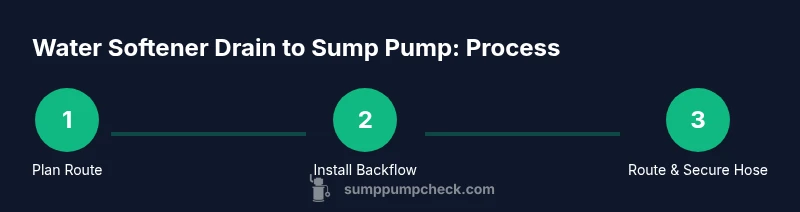
This section lays the groundwork for the hands-on steps in the dedicated STEP-BY-STEP block. You’ll learn how to determine connection points, choose fittings, and plan test procedures. Expect to see diagrams referenced (Figure 1 and Figure 2) to guide your layout. The approach prioritizes reversibility and the ability to revert to the original configuration if needed. Remember, safe testing requires a slow water flow and a monitored pressure check. See the diagram references for visual guidance.
Testing, maintenance, and troubleshooting
After installation, test the system with incremental flushing to verify there are no leaks and that the backflow prevention functions correctly. Check for any odors near the discharge path and confirm that the discharge rate remains within the sump pump’s capacity. Periodically inspect the hose connections, clamps, and fittings as part of your maintenance schedule. If discharge is slow or dripping appears at joints, re-tighten joints and reseal as needed. Routine checks help prevent unexpected failures during heavy rain or spring melt.
Common mistakes and how to avoid them
The most frequent errors involve undersizing the discharge path, skipping backflow protection, or placing hoses where freezing temperatures could damage them. Avoid tying into a potable-water line or using non-rated hoses that degrade over time. Don’t forget to label the new line and keep a planning document in your home maintenance binder. Following best practices and local codes reduces the risk of costly repairs and water damage.
Tools & Materials
- Discharge hose compatible with sump-pump outlet(1-1.5 inch diameter; length to reach sump discharge comfortably)
- Backflow preventer or air gap(Code-approved device sized for your discharge rate)
- PVC fittings: tees, adapters, couplings(Choose solvent-weld type; ensure compatibility with existing piping)
- Saddle valve or drill-and-tee attachment kit(Use only where permitted by code; avoid compromising potable supply lines)
- PVC glue, primer, and weatherproof sealant(Seal joints and prevent leaks in dry and wet environments)
- Pipe clamps, tape, and thread sealant(Secure and seal all hose connections; prevent movement)
- Shut-off valve for softener isolation(Allow maintenance without draining system)
- Marker, tape measure, level(Accuracy helps ensure a clean, leak-free run)
- Safety gear (gloves, eye protection)(Protect yourself during cutting and gluing operations)
- Bucket and rags(Contain spills during connections)
Steps
Estimated time: 60-120 minutes
- 1
Assess feasibility and code requirements
Review local codes and the water softener’s discharge capacity. Confirm that backflow protection is required and identify the best discharge route to minimize risk of backflow and flooding. Inspect the sump area for any existing access points you might reuse.
Tip: Document the local code citation you’re following and note any permit requirements before starting. - 2
Map the route from the softener to the sump discharge
Measure the distance and sketch a route that minimizes turns and avoids high-traffic areas. Plan for a gradual slope toward the sump to prevent standing water. Identify points for fittings and note potential interference with existing utilities.
Tip: Use chalk lines or painter’s tape to mark the path before cutting or drilling. - 3
Prepare the softener outlet and install shut-off
Shut off the water supply to the softener, drain any residual water, and install the shut-off valve to isolate the unit during work. This makes testing and maintenance safer and simpler.
Tip: Do not forget to label the shut-off valve for easy future access. - 4
Install backflow prevention and connect piping
Install the backflow preventer or air gap at the junction where the new drain will meet the sump line. Use the appropriate fittings and ensure all joints are clean before applying primer and glue. Allow joints to cure as recommended by the adhesive manufacturer.
Tip: Always test the backflow device by briefly running water to confirm it seals properly. - 5
Route and secure discharge hose
Attach the discharge hose along the planned route, securing with clamps at regular intervals. Route above floor level where possible and keep it clear of hot surfaces or moving parts. Check that the hose ends above the sump discharge level to prevent backflow.
Tip: Avoid tight bends; use gradual curves to prevent kinking and flow restriction. - 6
Make final connections and seal joints
Connect all fittings, apply sealant where needed, and tighten clamps. Double-check that every joint is watertight and that the hose is properly supported. Recheck alignment to avoid stress on any single joint.
Tip: Wipe off excess sealant before it cures to prevent residue from hardening on surfaces. - 7
Test for leaks and backflow
Gradually run the water softener through a cycle and watch all connections for leaks. Listen for gurgling that might indicate a backflow or flow restriction. If water pools, pause the test and re-tighten the fittings.
Tip: Keep a bucket handy to collect drips during the initial test for accurate assessment. - 8
Document and label the new drain path
Label the new drain line at both ends with its purpose and maintenance schedule. Update your home maintenance log with the installation date, permit details (if any), and contact information for future service.
Tip: Include a simple diagram in your binder for quick future reference. - 9
Schedule routine maintenance checks
Set reminders to inspect the discharge path every 6–12 months and after major plumbing work. Look for leaks, mineral buildup, or disconnections. Regular maintenance reduces the risk of system failures when you need it most.
Tip: Keep spare clamps and fittings on hand for easy emergency fixes.
FAQ
Can I connect a water softener drain directly to the sump pump discharge line?
Yes, if permitted by local code and you install proper backflow protection. Do not connect to potable water lines and ensure the discharge line is sized for the expected flow.
Yes, if allowed by code and with proper backflow protection. Do not connect to potable water lines and ensure adequate discharge sizing.
Do I need a permit to install this setup?
Permit requirements vary by location. Check with your city or county building department to determine if a permit is required for drainage modifications.
Permit requirements vary by location; check with your local building department.
Will this affect the water softener warranty?
Modifying drainage can affect warranty terms. Review the manufacturer guidelines and your installation manual before proceeding.
It can affect warranty; check the manual and manufacturer guidance.
What signs indicate a blocked discharge or potential backflow?
Slow drainage, gurgling sounds, water backing up into the softener or nearby fixtures, or damp spots near the discharge path indicate issues.
Look for slow drainage, gurgling, or backups near the discharge path.
How often should I inspect the drain connection?
Inspect every 6–12 months and after significant plumbing work or severe weather.
Check every 6 to 12 months and after major plumbing changes.
Watch Video
Top Takeaways
- Plan around local codes before starting
- Use backflow protection to prevent contamination
- Choose a straight, protected route for the discharge
- Test thoroughly and schedule regular maintenance
- Document changes for future service and inspections