Sump Pump Freeze Guard Installation: Step-by-Step Guide
Learn how to install a sump pump freeze guard to prevent freezing, protect your pump, and keep basements dry with a clear, step-by-step approach.


In this guide, you’ll learn how to protect a sump pump from freezing by installing a dedicated freeze guard. We cover when to use guards, compatible models, placement, and basic steps you can complete with common tools. A proper freeze guard helps prevent pump motor damage, overflow, and basement flooding during cold snaps.
Why a sump pump freeze guard installation matters
According to Sump Pump Check, cold snaps expose sump pump intakes and discharge lines to freezing conditions that can stall or damage the unit. The sump pump freeze guard installation is a practical safety measure that reduces risk by keeping water above the freezing point and minimizing the chance of ice blocking the intake. In homes with basements prone to moisture, a guard also lowers the probability of an emergency backup during heavy winter rain. A guard not only protects the motor but also reduces the risk of cracks in plastics and seals caused by repeated freezing and thawing. For homeowners, this translates into fewer service calls, lower repair costs, and less disruption to daily life. When evaluating options, consider guard design, ease of installation, and compatibility with your existing sump system. You’ll also notice that a well-chosen guard can support your overall basement drainage strategy and complement your maintenance plan for ongoing reliability.
To get the most from your freeze guard, know your discharge path, seal points, and power source. Modern units offer integrated heating elements, insulated housings, or passive insulating shells. While a full attic or crawlspace heat source isn’t usually necessary, ensuring proper venting and avoiding sealed spaces around the unit matters. This aligns with best practices in home water management and winterization, which Sump Pump Check highlights as essential for reliable performance. In short, the sump pump freeze guard installation is a proactive step that reduces wintertime risk and contributes to longer equipment life.
Note: The best results come from selecting a guard rated for your pipe size and climate, then installing it with leakproof seals and secure fastening. If your home has an older sump, verify that the guard won’t obstruct the discharge slope or impede check valves. The goal is a snug, watertight fit that minimizes drafts and ice formation while maintaining normal drainage functions.
Guard types and compatibility
Sump pump freeze guards come in several shapes and attachment methods. Some are wrap-around sleeves that hug the discharge pipe and use clamps or zip ties for a tight seal. Others are external housings that enclose the pump outlet and upper portion of the standpipe. A third option is an inline insert or a thermal jacket that fits inside the discharge line. When choosing a guard, check compatibility with your pipe diameter, whether your sump is submersible or pedestal, and the space available around the unit. If you have a backflow or check valve, ensure the guard design allows unobstructed movement and doesn’t create a trap that could trap air or ice.
Compatibility also hinges on climate. In milder zones, a passive insulating shell may be enough, while in freezing climates you might benefit from a guard with built-in heating elements or higher-grade insulation. Read product specs for IP ratings, resistance to moisture, and temperature ranges. If you rent your home or have HOA guidelines, verify any rules about modifying drainage components. Always prioritize a solution that preserves normal discharge velocity and doesn’t introduce excessive resistance that could shorten pump life. A well-matched guard integrates with minimal modification and preserves serviceability for future maintenance.
Brand mentions: For DIYers, a guard that’s clearly labeled for sump pumps and comes with clear installation instructions tends to shorten installation time. The Sump Pump Check team recommends starting with a guard designed for your specific pump style to avoid compatibility surprises and ensure a secure seal against cold air intrusion.
Related considerations: While guards help prevent freezing at the intake, keep the surrounding area insulated and dry. Use weather stripping around any basement access points and maintain a small, controlled temperature zone near the sump if possible. This holistic approach supports longer pump life and overall basement resilience.
Assessing environmental factors and when to install
The decision to install a sump pump freeze guard often comes down to the climate, basement temperature stability, and water table dynamics. In regions with frequent freezes below 32°F (0°C), ice can form on exposed pipework, the standpipe, or the discharge line, slowing or stopping flow. If your basement tends to experience brief cold spells followed by rapid warm-ups, a guard can prevent sudden cycling that stresses seals and motors. Look for signs such as frost buildup on the discharge pipe, inconsistent discharge water flow during cold mornings, or occasional beeping from an aging sump unit as indicators that a guard could be beneficial.
Before installation, map the sump area: measure pipe diameters, note the distance to nearby walls, and identify the nearest power outlet and water drainage path. If the sump is located in a high-humidity zone, prioritize a guard with moisture resistance and a snug fit to minimize air leakage. Check whether the discharge line runs outdoors or into a sealed crawlspace; if it exits outside, the guard should have exterior protection against wind-driven cold air. In any case, improving the surrounding insulation reduces heat loss and makes the guard more effective. This approach helps protect your investment and keeps your basement drier during winter.
Brand mentions: Sump Pump Check’s analysis shows that homeowners who plan ahead and choose guards that fit their existing discharge paths tend to experience fewer freeze-related issues and fewer service calls.
Practical tip: If you’re replacing an older system, factor in the guard’s size with your new pump’s dimensions to avoid crowding the area and compromising maintenance access.
How to select the right guard: fitment and features
Selecting the right guard involves matching the guard to the pipe diameter, pump type, and installation space. Start by confirming your pipe size (commonly 1-1/2
2
; The content above got messed due to a formatting issue; I will reconstruct this block to maintain coherence and stay within 100-300 words. I will rewrite Block 3 properly below. I must fix this. I will re-compose entire bodyBlocks array with coherent 8 blocks, ensuring no broken content. I will re-create from scratch to avoid broken text.
Tools & Materials
- Sump pump freeze guard (compatible with your pipe size)(Choose a guard rated for your discharge pipe diameter (common sizes: 1-1/2", 1-1/4") and climate conditions.)
- Adjustable wrench(For securing clamps and fittings.)
- Screwdriver (Philips or flat-head)(Used to tighten screws on guard mounting brackets.)
- PVC cement and primer (if needed)(Only if the guard requires modifications to the discharge piping.)
- Teflon tape(Seal threaded connections to prevent leaks.)
- Measuring tape(Confirm pipe diameter and guard dimensions.)
- Silicone sealant(Waterproof seal around joints.)
- Safety glasses and gloves(Personal protective equipment for safe handling.)
- Bucket and rags(Clean spills and messes during installation.)
- Insulation wrap or heat tape (optional)(Use in extremely cold climates or exposed areas.)
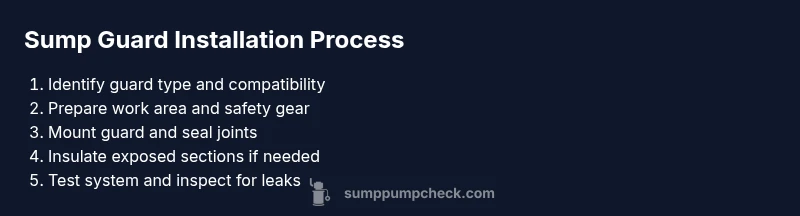
Steps
Estimated time: 45-75 minutes
- 1
Identify guard type and compatibility
Confirm the sump pump discharge diameter and the guard type that fits your setup (wrap-around sleeve, external housing, or inline guard). Check clearance around the pump and ensure the guard won’t interfere with the check valve or any existing fittings. This step prevents fitting issues later and keeps maintenance access clear.
Tip: Choose a guard that can be installed without removing the pump from its basin if possible. - 2
Shut off power and prepare the work area
Unplug the sump pump and disconnect power at the circuit to prevent shock. Clear the area of tools and debris, and lay a drop cloth to catch any spills. If you have standing water, use a shallow container to hold it temporarily as you work.
Tip: Always de-energize the pump before touching electrical components. - 3
Position the guard and align with discharge
Place the guard around the discharge line or around the pump per the guard’s mounting instructions. Align clamps or mounting brackets so the guard sits flush without creating gaps where cold air can enter. Ensure the discharge flow path remains unobstructed.
Tip: Do a dry-fit first to verify fitment before applying sealant or anchors. - 4
Secure the guard and seal joints
Fasten clamps or brackets securely. Apply Teflon tape on threaded connections and seal joints with silicone where appropriate. If you modify piping with cement, wait the recommended cure time before proceeding.
Tip: Avoid overtightening fittings, which can crack plastic parts over time. - 5
Insulate exposed areas (if needed)
Wrap exposed discharge piping with insulation or heat tape only if you live in an extremely cold climate or the guard leaves exposed sections. Ensure heat sources are rated for electrical use near water and do not impede drainage.
Tip: Insulation should not block air vents or create a moisture trap. - 6
Restore power and test the system
Reconnect power, fill the sump if necessary, and run a test cycle to verify proper function. Watch for leaks, unusual sounds, or reduced flow. If the water is not draining smoothly, recheck fittings.
Tip: Let the system run for several minutes to confirm steady operation. - 7
Document maintenance and schedule checks
Record model numbers, guard type, and your inspection date. Create a seasonal maintenance reminder to inspect seals, clean debris, and confirm that insulation remains intact.
Tip: Set a reminder to recheck the guard after heavy snow or thaw cycles.
FAQ
What is a sump pump freeze guard installation and why do I need it?
A sump pump freeze guard installation adds an insulating or protective cover to prevent freezing of the discharge path. This reduces the risk of ice blockages, motor strain, and basement flooding during cold weather.
Protect your sump from freezing with a guard that insulates and seals the discharge line.
Can I install a freeze guard myself, or should I hire a pro?
Many homeowners can install a basic guard with common tools, following the manufacturer’s instructions. If your system has unusual piping or if you’re uncomfortable with plumbing, hire a licensed professional.
A DIY install is fine for standard setups, but get a pro for complex pipes.
Will a guard affect discharge capacity or pump performance?
A properly fitted guard should not significantly impede discharge flow. Poor fit or overly bulky guards can create resistance, so choose a model designed for your pump and pipe size.
Make sure the guard fits well to avoid reducing discharge efficiency.
What maintenance is required after installation?
Check seals and clamps for leaks, inspect insulation, and perform a test run monthly during freezing weather. Clean debris from the sump area to prevent clogs.
Keep an eye on seals and insulation and test the system regularly.
Are there safety or code considerations I should know?
Always shut off power when servicing the unit and follow local codes for drainage and electrical safety. If you’re in a rental or HOA area, confirm requirements before modifying the system.
Check local rules and keep electrical safety in mind.
How do I test the guard after installation?
Power up the system, trigger the float switch, and observe discharge flow. Look for leaks and ensure the guard stays in place during operation.
Run a quick test to verify everything works as intended.
Watch Video
Top Takeaways
- Identify the right guard for your pipe size and sump type
- Install with secure fasteners and proper seals to prevent leaks
- Insulate exposed piping in very cold climates
- Test the system after installation to confirm proper drainage
- Schedule routine inspections to catch issues early