Pedestal Sump Pump vs Submersible: Which Is Best for Your Basement?
An evidence-based, balanced comparison of pedestal and submersible sump pumps for basements, covering installation, performance, maintenance, noise, backup options, and cost considerations for homeowners in 2026.


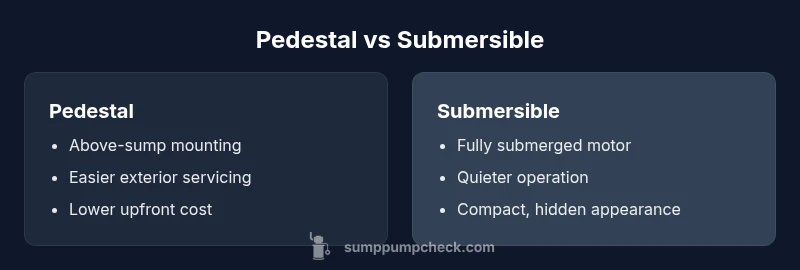
Pedestal sump pumps are mounted above the sump and are easier to service, while submersible models sit inside the sump and typically seal the motor for longer life. For most homes, submersible pumps offer quieter operation and better protection against damp basements; pedestal pumps shine where service access and lower upfront cost matter most.
What Are Pedestal and Submersible Sump Pumps?
Pedestal sump pumps are designed with the motor and pump assembly mounted above the sump basin, protected by a durable column or pedestal. Submersible sump pumps place the motor and impeller inside a waterproof housing that sits in the collected water. For homeowners, the distinction isn't just about placement; it affects serviceability, noise, and how the unit handles heavy runoff. According to Sump Pump Check, pedestal models shine when convenient service access is a priority, while submersible units are favored for their concealed operation and compact appearance in finished basements. The pedestal design is often perceived as easier to replace or inspect without draining the entire sump, whereas submersible units require opening the basin for access but can offer quieter performance when installed properly. In 2026, many new homes ship with submersible pumps, reflecting a shift toward sealed motors and compact form factors that fit modern basements.
Both types share core goals: move groundwater away from living spaces, protect foundations, and minimize overflow. The choice between pedestal and submersible affects how you install, service, and back up the system, as well as how it integrates with discharge piping and a backup pump. This guide references practical, real-world considerations rather than marketing claims to help homeowners decide based on function, space, and long-term reliability.
Comparison
| Feature | Pedestal sump pump | Submersible sump pump |
|---|---|---|
| Positioning and installation | Mounted above sump with external housing | Fully submerged in sump basin |
| Maintenance access | Easier to access on the exterior surface | Requires draining the sump or lifting the unit for service |
| Noise and vibration | Typically louder externally but minimal vibration once mounted | Quieter in finished spaces, but mounting quality and basin design matter |
| Durability in damp basements | Simple construction, robust but exposed to environmental conditions | Sealed motor enclosure designed for water exposure and long life |
| Discharge options | Top outlet with straightforward routing | Bottom outlet options depending on basin design and seal |
| Initial cost | Usually lower upfront cost | Often higher upfront cost but perceived long-term benefits |
| Best use case | Spaces with easy service access or garages | Finished basements requiring quiet operation and compact footprint |
What's Good
- Pedestal pumps offer easier service access without draining the sump
- Lower upfront cost makes pedestal pumps attractive for budget setups
- Submersible pumps run with less perceived noise and can handle typical loads when properly sized
- Both types benefit from a good backup option and proper discharge routing
Drawbacks
- Pedestal pumps may be louder and harder to protect from damp basements in tight spaces
- Submersible pumps can be harder to service and may require more complex disassembly for maintenance
- Upgrading to a backup system adds cost regardless of pump type
Submersible pumps are generally the better all-around choice for most residential basements, but pedestal pumps still have value in constrained spaces and for easier servicing.
In typical basements, submersible units provide quieter operation and sealed motor protection. Pedestal units shine when service access is essential or upfront cost is a critical factor. A careful assessment of space, noise tolerance, and maintenance plan will guide the best pick.
FAQ
Which sump pump type is easier to install for a DIY homeowner?
Pedestal pumps are generally easier to install for DIYers because the motor is above the sump, giving straightforward access to wiring and controls. Submersibles require more careful basin preparation and sealing, but they can be installed with basic plumbing and electrical skills if you follow manufacturer instructions.
Pedestal pumps are usually easier to install since you can access the motor without draining the basin.
Do pedestal and submersible pumps have different lifespans?
Lifespan depends more on sizing, maintenance, and usage than on pump type alone. Submersibles often benefit from sealed motors and modern bearings, which can extend life in busy basements when correctly installed and backed up.
Lifespan depends on use and maintenance more than the pump type.
Can I convert a pedestal pump to a submersible or vice versa?
Conversion isn’t straightforward because it typically requires changing the sump basin, mounting hardware, and possibly the discharge piping. In most cases, you should select one type based on the existing sump and space, rather than swapping later.
Conversions usually aren’t practical; pick the type that fits your sump and space from the start.
Which type is better for a finished basement?
Submersible pumps are generally preferred in finished basements for their quieter operation and compact appearance, reducing audible noise and visual impact. Pedestals can work if space and access are constrained and the noise level is acceptable.
Submersibles tend to be better for finished basements due to quieter operation.
What maintenance schedule should I follow?
Follow the manufacturer’s plan, typically including yearly inspections, checking the check valve, cleaning intake screens, and testing the float or switch. Batteries in backup systems should be replaced per the manufacturer’s guidelines to ensure readiness.
Inspect yearly, check the valve, and test the backup battery regularly.
Top Takeaways
- Assess service access needs before choosing the pump type
- Submersible models are typically quieter and space-efficient
- Pedestal pumps offer easier exterior servicing and often lower upfront costs
- Sizing and a proper backup plan affect long-term reliability
- Plan correct discharge routing to prevent backflow or flooding