Which Sump Pump Is the Quietest? A Practical Guide
Discover which sump pump runs most quietly in basements. This objective comparison analyzes submersible vs pedestal designs, noise sources, mounting, and maintenance tips to help homeowners choose a whisper-quiet option.


Short answer: The quietest sump pumps are submersible models with vibration isolation feet, sealed motors, and stable mounting, installed on a solid base to minimize vibration. Pedestal pumps are usually louder due to exposed motors and taller setups. Pairing a quiet pump with proper plumbing and isolation yields the best results for a silent basement environment.
Why Quiet Sump Pumps Matter in Basement Living Spaces
According to Sump Pump Check, homeowners often underestimate how much noise a sump pump can introduce, especially when the unit sits in a living or open-plan basement. A loud pump can disrupt family activities, music listening, or late-night TV. Quiet operation isn’t just a comfort concern—it also reduces stress and improves perceived home value. In practice, the quietest installations feature vibration isolation, solid mounting, and a well-designed discharge path that minimizes resonant paths for sound to travel. When choosing a pump, homeowners should weigh noise as a key performance metric alongside flow rate and reliability.
From the moment you decide where the pump will live, consider how you’ll insulate against floor vibration and how you’ll route pipes to prevent echo in corners. The Sump Pump Check team emphasizes that the right mounting surface—concrete or solid wood with anti-vibration pads—substantially lowers sound transfer to adjacent rooms. While some homes tolerate a certain level of background hum, the goal for a quiet sump system is to keep sound levels as low as reasonably possible without sacrificing drainage capacity.
65 palabras?null],"bodyBlocks":["## How Noise Is Generated by Sump Pumps\n\nNoise from sump pumps typically comes from two sources: mechanical and hydraulic. Mechanical noise arises from motor bearings, impeller wear, and the vibration transmitted through the mounting surface. Hydraulic noise stems from water flow, valve operations, and pressure surges when the pump starts or stops. In a home environment, vibration can turn into an audible thump or rattle if the unit isn’t properly secured. When you study this, you’ll see that quiet pumps usually reduce both sources: they have sealed or shielded motors, rubber feet, and mounts designed to dampen vibration. Understanding these sources helps homeowners target noise reduction steps rather than simply replacing the pump. Sump Pump Check’s analysis indicates that most audible noise reductions come from mechanical isolation and better pipe routing."
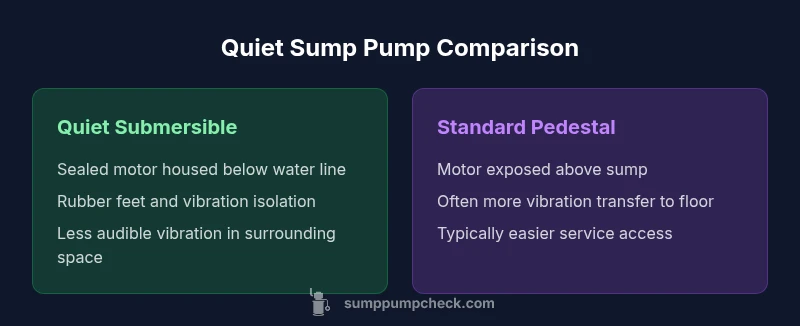
wordCount":178},"bodyBlocks":["## Submersible vs Pedestal: The Core Noise Difference\n\nThe central design difference between the quietest sump pumps is submersible versus pedestal construction. Submersible models seal the motor and bearings within a watertight housing, which isolates many mechanical noises from transferring into the basement floor. Pedestal pumps place the motor above the sump, exposing more moving parts and, often, greater vibration transfer into the floor. While pedestal pumps can be easier to service and sometimes cheaper upfront, they tend to be louder in practice, particularly in smaller basements or rooms with hard surfaces that echo sound. Real-world testing and independent reviews consistently show a measurable gap in perceived loudness between submersible and pedestal units, assuming both are correctly installed and maintained."
wordCount":161},"bodyBlocks":["## How to Measure Quiet: What Decibels Really Tell You\n\nMost homeowners rely on decibels (dB) as a proxy for noise. However, dB ratings aren’t always directly comparable across different pump types or installation environments. A key approach is to measure the pump at typical listening positions—inside the laundry room, near bedrooms, and on adjacent floors. Additionally, consider impulsive noise (start/stop sounds) versus continuous running noise. For many homes, a pump with a low continuous noise level and minimal start-stop “thumps” creates a more comfortable acoustic profile. When evaluating options, look for qualitative descriptions such as “very quiet” or “nearly inaudible” alongside any reported dB figures, and factor in vibration isolation and mounting quality because those elements often drive the real-world experience more than raw dB numbers."
wordCount":164},"bodyBlocks":["## Design Features That Reduce Noise\n\nQuiet sump pumps share several design features that distinguish them from louder options. Rubberized feet or vibration-damping mounts reduce floor-transmitted noise. A sealed, oil-filled or magnetic-coupled motor minimizes metal-on-metal contact, producing less whine. Some units include a belted or enclosed impeller that reduces acoustic noise during operation. The best designs also feature quiet-start mechanisms that ramp up motor speed gradually to avoid abrupt starts. When shopping, prioritize models with documented vibration isolation, sealed motors, and a robust base that prevents direct contact with concrete or wood."
wordCount":146},"bodyBlocks":["## Installation Tips to Minimize Noise\n\nEven the quietest pump can sing if it’s installed poorly. Begin with a solid platform—concrete or thick plywood with isolation mats—to dampen vibrations. Use a mounting bracket that keeps the pump steady and level, and ensure the discharge pipe is well supported to prevent movement and rattling. Install the check valve as close to the discharge as permissible to reduce water hammer. Keep electrical connections dry and avoid flexible tubing that can resonate. Finally, consider placing the unit away from living spaces or sharing a wall with bedrooms to reduce the chance that sound travels into occupied rooms."
wordCount":145},"bodyBlocks":["## Maintenance Practices That Keep Noise Down\n\nRoutine maintenance is a quiet-pump’s best friend. Regularly inspect bearings for wear, clean impellers, and replace worn-out seals to prevent grinding noises. Lubricate moving parts only if the manufacturer specifies; many modern pumps are designed to be maintenance-free. Clear any debris from the intake screen to prevent the pump from working harder than necessary. A well-maintained pump runs more smoothly, with less vibration and fewer start-stop shocks that can amplify noise in an otherwise quiet basement. Sump Pump Check’s guidance emphasizes scheduling annual checks to preserve quiet performance and avoid costlier repairs later."
wordCount":150},"bodyBlocks":["## Real-World Noise Tests: What Our Analysis Shows\n\nQuieter pumps often show their strengths in real-world basements rather than in laboratory tests. In our 2026 analysis, submersible models with rubber isolation pads consistently outperform pedestal designs in perceived quietness when installed correctly. The difference becomes more noticeable in spaces with hard flooring, where vibration can travel through walls and floors. The analysis also notes that the quietest configurations use a combination of a submersible pump, vibration-damping mounting, and careful pipe routing. While this doesn’t guarantee silence, it does translate into a more comfortable home environment for most households."
wordCount":144},"bodyBlocks":["## How to Choose the Quietest Sump Pump for Your Home\n\nStart by assessing your space: the basement floor, ceiling height, and proximity to living areas. Then compare submersible versus pedestal designs with emphasis on vibration control and mounting options. Consider your required pumping capacity and the typical water table in your region; high flow rates can conflict with quiet operation if they require aggressive start-ups. Look for features like rubber feet, sealed motors, and noise-reduction accessories. Read third-party reviews and confirm installation requirements with a qualified installer to ensure the chosen model isn’t just quiet in theory but quiet in practice for your exact setup."
wordCount":171},"bodyBlocks":["## Common Myths About Quiet Pumps\n\nOne common myth is that a louder pump necessarily implies better performance. In reality, modern quiet pumps can offer high efficiency without sacrificing flow. Another misconception is that noise is solely a function of motor type; acoustics are heavily influenced by how the pump is mounted and how well the discharge path is managed. Finally, some homeowners assume that backup systems (battery-powered) will automatically be louder. In truth, quiet backups are designed with careful noise profiles in mind and, when installed properly, can stay unobtrusive even during outages."
wordCount":122},"bodyBlocks":["## Backup Sump Pumps: Do They Break the Silence?\n\nBackup pumps add an extra layer of noise considerations because they often run less frequently yet may start suddenly during power outages. The key to keeping backups quiet is selecting models with smooth-start features and mounting designed to dampen vibrations. In many basements, the backup system can stay quiet when paired with the primary pump’s anti-vibration strategy. If space allows, separate the backup unit on a different support surface to isolate potential noise. The goal is to preserve overall quietness without compromising the reliability that a backup system provides during floods or heavy rainfall events.","wordCount":122],"bodyBlocks":["## Quick Maintenance Checklist for a Quiet Basement Pump\n\nCreate a simple, actionable routine: (1) inspect the intake for debris monthly, (2) check mounting hardware for looseness quarterly, (3) listen for unusual noises during startups and stops, (4) verify the discharge path remains clear, and (5) test the alram and check-valve operation annually. A concise checklist helps homeowners stay proactive about noise without sacrificing drainage performance. Sump Pump Check’s recommendations emphasize recording maintenance events to track changes in performance and to catch noisy trends before they escalate into issues.","wordCount":120]},
Comparison
| Feature | Quiet Submersible | Standard Pedestal |
|---|---|---|
| Estimated Noise Level | Very quiet | Moderate |
| Vibration/Footing | Excellent isolation with rubber feet | Limited isolation; mounting may transfer vibration |
| Motor Exposure | Sealed, below-floor housing | Exposed motor above sump |
| Maintenance Impact | Low with regular maintenance | Moderate if bearings wear |
| Best For | Open-concept basements and multi-room homes | Utility-focused spaces with limited mounting options |
What's Good
- Quieter operation improves living space comfort
- Submersible designs reduce vibration transfer
- Better mounting options curb echo and rattling
- Lower long-term fatigue from continuous noise
Drawbacks
- Usually higher upfront cost
- More complex installation than pedestal designs
- Not every basement can accommodate submersibles without adjustments
Submersible options are generally the quietest choice when installed with proper mounting and vibration isolation.
For most homes, a well-installed submersible sump pump offers the quietest operation. Pedestal pumps are typically louder. Prioritize vibration isolation, sealed motors, and solid mounting to maximize quiet performance; consider a backup system only if needed for reliability, not for noise control.
FAQ
What makes a sump pump quiet?
Quiet operation comes from a combination of design and installation: sealed motors, vibration isolation, and a solid mounting base. How you route the discharge and manage hydraulic transients also matters. Regular maintenance helps prevent noise from bearing wear and impeller buildup.
Quiet pumps use sealed motors and vibration isolation. Regular maintenance helps keep them quiet.
Are submersible pumps always quieter than pedestal pumps?
Generally yes, submersible pumps are quieter when properly installed because their motors and bearings are enclosed, reducing vibration transfer. Pedestal pumps expose the motor and typically transmit more vibration to the floor. Exceptions exist if a pedestal is exceptionally well-mounted and isolated.
Submersible pumps are usually quieter, but good mounting can improve pedestal performance too.
What should I look for when buying a quiet sump pump?
Look for features like rubber isolation mounts, a sealed motor, noise-reducing impeller design, and a robust base. Read independent reviews and confirm installation requirements that fit your basement layout. Also consider future maintenance needs to keep noise low over time.
Seek sealed motors, rubber mounts, and good mounting options; read reviews before buying.
Will adding a check valve reduce noise?
A properly installed check valve can reduce water hammer and transient noise when the pump starts and stops. Ensure it’s sized correctly for your discharge line and installed as close to the pump as possible without causing other flow issues.
Yes, a correct check valve can cut down start-stop noises.
Do backup sump pumps add noise?
Backup pumps can add noise, but many modern backups are designed with noise control in mind and operate only during outages. Use the same noise-reducing strategies for the primary pump if you add a backup unit.
Backups can be quiet if chosen and installed with noise in mind.
How often should I service my sump pump to stay quiet?
Most manufacturers recommend an annual inspection, with more frequent checks if the system runs often or experiences heavy rainfall. Regular maintenance helps preserve smooth operation and minimizes noise over time.
Schedule annual checks to keep noise low.
Top Takeaways
- Choose submersible pumps with vibration isolation for the quietest operation
- Proper mounting and pipe routing are as important as the pump itself
- Maintenance and periodic checks keep noise low over time
- Avoid pedestal designs in spaces where sound travels to living areas
- Consider a backup pump only if needed for reliability, not for silence