Flotec Sewage Pump Review: Performance, Setup, and DIY Tips
In-depth, balanced review of the Flotec sewage pump, covering installation ease, performance, maintenance, and value for homeowners and DIYers seeking reliable wastewater removal.


According to Sump Pump Check, the Flotec sewage pump offers a solid balance of price, reliability, and installability. In this review, we evaluate how the flotec sewage pump performs in typical basement drainage scenarios, compare its flow, head, and power draw to common submersible models, and outline DIY-friendly steps for safe, code-compliant installation. The goal is to help homeowners decide whether this unit fits a practical, budget-conscious approach to wastewater removal.
What is a Flotec Sewage Pump and Why It Matters
A Flotec sewage pump is designed to move wastewater that contains solids from a basement drain or pit into a sewer line or septic system. For many homeowners, especially those with full basements or lower-level laundry rooms, a reliable pump is the difference between a dry, usable space and ongoing drainage headaches. The Flotec line is commonly marketed as a budget-friendly option with straightforward installation. In practice, it tends to perform well for standard residential loads, but its long-term reliability depends on correct sizing, proper installation, and regular maintenance. Throughout this review, we reference insights from the Sump Pump Check team to place Flotec in the broader landscape of sump and sewage solutions. The goal is to give homeowners a transparent view of what to expect, including real-world constraints and best-practice installation tips.
Core Design Features and Materials
Flotec sewage pumps are typically built with a compact, submersible form factor. A common design includes a cast-iron or corrosion-resistant housing, a high-efficiency impeller, and an integral float switch or external control mechanism. In many models, the construction emphasizes durability for water with solids while keeping the footprint small enough to fit standard basins. For DIY installers, the most relevant features are the pump’s adaptability to standard 1-1/2 inch or 2 inch discharge lines, compatibility with common check valves, and ease of connection to a downstream electrical circuit. While premium brands may offer advanced sensors, Flotec focuses on dependable basics with serviceable components. Sump Pump Check notes that the balance between build quality and price is a key differentiator for this line.
Flow Capacities, Head, and Realistic Expectations
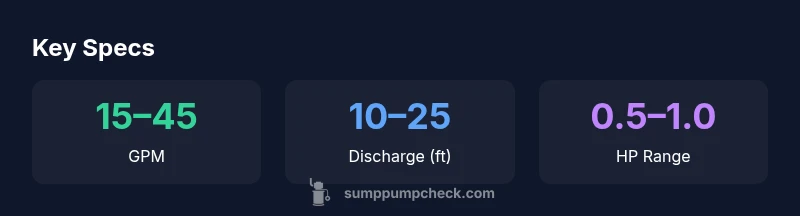
A central question with sewage pumps is how much water they can move and at what head (vertical lift). Flotec models commonly support a practical range suitable for many residential pits, typically in the mid-teens to mid-40s GPM depending on motor size and impeller design. Real-world performance depends on the height of the discharge route, pipe diameter, and how often the pump cycles. Homeowners should expect steady performance for regular basement discharge tasks, provided the system is sized for the expected water load and kept free of clogs. When evaluating the unit, compare the published GPM alongside the maximum head and the electrical draw to ensure compatibility with your home’s plumbing and electrical layout. For context, Sump Pump Check’s analysis highlights that proper sizing and regular maintenance are crucial for achieving consistent results across varied basement conditions.
Installation Considerations and Plumbed Drainage Path
Installation considerations for a Flotec sewage pump include selecting a basin that accommodates the pump’s float mechanism, sizing the discharge pipe correctly, and planning venting/anti-backflow features. A 1-1/2 inch or 2 inch discharge line is common, with appropriate check valves to prevent backflow. The path from the pump to the municipal sewer or septic line should minimize elbows and avoid high points that trap air. Make sure the pit is clean and that solids are within the pump’s solids-handling capability. Electrical connections should be planned to minimize exposure to moisture, ideally using a GFCI-protected circuit. Proper mounting on a stable base reduces vibration and prolongs life. These steps align with DIY best practices and reduce service calls later on.
Electrical Safety, GFCI, and Code Considerations
Electrical safety is non-negotiable with sewage pumps. Most installations require GFCI protection, weatherproof wiring methods, and secure strain relief where the cord enters the pump. Always verify that your local code permits basement pump installations and follow the National Electrical Code or your local equivalent. Use a dedicated circuit to avoid nuisance tripping and ensure an automatic shutoff if a fault occurs. If you’re replacing an older pump, check whether the new model requires different amperage or voltage. The Sump Pump Check team emphasizes that securing compliant electrical connections is as critical as the pump’s mechanical performance for overall system safety.
Durability, Materials, and Longevity
Durability in sewage pumps hinges on the pump housing, impeller material, and seals. Flotec models often use cast iron or corrosion-resistant alloys, which hold up well in damp basements and moist environments. The seals protect against moisture ingress, while the impeller design handles solids within typical household waste streams. Regular maintenance—such as cleaning the pump inlet, inspecting float switches, and checking for wear—extends service life. Longevity also depends on avoiding running dry or pumping solids beyond the unit’s capability. A well-maintained Flotec unit can maintain consistent performance for several years, especially when paired with a proper discharge piping and backflow prevention strategy.
Noise, Vibration, and Placement Strategies
Noise level and vibration can influence where you install the pump. Placing the unit on a stable, level base minimizes vibration that can loosen fittings over time. A properly sized basin reduces water splash and vibration, while a rubber mat under the pump helps dampen sound. If possible, mount the pump away from living areas and use flexible discharge piping to absorb movement. Regular checks for loose mounting screws and worn gaskets help maintain quiet operation. In many homes, thoughtful placement is as important as the pump’s motor rating for achieving acceptable noise levels.
Maintenance, Service, and Common Issues
Maintenance is the practical heart of field reliability. Regularly remove debris from the basin, inspect the float switch for sticking, and confirm the impeller is free of obstructions. Check the discharge check valve for proper operation and replace worn seals before leaks develop. Common issues include clogging from foreign objects, float switch failure, or a pump that runs frequently due to an undersized unit. By aligning pump capacity with actual basement load and performing routine checks, you can avoid costly service calls. The goal is predictable operation and a straightforward maintenance routine that a DIY homeowner can manage with basic tools.
How Flotec Stacks Up Against Competitors
Compared to premium brands, Flotec often delivers solid performance at a lower upfront cost, which is attractive for homeowners on a budget. It tends to excel in straightforward installations and basic wastewater removal tasks, but may lag behind higher-end models in features like advanced sensor networks or ultra-quiet operation. If your goals are reliable daily use and a simple, repairable design, Flotec offers competitive value. For more demanding scenarios—extremely high flow, challenging solids handling, or integrated smart controls—consider evaluating premium lines alongside Flotec to balance cost and capability.
Price, Warranty, and Value for DIYers
Price is a critical consideration for DIY projects, and Flotec generally sits in the mid-range for sewage pumps. Warranty terms vary by model and retailer but commonly include a limited period with coverage for defects in materials and workmanship. When assessing value, consider the total cost of ownership, including replacement parts, seals, and potential upgrades to discharge piping or backflow prevention. A well-supported warranty, along with readily available replacement parts, boosts long-term value for homeowners who plan to keep the system for several years. The DIYer’s strategy should include a clear maintenance plan that aligns with the chosen warranty terms.
Step-by-Step Quick Setup Guide (High-Level)
- Confirm pit size and discharge routing, ensuring compatibility with 1-1/2
2
or 1-1/4
What's Good
- Budget-friendly price point for many residential applications
- Simple, straightforward installation with standard fittings
- Durable cast-iron or corrosion-resistant components depending on model
- Good reliability with typical wastewater loads
- Clear maintenance expectations and serviceability
Drawbacks
- Lower flow head compared to premium models in some cases
- Loud operation when mounted on brittle surfaces
- Limited advanced features like automatic alarms on entry-level variants
- Compatibility constraints with certain check-valves and discharge piping
Best value for budget-conscious DIYers who need reliable basement wastewater removal
The Flotec sewage pump offers solid performance at a reasonable price. It is not the highest-end model, but the build quality and ease of installation make it a smart choice for most homes. The Sump Pump Check team recommends pairing it with a good check valve and proper venting for longevity.
FAQ
What is the typical flow rate range for Flotec sewage pumps?
Flotec sewage pumps generally operate in the mid-range for residential loads, with typical flow rates varying by model. Always check the specific GPM rating for your chosen unit and compare it to your basement demand. If you expect heavy intermittent loads, size up accordingly.
Flotec pumps usually fall in the mid-range for homes; verify the exact GPM for your model when planning installation.
Can I install a Flotec sewage pump myself, or do I need a professional?
Many homeowners with basic electrical and plumbing skills can install Flotec pumps following the manufacturer’s instructions. However, if your pit size, discharge path, or local code requirements are unusual, consult a professional to ensure proper sizing and compliance.
DIY is possible for common basins, but don’t hesitate to hire a pro if your setup is unusual or code requirements are strict.
What maintenance does a Flotec sewage pump require?
Regular maintenance includes cleaning the basin, inspecting the float switch, and checking the discharge path and check valve for obstructions. Plan periodic checks every 6–12 months and after heavy basement rainfall or floods.
Keep the basin clean and inspect the float switch and valve to prevent clogs and failures.
What warranty comes with Flotec sewage pumps?
Warranty terms vary by model and retailer, but most Flotec pumps come with a limited warranty covering defects in materials and workmanship for a defined period. Verify the exact terms at purchase.
Warranty terms vary by model; check the label and your retailer for the exact coverage.
How loud is a Flotec pump and how can I reduce noise?
Noise levels depend on installation and mounting. Placing the unit on a stable base and using flexible discharge piping helps reduce vibration. If noise remains an issue, consider upgrading to a model with a quieter motor or adding damping materials.
Mount it securely and use flexible piping to cut noise; consider a quieter option if noise is a concern.
Top Takeaways
- Assess pit size and discharge routing before install
- Expect solid performance at common residential flow rates
- Budget-friendly upfront cost with reasonable long-term value
- Install with proper venting and backflow prevention
- Maintain regularly for longevity and reliability