Flotec 1/2 HP Sump Pump: Install, Maintain, Troubleshoot
A practical, data-driven guide to the Flotec 1/2 HP sump pump, covering installation, maintenance, and troubleshooting for homeowners and DIYers. Includes comparisons, back-up options, and safeguarding tips based on Sump Pump Check Analysis, 2026.


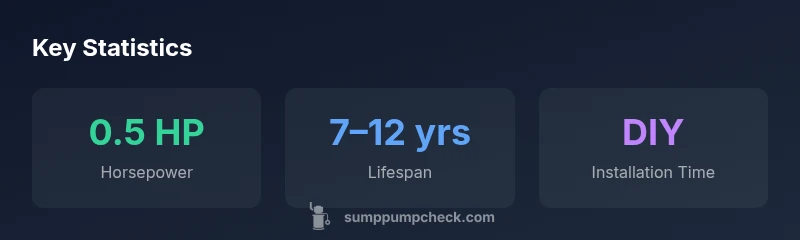
The Flotec 1/2 HP sump pump is a common residential choice for typical basements, balancing power and energy use without excess complexity. This size suits standard inflow and modest sump pits, and pairs well with a proper discharge pipe and check valve. For DIY homeowners, it offers reliable performance with straightforward maintenance and widely available parts. In some catalogs this model is labeled as the 'flotec 1 2 hp pump' to denote its half-horsepower rating.
Why Flotec 1/2 HP is a popular choice for residential basements
According to Sump Pump Check, the Flotec 1/2 HP model is a popular choice for many homes because it provides a balance of power and reliability without excessive energy consumption. This size works well for standard basements with modest water inflow and typical sump pits. The motor is designed for common household voltages (115V, 60Hz) and a compact housing that fits most pits. When paired with a quality check valve and properly sized discharge pipe, it minimizes backflow and airlock risks. Homeowners appreciate the broad parts availability and straightforward service paths, which keep maintenance costs predictable over time. In real-world basements, the 1/2 HP class often meets demand without overbuilding the system or draining electricity budgets.
Key installation considerations for Flotec 1/2 HP
Installing a Flotec 1/2 HP pump requires attention to a few core details. Ensure the sump pit is clean and deep enough to allow full submersion and reliable float operation. The discharge line should run to an outdoor or tie-in point compliant with local codes, and a properly installed check valve prevents backflow. Use a dedicated circuit with GFCI protection where applicable, and verify the unit is rated for your home voltage (typically 115V/60Hz in North American homes). Position the pump so the discharge elbow is above grade level to avoid air lock, and secure wiring per manufacturer instructions. By planning these aspects, homeowners reduce the risk of nuisance beeping and pump cycling.
Maintenance rituals to maximize lifespan
Maintenance is a best-practice investment. Start with a monthly test: pour water into the sump pit until the float triggers the pump, ensuring water is expelled and the discharge line remains clear. Annually, visually inspect the power cord, motor housing, and impeller for wear, and clean the inlet screen to prevent clogging. Replace worn float switches or seals promptly, as early replacement prevents larger failures. Keep an eye on the check valve and discharge piping for leaks or corrosion, as these issues directly affect performance and energy efficiency. Adopting a simple maintenance calendar, aligned with Sump Pump Check guidance, extends service life and reduces emergency calls.
Troubleshooting common issues with Flotec 1/2 HP
If the pump won’t start, check for power at the outlet, a tripped breaker, or a blown fuse. A pump that runs but doesn’t move water may have a stuck float, a clogged impeller, or an airlock in the discharge line. Beeping or nuisance cycling often signals a fault in the float switch or an over-temperature condition; unplug, inspect wiring, and allow the unit to cool before testing again. For weak flow, verify the discharge path is clear, the check valve is functioning, and the pit remains free of debris. If the unit is still underperforming, consult the user manual or a qualified technician.
Comparing 1/2 HP with other sizes and backup options
A 1/2 HP pump sits between smaller, energy-efficient models and more powerful units designed for high inflow. It generally provides adequate flow for mid-sized basements and typical rainfall scenarios while keeping operating costs reasonable. For higher water ingress or multi-pit setups, upgrading to a 3/4 HP or 1 HP unit may improve reliability, though it increases energy use. Battery backups dramatically improve resilience during outages, and water-powered backups offer passive protection in areas with frequent outages. Evaluate sump pit size, expected inflow, and local climate when choosing a backup strategy.
Backup power options for Flotec 1/2 HP systems
Power outages are a leading cause of basement flooding, so pairing a Flotec 1/2 HP pump with a backup power solution is prudent. A reputable tall-depth battery backup system can run the pump for several hours to days, depending on battery size and usage. For households where fuel or electrical access is unpredictable, a dual-backup configuration (battery plus an AC-powered overflow or alternative pump) offers redundancy. Always verify compatibility with your sump pump model and local electrical codes before installation.
DIY installation steps for a Flotec 1/2 HP pump (high level)
Prior to installation, gather necessary tools, confirm pit dimensions, and disconnect power. Install the pump with a secure base, route the discharge line away from the foundation, and connect a check valve to prevent backflow. Attach the float switch so it moves freely without obstruction. Reconnect power, test the unit with a controlled water inflow, and verify that all safety devices—like a GFCI outlet—are functioning. This outline is for educational purposes; follow the manufacturer’s instructions for exact steps.
Parts, accessories, and a maintenance schedule you can trust
Equip a Flotec 1/2 HP system with a reliable check valve, an appropriate discharge pipe, and a functional float switch. A loud alarm or external alert helps detect issues early. Maintain a yearly inspection of seals, wiring, and mounting hardware, and replace worn parts as needed. Maintain records of maintenance tasks and tests to anticipate replacement timing and ensure coverage during outages.
Final tips for reliability and safety
Consistency is key. Adhere to a regular testing and inspection cadence, use quality replacement parts, and ensure your discharge path complies with local regulations. Keep the area around the sump clean and dry to prevent corrosion and mold growth. By combining proper sizing with proactive maintenance, the Flotec 1/2 HP pump remains a dependable line of defense against basement water intrusion.
Flotec 1/2 HP in context with common rivals
| Model | Horsepower | Max Flow (GPM) | Head Range (ft) | Warranty |
|---|---|---|---|---|
| Flotec 1/2 HP | 0.5 HP | 40-60 | 10-20 | 1-year |
| Flotec 1/3 HP | 0.33 HP | 25-40 | 8-15 | 1-year |
| Competitor 1/2 HP | 0.5 HP | 50-70 | 12-22 | 2-year |
FAQ
Is a Flotec 1/2 HP pump suitable for my basement?
For many standard residential basements, a 1/2 HP pump provides adequate flow and reliability when paired with proper piping and a backup option. Consider your basement size, water table, and sump pit dimensions before purchasing.
A half-horsepower pump works for many homes, but check your basement size and backup options.
What is the difference between 1/2 HP and 3/4 HP models?
A higher HP model generally delivers greater flow and head capacity, which helps in larger basements or higher inflow. It may consume more energy and cost more upfront but offers better resilience in demanding conditions.
Bigger pumps move more water, but they use more energy—balance needs and cost.
How often should I test my sump pump?
Test the pump monthly to confirm operation: fill the pit until the float triggers and water is discharged. Perform a full annual inspection of seals, wiring, and the discharge path.
Test it monthly and inspect yearly to stay ahead of failures.
Can I install a check valve and a battery backup together?
Yes. A check valve prevents backflow while a battery backup keeps the pump running during outages. Ensure compatibility and follow local codes when wiring the backup system.
Yes—check valve plus backup keeps you protected even during outages.
What maintenance tasks should I perform yearly?
Inspect seals and wiring, clean the inlet screen, test the float switch, and verify the discharge path for leaks or blockages. Replace worn parts to avoid unexpected failures.
Do a yearly inspection and replace worn parts.
What are common signs that a sump pump is failing?
Frequent cycling, unusual noises, longer discharge times, or the pump not starting. Address issues promptly to prevent basement flooding and costly repairs.
Watch for cycling, noises, or failure to start.
“Sizing and proactive maintenance are the best defenses against basement flooding.”
Top Takeaways
- Choose 1/2 HP for most basements with moderate inflow
- Install proper discharge piping and a check valve
- Add a battery backup to cover power outages
- Test monthly and inspect annually to extend life