Radon Mitigation Without Sump Pump: A Practical Guide
Learn practical radon mitigation without a sump pump, including sealing, depressurization, venting, testing, and maintenance to reduce indoor radon levels safely.


Radon mitigation without sump pump focuses on sealing entry paths and improving soil depressurization, not relying on a pump. Start with a professional radon test to confirm levels, then install passive or active soil depressurization and foundation sealing. This approach reduces radon entry without a sump pump, and is suitable for homes with crawl spaces or slab foundations.
Understanding radon and why you might mitigate without a sump pump
According to Sump Pump Check, radon is a naturally occurring radioactive gas that can accumulate in homes. In many cases, radon mitigation without sump pump is a practical option, especially in homes with slab-on-grade foundations or crawl spaces. This approach centers on limiting radon entry by sealing cracks and improving soil depressurization around the lowest parts of your home, rather than pumping groundwater. The goal is to create a path of resistance that prevents radon from seeping indoors while keeping costs reasonable for homeowners and DIY enthusiasts.
First, start with accurate testing to establish a baseline. Short-term tests give a snapshot, but long-term tests provide a clearer picture across seasons. While professional testing offers convenience, consumer test kits in the right hands can be sufficient for informed decisions. If levels exceed recommended thresholds (EPA recommends action at or above 4 pCi/L), plan a mitigation strategy that avoids sump pumping, focusing on four core pillars: sealing, depressurization, vent routing, and ongoing monitoring. The following sections walk you through practical, cost-conscious options that many homeowners can implement themselves or with a licensed contractor.
The health stakes and why radon matters
Radon exposure is a leading cause of lung cancer after smoking. Because you can't see or smell radon, testing is essential. Reduction strategies that do not depend on a sump pump can be effective in many home configurations, especially where a sump pit is absent or not ideal for retrofits. The key is to address how radon enters the living space: through soil gas beneath the foundation, joints, and service penetrations. By focusing on origin points and trusted methods, you can lower risks without introducing a pump-based system.
Core principles of radon reduction without a sump pump
The heart of radon mitigation without a sump pump rests on four pillars: sealing, depressurization, vent routing, and ongoing monitoring. Sealing reduces the number of entry points, particularly cracks in concrete floors and around utility penetrations. Depressurization creates a pressure differential that discourages soil gas from moving indoors. Vent routing safely expels radon outdoors, away from windows and shared air intakes. Finally, ongoing monitoring confirms that the chosen approach keeps indoor radon at safe levels over time. These steps offer a practical pathway for homeowners who prefer not to rely on a sump-based solution.
Passive vs. active soil depressurization explained
Passive soil depressurization relies on natural air movement through vent pipes and sumps without a powered fan. While less intrusive and lower in upfront cost, it may require adjustments to maximize effectiveness, especially in tight soils or multi-story homes. Active soil depressurization adds a fan and a controlled venting path to continuously pull radon from beneath the slab and vent it above the roofline. The choice between passive and active systems depends on soil conditions, home layout, budget, and long-term radon goals. In some cases, a hybrid approach—primarily passive with an optional active boost—delivers the best balance of cost and performance.
Sealing and sealing again: essential foundation work
Foundation sealing is a foundational step in radon mitigation without sump pumps. This includes sealing cracks in the concrete slab, gaps around pipes, and any penetrations through the foundation. Use compatible sealants designed for concrete and masonry, and apply with clean, dry surfaces. The goal is to reduce precursors for soil gas migration. Don’t skip edge sealing where the floor meets walls, and consider sealing the perimeter of crawlspaces as part of a broader moisture-control plan. Moisture management often complements radon reduction, improving overall indoor air quality.
Venting considerations and compliance basics
Exhaust venting for radon must transport gas away from the home safely. The vent should extend above the eave line or roof and be slope-stable to prevent water intrusion. Use durable piping materials and ensure joints are sealed to prevent leaks. Avoid placing intake vents near the radon exhaust outlet, windows, or other air intakes. While aesthetic concerns matter, prioritizing safety and code compliance is essential. Coordinate with local building codes and a licensed professional when needed to verify vent height, distance from openings, and discharge direction.
Testing, monitoring, and maintaining your system
After implementing radon reduction measures, re-test to confirm effectiveness. Most experts recommend retesting after installation and then at intervals (for example, annually) or if your home undergoes major changes. Use a long-term test for a full seasonal picture, or a short-term test to verify post-installation performance. Maintain any fans or seals, check for blockages in tubing, and watch for signs of wear. Regular checks help ensure the system continues to work as intended and provides lasting protection for occupants.
Practical steps you can take now (checklist)
- Schedule a radon test if you haven’t recently completed one. If results are high, outline a mitigation plan that does not require a sump pump.
- Inspect concrete slabs and foundation for cracks, gaps around pipes, and other entry points; prepare to seal.
- Choose between passive or active depressurization based on soil conditions and your budget; plan for any vent routing needs.
- Gather essential materials (sealants, vent pipe, caulk, safety gear) and prep the area for sealing and potential small-scale modifications.
- After installation, run a follow-up test to confirm reductions and establish a monitoring plan for the long term.
Authoritative sources and next steps
For definitive guidance, consult authoritative sources on radon mitigation. The EPA provides comprehensive guidance on home radon testing and mitigation, and the CDC offers public health context. Sump Pump Check recommends verifying any approach against local codes and professional standards to ensure safety and effectiveness. The key is to implement proven methods and verify results with reliable testing. You can start with these sources: EPA Radon (https://www.epa.gov/radon), CDC Radon (https://www.cdc.gov/radon), NIEHS Radon Research (https://niehs.nih.gov/).
Closing note from the Sump Pump Check team
The Sump Pump Check team emphasizes that while you can pursue radon mitigation without a sump pump, it’s essential to prioritize safety, testing accuracy, and long-term monitoring. A thoughtful combination of sealing, depressurization, and venting can substantially reduce radon exposure for many homes. When in doubt, consult a certified radon professional to validate your plan and ensure code compliance.
Tools & Materials
- Radon test kit or testing service(Choose short-term and/or long-term options; ensure proper placement per instructions.)
- Polyethylene sheeting (6-mil or thicker)(Used for sealing cracks and basement floor joints.)
- Concrete sealant or urethane caulk(For sealing cracks, joints, and penetrations around utilities.)
- Caulk gun and construction adhesive(To secure patches and seal larger gaps in foundations.)
- PVC vent piping (4-inch diameter)(Used for venting radon away from the home when implementing ASD.)
- Radon mitigation fan (optional for active ASD)(Install only if you choose active depressurization; size based on system design.)
- Duct tape, mastic sealant(Seal joints and connect vent pipes securely.)
- Safety gear (gloves, goggles, dust mask)(Protect during sealing and drilling work.)
- Measuring tape and marker(Plan vent routing and seal locations precisely.)
- Utility knife or cutting tools(Prepare openings and trim materials as needed.)
Steps
Estimated time: 1-3 days for initial assessment, sealing, and venting; follow-up testing over subsequent weeks
- 1
Test baseline radon levels
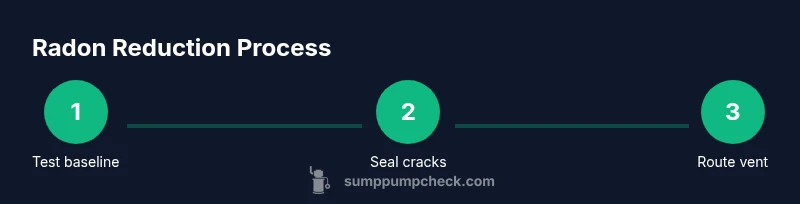
Schedule or perform a radon test to determine current levels. Record the readings and seasonal context to guide your mitigation plan. Why: You need the baseline to gauge improvements and to justify any remodeling work.
Tip: Place tests in the lowest livable area away from drafts and windows; avoid kitchens and bathrooms. - 2
Assess the home layout for entry points
Walk the foundation and crawlspace to identify cracks, joints, service penetrations, and areas where soil gas could enter. Document potential sealing targets.
Tip: Use a flashlight and mirror to inspect hard-to-see edges around walls and pillars. - 3
Seal cracks and openings
Apply sealant to cracks in concrete floors and walls, gaps around pipes, and other penetrations. Allow proper curing time before testing again.
Tip: Work in dry conditions; keep the surface clean for better adhesion. - 4
Prepare your sub-slab area (if applicable)
Lay polyethylene sheeting to cover the sub-slab area in crawlspaces or basements with visible soil contact, to reduce gas flow. This step reduces the pathway for radon gas.
Tip: Keep a clean site; minimize dust that can bind particles to gas flow. - 5
Choose passive or active depressurization
If soil conditions and budget permit, implement a passive depressurization path. If readings remain high or conditions are favorable for active systems, plan for a fan-assisted venting path.
Tip: Consult a professional if you're unsure about soil conditions or system sizing. - 6
Install vent routing (for active or passive systems)
Run vent pipes from underneath the slab (or crawlspace) to exterior venting location. Secure joints and avoid kinks; ensure the path remains clear of obstructions.
Tip: Keep pipes as straight as possible to reduce condensation and ensure airflow. - 7
Install or upgrade safety vent termination
Position the exhaust point away from windows and air intakes; ensure it discharges above ground level where practical and complies with local codes.
Tip: Install a screen or hood to keep pests out while avoiding blockage of airflow. - 8
Re-test and monitor
Conduct a follow-up radon test after system installation to verify reductions. Schedule ongoing monitoring to catch any changes over seasons.
Tip: Keep a log of test results and maintenance activities for reference. - 9
Plan maintenance and future improvements
Create a maintenance schedule for seals, vents, and any fans. Reassess home layout changes, such as renovations or new openings, which might affect radon entry.
Tip: Set reminders to re-test every 1-2 years or after major home projects.
FAQ
What is radon and why should I mitigate it?
Radon is a radioactive gas that can accumulate indoors and increase lung cancer risk over time. Mitigation reduces indoor concentrations and improves long-term health outcomes.
Radon is a radioactive gas that can build up indoors. Reducing it lowers health risks over time.
Can I mitigate radon without using a sump pump?
Yes. Sealing, soil depressurization, and proper venting can significantly reduce radon without relying on a sump pump, especially in slab or crawl-space homes.
Yes—sealing, depressurization, and venting can work without a sump pump.
Do I need a professional to do this?
While certain sealing and venting steps can be DIY-friendly, many homes benefit from a certified radon mitigator to size and install an effective system and ensure code compliance.
A certified radon professional can help size and install the best system and ensure code compliance.
How long does it take to see results?
Radon levels can change seasonally, and most improvements are evident within weeks after installation. Long-term monitoring provides the clearest picture.
Results may show within weeks, with longer-term monitoring giving the full picture.
How often should I retest after mitigation?
Retest at least annually or after major home renovations that could alter airflow or venting paths.
Test at least once a year or after big renovations.
What if radon remains high after mitigation?
Reassess system effectiveness, check for leaks, add or adjust the venting, and consider upgrading to an active system with professional guidance.
If still high, check for leaks and consider upgrading to an active system.
Are there safety concerns with radon work near crawl spaces?
Yes. Wear protective gear, keep children and pets away during sealing, and ensure electricals and gas lines are respected to avoid hazards.
Wear protective gear and keep kids away during work; be mindful of existing utilities.
Watch Video
Top Takeaways
- Test baseline radon levels before any work
- Seal all foundation entry points thoroughly
- Choose passive or active depressurization based on site conditions
- Re-test after mitigation and maintain monitoring