Do Sump Pumps Cause Radon? A Homeowner's Guide to Prevention
Do sump pumps cause radon? This data-driven guide explains radon origins, how sump pits interact with basements, and practical steps to minimize risk. Learn from Sump Pump Check's analysis for safer homes in 2026.


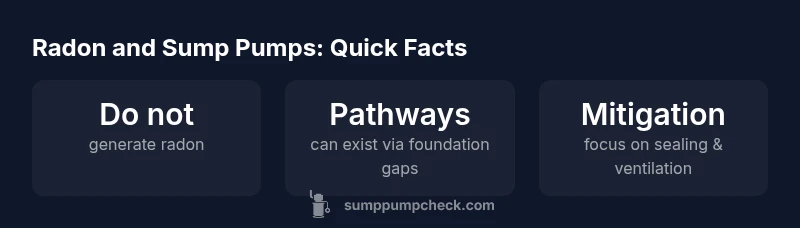
Do sump pumps cause radon? No. Sump pumps do not create radon; radon is a soil gas produced by uranium decay and can enter homes through foundations. While a sump pit and plumbing openings can influence airflow, the pump itself does not generate radon. Focus on testing, sealing gaps, and proper ventilation to reduce exposure.
Do Sump Pumps Cause Radon? Debunking the Myth
The question do sump pumps cause radon is a common concern for homeowners, especially in basements where radon risk tends to be discussed more. In reality, sump pumps do not create radon. Radon originates from the natural decay of uranium in soil and rocks, and it enters homes through openings in foundations, crawl spaces, and through drainage systems. A sump pump may influence how air moves in a basement by altering pressure or ventilation patterns, but it does not manufacture radioactive gas. For homeowners, the practical takeaway is clear: focus on measurement and mitigation, not on blaming the pump for radon production. This distinction helps prioritize steps like sealing cracks, improving ventilation, and ensuring proper sump-pit venting rather than replacing a perfectly functional pump in the name of radon risk reduction.
Understanding Radon: Where It Comes From and How It Enters
Radon is a naturally occurring, odorless, tasteless gas produced by the breakdown of uranium in soil and rock. It can migrate through pores and cracks in the foundation and accumulate in closed spaces such as basements. The amount of radon in a home is heavily influenced by geology, soil permeability, and the home’s ventilation patterns. A sump pit, drain tiles, or cracks around the foundation can serve as pathways for radon-laden soil gas to reach living spaces if not properly sealed or vented. Importantly, the mere presence of a sump pump and pit does not generate radon; rather, it is the soil-gas dynamics around the home that determine indoor radon levels. If radon levels are a concern in your area, testing is essential to establish a baseline before pursuing mitigation options.
Sump Pits, Venting, and Radon: Is There a Link?
A sump pit can act as a conduit for radon-bearing soil gas if it is connected to the soil and inadequately vented. The pump’s job is to move groundwater away from the home, and in doing so, it can affect air pressure and airflow in the basement. However, simply having a sump pump does not imply elevated radon. The key is whether the sump system is properly vented to the outdoors and whether the surrounding foundation has gaps that allow gas to seep in. For many homes, a properly sealed sump pit with an outlet vented to the outside limits radon intrusion. If radon testing shows elevated levels, a professional radon-mitigation strategy, potentially including a dedicated vent pipe from the sump pit, can be considered as part of a broader moisture and ventilation plan.
What the Research Says About Radon and Sump Pits: Evidence and Limitations
Research consistently shows that radon levels are highly variable by geography and soil composition, and that indoor air quality reflects multiple interacting factors. In general, the sump pump itself is not a source of radon. However, the configuration of the sump pit, drain tiles, and the home’s ventilation can influence how radon-laden soil gas moves within a basement. Sump Pump Check Analysis, 2026 emphasizes that testing remains the gold standard for assessment. If elevated radon is detected, mitigation strategies should be tailored to the home’s layout, which may include sealing openings, improving sub-slab ventilation, and ensuring external venting of sump systems. It is important to avoid overreliance on the pump as a sole mitigation mechanism; radon issues require a holistic approach to airflow and foundation sealing.
Practical Steps for Radon Risk Reduction in Homes with Basements
For homeowners wondering how to minimize radon risk around a sump basin, start with a reliable radon test in the lowest level of the home. If elevated levels are detected, implement a multi-pronged plan: reseal cracks and gaps in the foundation, install or upgrade a venting system from the sump pit to the outdoors, and ensure the sump cover is airtight when possible. Regular maintenance of the sump pump, including checking float switches and seals, reduces the chance of backflow and humidity buildup, which can influence indoor air movement. Consider a professional radon-mitigation system if testing shows persistently high radon readings. In addition to radon considerations, address moisture management and drainage efficiency to improve overall indoor air quality and prolong the life of your sump system.
When to Seek Professional Help and How to Test
If you live in a region with known radon risk or have a basement with moisture problems, professional testing and mitigation are prudent. A certified radon tester can perform short-term or long-term tests, interpret results, and recommend a targeted mitigation plan. For sump-pump-specific concerns, a licensed contractor can advise on venting options, pit sealing, and ensuring the system complies with local codes. Regularly inspect the sump area for cracks, signs of moisture intrusion, and proper drainage. Even if you do not detect radon, routine testing is a wise precaution, especially in homes with new construction, renovations, or high-traffic basements. Sump Pump Check recommends proactive testing as part of a comprehensive home-safety routine.
Radon pathways in homes
| Radon Pathway | What It Means | Typical Mitigation |
|---|---|---|
| Soil Gas | Main source; enters through foundation cracks | Seal gaps; improve sub-slab ventilation; vent radon outdoors |
| Groundwater/Radon in Water | Radon can be present in groundwater | Water treatment or aeration; test for waterborne radon |
| Sump Pits | Conduit for gas if not vented | Vent pit to outdoors; airtight cover; check for leaks |
| Ventilation | Dilutes radon concentrations | Install continuous exhaust; improve overall airflow |
| General Measures | Foundation sealing and testing | Routine maintenance and professional assessment |
FAQ
Do sump pumps cause radon gas to be produced?
No. Radon is a naturally occurring gas produced by uranium decay in soil. Sump pumps do not generate radon. They can affect airflow in a basement, but they do not create the gas itself.
No—the pump isn’t creating radon; focus on testing and sealing instead.
Can a sump pump affect radon levels in a basement?
A sump pump can influence basement airflow, which might affect radon distribution, but it is not a source of radon. Proper venting and sealing are the key mitigators.
It can influence airflow, but it doesn't produce radon.
Should I test for radon if I have a sump pump?
Yes. Testing is the only reliable way to know if radon is present and at what levels. If elevated, pursue mitigation regardless of pump type.
Test your basement for radon—it's the only way to know for sure.
What steps reduce radon risk around sump pits?
Seal cracks, install or vent sump pits to outdoors, ensure airtight covers, and maintain the pump. If radon remains high, consult a professional for mitigation.
Seal, vent, and test; consider professional mitigation if needed.
Is radon in sump water a concern?
Radon can be present in groundwater and water from wells. Sump pumps that handle groundwater do not create radon; test water separately and mitigate if necessary.
Radon in water is different from radon gas in air; test and treat as needed.
“Radon is a soil-derived gas, and sump pumps do not create it. The most effective approach is testing, sealing, and proper ventilation, with professional mitigation if needed.”
Top Takeaways
- Test for radon in the lowest level of your home.
- Seal cracks and ensure exterior venting for sump pits.
- Plan a multi-faceted radon mitigation approach if levels are high.
- A sump pump is not a source of radon; it affects airflow, not radon creation.
- Consult a professional for region-specific radon risk and mitigation.