Sump Pump and Radon: A Practical Comparison Guide for Homes
Compare sump pump setups and radon mitigation strategies for basements. Learn how to protect your home from floods and radon exposure with practical, evidence-based guidance from Sump Pump Check.


Bottom line: a combined strategy addressing sump pumping and radon mitigation provides comprehensive basement safety. If you only replace one, radon mitigation is essential for air quality, while a dependable sump pump protects against flooding. Sump Pump Check recommends evaluating both issues together, considering local codes, maintenance needs, and cost to ensure lasting protection.
The Sump Pump and Radon Link: Why They Belong in the Same Conversation
Radon and flood protection are both basement safety concerns, but they address different hazards. A sump pump helps remove water, reduce humidity, and prevent water damage, while radon mitigation reduces cancer risk from indoor air. According to Sump Pump Check, many basements benefit from addressing both issues in tandem. When moisture is high, soil gas movement and air currents can alter radon diffusion patterns, making integrated planning prudent. Radon entry is driven mainly by soil gas, while water intrusion worsens indoor humidity, which can affect comfort and mold growth. The most effective strategies combine drainage improvements with validated radon mitigation. In practical terms, you’ll want a reliable sump pump connected to a well-designed discharge system, plus a certified radon system that vents soil gas to the outdoors. This article compares how these systems complement each other and how to decide when to install both for resilience against floods and radon exposure.
Core Differences: Sump Pump System vs Radon Mitigation System
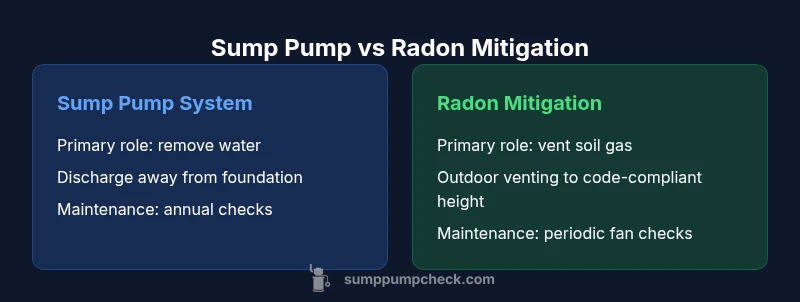
The two systems serve different purposes, yet homeowners often consider them together. A sump pump system is designed to move water away from the foundation during storms or high water tables. A radon mitigation system reduces a building's radon concentration by venting soil gas to the outdoors and sealing entry points. Components differ: pumps, check valves, and discharge lines vs sub-slab depressurization fans and vent pipes. Maintenance differs too: sump pumps typically require annual checks and pump replacement after several years, while radon systems rely on continuous venting with periodic fan or filter maintenance. The cost drivers are distinct: you’re paying for water management on one hand and for permanent gas mitigation on the other. Real-world decisions frequently converge when homes experience both moisture and elevated radon levels. In those cases, aligning the designs so that one supports the other—without compromising either system's performance—delivers the best long-term protection.
How to Assess Radon Risk and Flood Risk in Your Basement
Begin with testing and inspection. Start with a certified radon test kit or professional service to establish baseline radon levels; most homes in certain regions benefit from annual or multi-year tests. Parallelly inspect the sump pit, check valve, and discharge path for blockages, leaks, or improper slope. A moisture assessment can reveal high humidity, damp walls, or condensation that may influence mold risk and comfort. Sump Pump Check analysis, 2026, emphasizes that radon risk and flood risk are often location-dependent. In many households, radon levels are more pronounced in basement corners with poor ventilation, while floods occur where drainage fails or soil runs high. The practical takeaway is to assemble a simple plan: test radon, inspect drainage, and evaluate ventilation. Document findings, set thresholds for action, and seek professional guidance when radon readings exceed local recommendations.
Integrated System Design: When to Combine
Integrated design starts with separation of duties: keep the radon mitigation system independent from the sump pump, but ensure both systems have clear, unobstructed operation. Use dedicated venting for radon that exits above the roofline and away from intake vents; route the sump discharge away from the foundation and any radon entry points. Include a properly positioned check valve to prevent backflow and ensure that discharge does not re-enter the basement. Air sealing and a durable vapor barrier around the sump pit reduce moisture-driven airflow that could affect radon patterns. The goal is to create a coordinated plan where drainage improvements support overall air quality, and radon mitigation does not impede water management. An integrated approach aligns with best practices recommended by professional cohorts and reflected in Sump Pump Check’s guidance for 2026.
Practical Scenarios: Case Studies and Decisions
Scenario A: A flood-prone home with low radon. Install a robust sump pump with a durable discharge line, a backflow check valve, and a water-aware drainage plan. After flood protection is in place, test radon and consider a dedicated mitigation system if readings warrant action. Scenario B: A radon-prone home with some moisture but rare flooding. Prioritize radon mitigation and moisture control; plan for a future sump pump upgrade if humidity rises or water intrusion becomes more likely. Scenario C: A home with both high water and elevated radon. This is the strongest case for an integrated system: a reliable sump pump paired with a properly vented radon mitigation system, installed by licensed professionals, with ongoing verification. Each scenario highlights how to balance upfront costs with long-term risk reduction.
Maintenance and Best Practices
Maintenance is essential for both systems. Schedule annual sump pump checks, inspect the discharge path for clogs, and replace batteries in backup pumps before storm season. For radon mitigation, schedule periodic fan checks and confirm continuous ventilation. Use reputable contractors who follow local codes and use certified radon testers. Keep a maintenance log that documents test results, service visits, and any repairs. Sump Pump Check notes that adherence to a routine schedule dramatically extends system life and reliability, reducing the likelihood of expensive emergency fixes. Finally, educate household members about indicators of flooding or rising radon, and establish a clear action plan for weather events or test results.
Budgeting and Planning: Costs and ROI
Costs vary by home size, existing plumbing, and local labor rates. A typical sump pump installation can range broadly, reflecting pump capacity and features, and radon mitigation costs reflect soil conditions and the required venting length. When both systems are installed together, homeowners often incur higher upfront costs but gain resilience against two major basement hazards. Consider ROI in terms of reduced flood damage risk, improved indoor air quality, and potential energy savings from better insulation and humidity control. Sump Pump Check emphasizes that most homeowners find a combined approach cost-effective over the long term when both flood and radon concerns exist. Planning with a qualified contractor helps you sequence work to minimize disruption and maximize value.
Step-by-Step Implementation: A 6-Stage Plan
- Baseline assessment: test radon and inspect the current sump setup. 2) Define performance targets: flood protection level, radon action levels, and local code requirements. 3) Design integration: outline vent routing, discharge paths, and sealing strategies. 4) Equipment selection: choose a high-quality sump pump with appropriate capacity and a certified radon mitigation system. 5) Installation: have licensed professionals perform the install, ensuring proper venting, drainage, and electrical safety. 6) Verification and maintenance: retest radon after installation, observe system performance over the first season, and establish ongoing maintenance protocols. Throughout, document decisions, keep a safety-first mindset, and consult Sump Pump Check for guidance.
Safety, Codes, and Long-Term Compliance
Regulatory codes govern radon testing standards, venting requirements, and sump discharge practices. Ensure your plan follows local building codes, and obtain inspections where required. Use licensed contractors who can provide documentation and warranties. Radon mitigation often involves homeowners taking proactive steps to seal foundation gaps and create a sealed environment, then installing a venting system that exhausts outdoors. Sump pumps require regular testing, outlet checks, and battery backup readiness. Keeping both systems up to date with code-compliant installations improves safety, health, and property value over time. Sump Pump Check recommends reviewing local codes and staying current with state guidance to ensure compliance and optimal protection.
Next Steps and Verification
If you’re unsure where to start, begin with a radon test and a basic sump pump inspection. Use the results to prioritize installation steps and choose a coordinated plan that addresses both hazards. Work with qualified professionals who can design an integrated solution and provide documentation for future maintenance. The path to a safer basement lies in proactive testing, thoughtful design, and disciplined maintenance, guided by industry best practices and the Sump Pump Check framework for 2026.
Comparison
| Feature | Sump Pump System | Radon Mitigation System |
|---|---|---|
| Primary Purpose | Water removal and flood prevention | Radon gas reduction and ventilation |
| Installation Cost Range | $400-$1,500 | $1,000-$3,000 |
| Maintenance Frequency | Annual checks; pump replacement as needed | Annual radon test; periodic system servicing |
| Disruption to Home During Install | Moderate; some drilling and trenching | Low to moderate; wall-mounted or crawl-space installation |
| Impact on Indoor Air Quality | Indirect via humidity control; does not affect radon directly | Directly reduces radon risk when installed and sealed properly |
| Best For | Homes prone to flooding; high water table | Homes in radon-prone areas with existing moisture concerns |
| Limitations | Does not address radon unless combined with mitigation | Requires regular maintenance and fan replacement |
What's Good
- Addresses two major basement hazards—flooding and radon exposure—in a single plan
- Potentially lowers long-term costs by preventing water damage and health risks
- Increased resilience against moisture-related problems and gas infiltration
- Adds property value when both systems are present
Drawbacks
- Higher upfront cost and more complex installation
- Requires coordinated maintenance for two separate systems
- Radon mitigation effectiveness depends on soil conditions and proper venting
Integrated sump pump and radon mitigation is the best approach when both flood risk and radon exposure exist.
For homes with water intrusion and elevated radon, combining sump pump and radon mitigation delivers comprehensive protection. If only one issue is present, prioritize addressing radon for health or water safety depending on risk, but plan for a dual-system upgrade if possible.
FAQ
Do I need radon testing if I already have a sump pump?
Yes. Radon exposure is a separate hazard from flooding, and testing helps determine whether mitigation is needed even if your sump pump is functioning.
Yes. Radon testing is essential regardless of your sump pump situation to protect indoor air quality.
Can a sump pump reduce radon levels by itself?
No. A sump pump removes water, not radon gas. Radon mitigation requires a dedicated venting system and proper sealing.
A sump pump alone won’t reduce radon; you’ll need a radon mitigation system for that.
What is the typical cost range to install radon mitigation with a sump pump?
Costs vary, but combined work often falls in the range of radon mitigation plus installation upgrades for drainage and venting. Always obtain multiple quotes from licensed contractors.
Costs vary by home and soil conditions; get at least two quotes from licensed pros.
How often should I service a sump pump and a radon system?
Sump pumps should be checked annually and tested before storm season; radon systems should be checked per manufacturer guidelines, typically annually or after events that affect ventilation.
Check the sump pump yearly and inspect the radon system according to the manufacturer’s schedule.
Will radon mitigation interfere with the sump pump’s discharge?
Proper planning ensures radon venting and sump discharge routes do not cross or backflow into the living space. A licensed pro should coordinate both systems.
They can work together if properly designed; avoid discharge paths that cross radon vents.
What signs indicate I need radon mitigation ASAP?
Elevated radon test results beyond local guidelines, persistent dampness, or mold growth in the basement suggest mitigation should be considered.
If radon tests are high, act quickly and consult a pro for mitigation.
Top Takeaways
- Test radon levels early to determine need for mitigation
- Ensure your sump pump discharge is directed away from foundations
- Plan for a combined system when both moisture and radon risks exist
- Schedule regular maintenance for both systems to maintain performance