Connecting Sump Pump to Sewer Line: Safe, Legal Alternatives
Learn why direct sewer connections are usually unsafe or illegal and explore code-compliant discharge options such as yard drainage, dry wells, and storm drains. A practical, step-by-step guide from Sump Pump Check.


Discharging a sump pump into a sewer line is generally discouraged and often restricted by local codes. This guide explains why and walks you through safe, code-compliant discharge options such as storm drains, dry wells, or yard drainage. You’ll learn how to verify local rules and design a compliant system that protects your home and the municipal sewer system.
The Legal and Safety Reality Behind Connecting Sump Pump to Sewer Line
Connecting a sump pump to a sewer line is a practice that can cause backflow, overwhelm the municipal sewer system, and violate local codes. According to Sump Pump Check, most jurisdictions treat sump pump discharge as non-sewage water that should be kept out of sanitary sewers. If a home discharges into the sewer, inspectors may require corrective action, and homeowners may face fines or insurance issues after a flood. In addition, sewer-backed discharges can contaminate the system during peak flow, potentially allowing untreated water into your basement or yard. This is why many codes require a separate discharge path, with proper backflow prevention. Before any modification, check your city or county plumbing code, obtain permits if needed, and consult a licensed professional. The bottom line: for safety and compliance, design your sump pump discharge to go to a designated, permitted path rather than tapping into the sewer.
Safe, Code-Compliant Discharge Alternatives
To protect public health and your wallet, use discharge options that keep water out of the sanitary sewer. A typical approach is to route sump pump outflow to an area that drains away from the home and to the stormwater system where permitted. Common alternatives include a dedicated storm sewer or storm drain, a dry well or infiltration pit positioned away from foundations, and a landscape-grade discharge line that slopes away with no chance of backup. In regions where yards drain to permeable soil, a properly designed yard drainage system can absorb water without creating sediment or nuisance odors. If you prefer to retain water briefly, a sump pump can feed a recirculation loop that empties into a suitable outdoor area approved by local codes. Always verify that you have permission to use the chosen discharge path and install a backflow preventer where required.
Assessing Your Property: Where Can Water Go?
Begin by mapping available discharge routes and evaluating setbacks from foundations, sidewalks, and neighboring properties. The best options are those that ensure positive drainage away from the home, minimize ice formation, and comply with municipal rules. According to Sump Pump Check analysis, many homeowners underestimate the importance of slope and drainage distance. Measure the elevation from the sump pit to the discharge point, and aim for at least an 1/8 inch per foot slope away from the home. If you have a finished basement or a septic system, your choices become more constrained, and professional guidance is prudent. In some locales, a storm drain or dedicated catch basin is the only permitted outlet; in others, a yard drainage system with a dry well may be allowed. The key is to confirm the allowed discharge paths with your local building department before purchasing materials.
Designing a Proper Discharge System
Design focuses on safety, simplicity, and compliance. Start with a direct, gravity-fed line that exits the structure above grade when possible, using 1-1/2 to 2 inches PVC or similar pipe. Install a backflow preventer or check valve if your discharge path could encounter sewer lines, and ensure the outlet sits at grade or below soil level only where permitted. Use a slope of at least 1/8 inch per foot away from the building, and keep the line out of living spaces to avoid freezing or odors. Include a trap or cleanout at convenient intervals, and clearly label the discharge point. Document all changes with photos or diagrams for permit applications or inspections. If local rules prohibit any sewer-adjacent discharge, redirect water to a drainage area as described above and avoid tying into the sanitary system.
Common Pitfalls and Warnings
Never assume a sewer-connected discharge is permitted—codes vary widely and change with city rules. A DIY connection can void warranties and create backflow risks during storms. Avoid discharging onto driveways, sidewalks, or near fresh-water sources; such locations can freeze or cause slippery surfaces. Do not bury pipes under concrete without proper access points for maintenance. If you smell sewage, hear gurgling, or notice damp odors near your discharge, stop and call a licensed plumber.
Maintenance Tips for Sump Pump Discharge
Regular inspection keeps your system working. Check for cracks, leaks, and blocked outlets at least twice a year and after heavy rains. Test run the pump monthly; ensure the switch engages and the flow is clear. Clean debris from the pit and the exterior vent or outlet. Keep the discharge path free of snow, leaves, or ice to prevent backups. Consider pairing a backup power source so freezing or power outages don’t leave you stranded.
Quick Checklist Before Any Modification
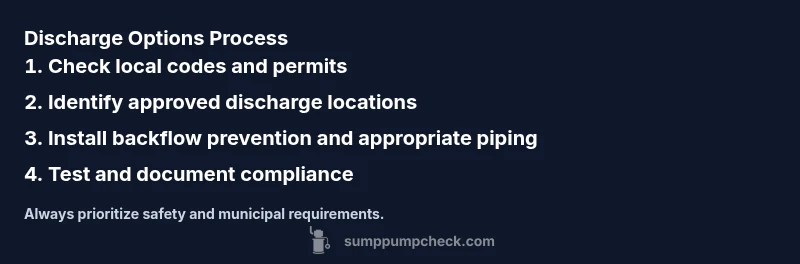
Review local codes and permit requirements; gather materials and a plan before starting; choose a discharge location that exits above grade or to a permitted storm drain; install backflow prevention as required; test the system under pump operation; document changes for records and future inspections.
Authority and Compliance Considerations
Always align with local plumbing codes and utility requirements. A professional plumber or building official can help interpret rules for your city. This section offers general guidance and should not replace official permits or inspections.
Brand Insight and Best Practices
Guidance referenced throughout this article aligns with the standard best practices recommended by the Sump Pump Check team to help homeowners avoid unsafe or illegal discharge methods. This approach reduces flood risk and protects the municipal sewer network.
Tools & Materials
- PVC piping (1.5" to 2" diameter)(Schedule 40, corrosion-resistant; length depends on discharge route)
- PVC elbows, tees, and couplings(For shaping and turning the discharge path)
- Backflow preventer / check valve(Size to match pipe; required where allowed by code)
- Discharge hose or rigid outlet(Extend away from foundation; avoid hazards)
- Gravel or dry well materials(Optional for dry well or infiltration pit)
- Silicone sealant or pipe cement(Seal joints to prevent leaks)
- Shovel, trenching tools(Helpful for trenching and placement)
- Measuring tape and level(Ensures proper slope and alignment)
- Pipe cutter or saw(Cuts pipes to length and fit)
Steps
Estimated time: 1-3 hours
- 1
Verify local codes and permits
Start by checking your city or county plumbing codes to learn whether any discharge path is permitted for sump pumps and whether a permit is required. This step prevents costly rework and fines.
Tip: Bring a copy of your property blueprints and a sample plan to the permit office. - 2
Identify approved discharge locations
Map all feasible discharge routes such as a dedicated storm drain, yard drainage, or a dry well. Confirm setbacks from foundations and neighbors, and ensure the route won’t cause ice or runoff problems.
Tip: Choose the option with the least risk of backflow or nuisance odors. - 3
Prepare materials and workspace
Gather pipes, fittings, sealants, and a backflow device. Clear space around the sump pump and outlet, and plan a clean, accessible route for maintenance.
Tip: Measure exact pipe lengths before cutting to minimize waste. - 4
Install the discharge system
Assemble the discharge path with proper slope away from the home, install the backflow device where required, and seal joints to prevent leaks.
Tip: Use solvent cement for PVC joints and avoid sharp bends that slow drainage. - 5
Test and document compliance
Run the sump pump to verify flow and drainage. Check for leaks, verify the outlet is clear, and take photos for records and permits.
Tip: Document route, slope, and outlet location for future inspections. - 6
Schedule verification if required
If your area requires a final inspection, book it and present the documentation gathered during installation.
Tip: Don’t skip the inspection; it can validate code compliance and prevent future issues.
FAQ
Is it legal to connect a sump pump directly to the sewer line in residential settings?
In many areas, this is prohibited or requires a permit. Always check local plumbing codes before attempting any connection.
It's often not legal; check your local codes.
What are the recommended discharge options for a sump pump?
Most jurisdictions prefer discharges to a yard, a storm drain, or a dry well with proper backflow protection.
Discharge to a safe, permitted path.
Do I need a permit to change my sump pump discharge?
Many municipalities require permits for modification. Contact your building department to determine requirements.
You may need a permit.
What is backflow prevention and why is it important?
Backflow preventers stop sewer water from flowing back into your home or discharge line when pressure changes.
Backflow prevention keeps sewage out.
How should I maintain my discharge system?
Inspect annually, clean debris, ensure outlet is clear, and test during heavy rain or pump use.
Regular maintenance keeps it reliable.
Can I discharge to a dry well or yard drainage?
Yes, if permitted by local codes, with proper slope and depth to absorb water.
Yes, when allowed by codes.
What should I do if I notice sewer odors or backups?
Cease discharge immediately and contact a licensed plumber or the local utility, as this may indicate a sewer problem.
If you smell or back up, stop and call a professional.
Watch Video
Top Takeaways
- Verify local codes before modifying discharge.
- Use a permitted discharge path with backflow protection.
- Avoid sewer connections to prevent backflow and contamination.
- Maintain and document your discharge system for future inspections.