Sump Pump to Sewer Line: Safety, Codes, and Safer Alternatives
Learn whether you can tie a sump pump into a sewer line, why codes restrict this practice, and safer discharge options with practical, code-conscious guidance.


Definitively, you should not tie a sump pump discharge into the sanitary sewer. In most jurisdictions this is prohibited due to backflow risk and sewer backups. Instead, discharge should be directed outdoors or into an appropriate drainage system with backflow protection, or routed to a dedicated storm/sewer system where allowed by local codes. Always verify requirements with your local authority and a licensed plumber.
Can you legally tie a sump pump into the sewer line?
If you’re dealing with a flooded basement, you might wonder whether can you tie sump pump into sewer line to eliminate yard drainage. The short answer is that in most places this practice is not allowed. Sewer systems are designed to handle household waste, not a continuous flow from a pumped out sump. Improper connections can create backflow into basements, contaminate clean water lines, or overwhelm municipal sewers during peak rain events. The question can you tie sump pump into sewer line is common among homeowners, but the correct approach is to pursue approved discharge paths with proper backflow protection. According to Sump Pump Check, many local codes restrict this practice and require discharge to an exterior area or dedicated drainage system. If you must relocate discharge, coordinate with a licensed plumber to ensure the work complies with current standards and permits. This initial assessment helps you avoid costly code violations and potential health risks.
Why codes generally restrict sewer ties and backflow risks
Codes restrict tying sump pumps into sanitary sewers because a pump is designed to move water, not raw sewage and solids. A high-volume discharge can push wastewater into the home’s plumbing, lead to sewer backups, or create cross-connections that endanger drinking water lines. Backflow prevention devices are essential when any alternate discharge is considered, but many municipalities simply prohibit the practice altogether. Regulators worry about unintended consequences, like stormwater or groundwater seeping into sewer lines during heavy rain, which can cause pressure fluctuations and sewer overflows. The guidance from the Sump Pump Check Analysis, 2026 notes that enforcement varies by city, but the safer, widely accepted approach is to avoid sewer ties entirely and pursue outdoor drainage solutions that comply with local codes.
Safer discharge options and best practices for homeowners
Safer discharge options start with directing the pump’s outlet away from the foundation and toward an exterior area where the water can drain harmlessly into soil. A dedicated outdoor discharge line, equipped with a backflow preventer and a properly sloped pipe, is a common solution. If your lot drains toward a storm sewer or a municipal drainage system, verify eligibility with local authorities and obtain any required permits. In some cases, a French drain, dry well, or subsurface drainage field can be used to manage groundwater, but those systems require design and approval. Always use a check valve on the discharge line to prevent backflow into the sump or house. Regular inspections ensure the discharge path remains clear of snow, ice, or debris that could block flow.
How to determine rules for your home and obtain permits
Start by checking your city or county building department’s online code portal or contacting a permit desk. Look for sections on sanitary sewer connections, backflow prevention, and sump pump discharge. If a permit is required, submit a simple site plan showing the sump location, discharge path, and proposed backflow protection. HOA rules, if applicable, may also govern drainage connections. While you explore options, document your current setup with photos and notes so you can compare before-and-after configurations when you discuss changes with a professional. Sump Pump Check emphasizes coordinating with local authorities to ensure compliance and safety before making any modifications.
Remediation steps if an illegal tie-in exists
If you discover an existing, unapproved tie-in, do not continue to use it. Turn off the sump pump and arrange a professional assessment to remove or reroute the line to a compliant discharge path. The remediation may involve disconnecting the line, sealing the sewer port, and installing a proper exterior discharge or dedicated drainage connection. Take before-and-after photos for records and keep receipts for any permits or inspections. This approach minimizes risk of sewer backups and protects household health.
Professional help and long-term maintenance for a safe system
Even when a discharge path is approved, ongoing maintenance protects your investment. Schedule periodic checks of the discharge line for cracks or leaks, confirm the backflow device remains functional, and test the sump pump regularly (at least monthly) to ensure proper operation. Keep the area around the discharge clear and free of ice in winter. Consider a backup power source and alarm to ensure flood protection during power outages or pump failure. Regular professional inspections help catch problems early and keep your system compliant with evolving codes.
Tools & Materials
- PVC pipe (1-1/2 inch) or as required(Standard PVC schedule 40 for exterior discharge)
- PVC elbow and street elbow(For routing around obstacles)
- Fernco rubber couplings(Flexible couplings for transitions)
- PVC cement and primer(Seal joints securely)
- Pipe cutter or handsaw(Cut piping cleanly)
- Pipe wrench and adjustable wrench(Tighten fittings safely)
- Teflon tape(Seal threaded connections)
- Backflow prevention device or check valve(Prevent sewer backflow)
- Safety gear (gloves, goggles)(Protect during work)
Steps
Estimated time: 60-120 minutes
- 1
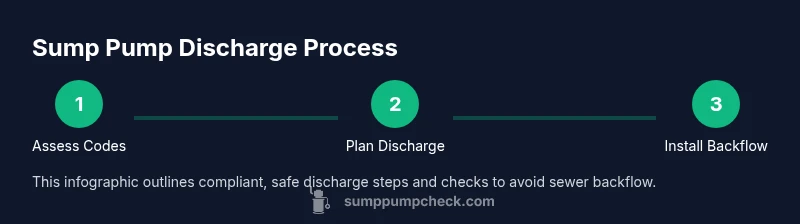
Check local codes and permits
Review your city or county building code to determine whether any connection to the sanitary sewer is permitted. Look for sections on sump pump discharge, backflow prevention, and required permits. If a permit is required, submit a plan and expected discharge path before starting work.
Tip: If in doubt, consult a licensed plumber or your local building official for clarity. - 2
Plan an approved discharge path
Map a route from the sump pump to an exterior discharge point or to an approved drainage system. Ensure the route avoids basements and living spaces, maintains a natural downhill slope, and includes a backflow preventer where required.
Tip: Document the plan with a simple diagram for permits and future maintenance. - 3
Install discharge piping with backflow protection
Cut and assemble the discharge piping, install check valve or backflow preventer, and secure all joints with PVC cement. Route the pipe to the exterior discharge or approved drainage path and test for leaks.
Tip: Test the system by running water through the sump to confirm full flow and leak-free joints. - 4
Remove any illegal tie-in responsibly
If there is an existing illegal sewer tie-in, stop using it and arrange professional remediation. Disconnect the line, seal the connection, and reroute to a compliant path as required by local code.
Tip: Take photos before and after remediation for your records. - 5
Test, document, and maintain
Run the sump pump to ensure proper discharge and no backflow. Keep a maintenance log and schedule regular checks of the line and backflow devices.
Tip: Keep emergency contact info for a licensed plumber in your maintenance folder.
FAQ
Can I legally tie my sump pump to the sewer line?
In most places, tying sump pump discharge to the sanitary sewer is not allowed. It can cause sewer backups and cross-connection hazards. Always verify with local codes and a licensed plumber before making any changes.
Most jurisdictions restrict tying a sump pump to the sewer because it can cause sewer backups. Check your local codes and consult a licensed plumber before proceeding.
What are the best alternatives to sewer line tie-in?
Discharge to outdoors with a properly sloped pipe and backflow protection, or route to an approved drainage path such as a storm sewer or French drain, depending on local rules.
The best alternative is an outdoor discharge with backflow protection, or routing to an approved drainage path per local rules.
Do I need a permit to modify sump pump discharge?
Often yes. Many jurisdictions require a permit for changing drainage paths. Contact your city or county building department to confirm requirements.
Most places require a permit for changes to sump pump discharge. Check with your local building department.
What happens if there is an illegal sewer tie-in?
An illegal tie-in can cause sewer backups, health hazards, and fines. Do not use it; arrange remediation with a licensed plumber and obtain any necessary approvals.
Illegal tie-ins can cause backups and health hazards. Remove it with professional help and get approvals.
How can I tell if my discharge setup is safe?
Check for a functioning backflow device, clear exterior discharge, and no leaks. Regularly test the sump pump and inspect piping for cracks or blockages.
Look for a working backflow device, clear discharge, and test the pump regularly.
What components are essential for a proper discharge system?
Essential components include appropriate piping, a backflow preventer or check valve, proper slope away from the foundation, and a secure exterior discharge point.
You need piping, a check valve or backflow preventer, proper slope, and a secure outdoor discharge.
Watch Video
Top Takeaways
- Check local codes before attempting any tie-in.
- Avoid sewer connections; use outdoors or approved drainage.
- Get permits and involve a licensed plumber when required.
- Install backflow protection and verify slope for discharge.
- Maintain discharge lines and test regularly.