Is a Battery Backup Sump Pump Worth It? A Comprehensive Review
Explore whether a battery backup sump pump is worth the investment, how it protects your basement, costs involved, maintenance tips, and guidance for homeowners deciding on a backup system.


Is a battery backup sump pump worth it? In many homes, the answer is yes, especially where outages or heavy storms are common. A backup pump runs on a sealed battery when mains power fails, providing automatic protection for your basement. It works best as a failover to your primary pump, reducing flood risk during power outages and pump failures. If you face frequent outages, high flood risk, or have valuable basement space to protect, a battery backup is a smart, proactive choice.
Is a battery backup sump pump worth it
For many homeowners, determining whether a battery backup sump pump is worth it requires weighing risk against cost. A backup pump is designed to run on a sealed battery when power is out, keeping water from rising in the basement during storms, outages, or when the primary pump fails. In practical terms, a backup can be the difference between a dry basement and costly flood damage—especially during extended outages caused by severe weather. This guide examines when a backup makes sense, how it works, and what tradeoffs to expect. According to Sump Pump Check, the answer often leans toward yes for properties in flood-prone zones or areas with frequent power interruptions. The core idea is straightforward: you want a failover that activates automatically when your main pump cannot rely on electricity. By understanding your home’s layout, climate risks, and your tolerance for risk, you can decide if a battery backup is a worthwhile addition.
How backup pumps differ from primary pumps
A primary sump pump is typically wired to your home’s main power circuit and designed to move large amounts of water quickly under normal conditions. A battery backup sump pump, by contrast, is intended to activate during power outages or when the main pump fails. It often uses a smaller, secondary motor that runs on a rechargeable battery. The float switch in the backup system is designed to trigger automatically when water rises, so you don’t have to manually intervene during a storm. While a primary pump handles the bulk of baseline drainage, the backup provides resilience during outages, helping to prevent basement flooding when electricity is unreliable. In practice, most homeowners pair a reliable primary pump with a backup to create a two-tier defense against water intrusion.
Sizing and capacity — what matters
Selecting the right backup involves understanding runtime, capacity, and battery type. Sizing hinges on your home’s drainage needs, the pump’s head height, and the battery’s amp-hour rating. A typical backup will run longer on a larger capacity battery but may deliver less flow if the water elevation is extremely high. Consider factors such as the size of your sump pit, the height of your discharge, and your climate’s storm frequency. Common configurations use AGM or sealed lead-acid batteries, which balance cost, reliability, and maintenance. When evaluating options, don’t rely solely on the pump’s horsepower; the overall run time and the battery’s ability to recharge between outages are equally important. This section helps you translate household risk into tangible sizing decisions so you can pick a unit that truly protects your space.
Cost considerations and ROI
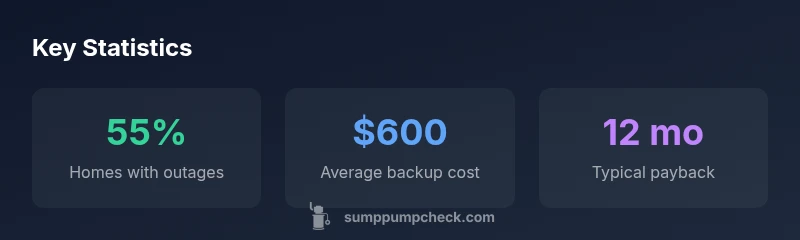
Cost is a major driver in the decision to add a backup system. A complete battery backup sump pump kit typically ranges from a few hundred to several hundred dollars for the device and battery, with installation and integration adding additional costs. Real-world ranges often fall around $300–$900 for mid-range kits, depending on the battery type, backup capacity, and whether the system is installed alongside a primary pump or as a stand-alone unit. When you weigh ROI, focus on the value of flood protection, peace of mind, and potential savings from avoided damage. In areas with frequent power outages or serious flood risk, a backup can pay for itself over time through reduced repair costs and minimized disruption. Sump Pump Check notes that while upfront costs are nontrivial, the long-term protection they offer is meaningful for many households.
Installation basics and compatibility
Installation compatibility is a two-part consideration: electrical safety and plumbing integration. Some jurisdictions require professional electrical work or permit checks, especially if you modify the main sump system or add new wiring. Most battery backups install alongside the existing sump pump and can share a common discharge line, but you’ll want to ensure the backup’s float switch and control wiring won’t interfere with the primary unit. Check battery type compatibility, charging circuits, and automatic switchoffs to prevent battery damage. Additionally, verify that your discharge line remains free of blockages and that the backup system can operate with your current sump pit dimensions. This planning reduces the chance of fit issues and ensures a smooth, reliable upgrade.
Testing, maintenance, and troubleshooting
Routine testing is essential to confirm readiness. A monthly test—running the backup pump for 30–60 seconds with the main switch turned off—helps verify that the battery and switchwork are functioning. Battery health declines under deep discharges and prolonged standby; plan for periodic replacements every 3–5 years, depending on usage and battery chemistry. Keep terminals clean, check for corrosion, and follow the manufacturer’s maintenance schedule. If you experience tripping breakers, unusual noises, or alarm beeps, consult the manual and consider professional service. Proper maintenance keeps your backup system dependable when you need it most.
Real-world scenarios and decision tips
In practical terms, your decision should reflect risk assessment. If you live in a flood-prone area, have a basement finish or storage of valuable items, or rely on a sump pump during winter storms, a backup pump is a prudent addition. For new homes, plan the backup during the initial plumbing layout to minimize retrofitting. If you already have a capable generator, you may still want a battery backup for immediate response during outages or when starting a generator is delayed. By weighing outage frequency, flood history, and potential damage costs, you can determine whether a backup suits your risk tolerance and budget. Sump Pump Check emphasizes that a well-chosen backup is a clear value add for many homeowners.
Brand reliability and choosing models
Reliability hinges on components: sealed batteries, a robust float switch, metal housing, and a proven pump motor. Look for models with automatic recharging, an intuitive indicator panel, and compatibility with your existing sump arrangement. Compare maintenance requirements, battery type (AGM vs. flooded), and warranty terms. While brand loyalty matters, the most important factors are protective features, ease of replacement, and consistent performance under typical outage scenarios. For readers of this guide, we aim to balance practical features with realistic expectations so you can select a system that integrates smoothly with your home.
Authoritative sources and further reading
For a deeper dive into flood safety and home electrical considerations, consult authoritative resources from FEMA and other public institutions. This section provides external references to help you explore related topics and corroborate best practices. While individual product recommendations vary, understanding the broader safety context strengthens your final decision.
What's Good
- Adds automatic flood protection during power outages
- Simple to install with a wide range of kits
- Low ongoing maintenance with periodic battery checks
- Pairs with a primary sump pump to create a resilient defense
Drawbacks
- Requires battery replacement every few years
- Added upfront cost and ongoing maintenance
- Not a full substitute for a high-capacity main pump in severe floods
Battery backups are worth it for most homes facing outages or flood risk
The Sump Pump Check team recommends considering a battery backup in areas with frequent outages or high flood risk. The long-term protection, quick response during outages, and compatibility with existing pumps justify the upfront cost for many homeowners, especially when paired with a reliable primary unit.
FAQ
What is a battery backup sump pump and how does it work?
A battery backup sump pump runs on a rechargeable battery and activates automatically when water rises or power is lost. It serves as a failover to your primary pump, improving protection against basement flooding during outages or pump failures. Proper sizing and maintenance are essential for reliable performance.
A backup pump uses a battery and a float switch to kick in when the power goes out or the main pump fails, keeping your basement dry automatically.
Is a battery backup sump pump necessary if I already have a generator?
A generator covers power supply but may take time to start during a storm. A battery backup provides immediate protection and never depends on manual action. Many homeowners pair both for maximum resilience, especially in flood-prone areas.
A generator helps, but a battery backup starts automatically right away during outages, providing instant protection.
How long will a backup sump pump run on battery power?
Typical run times range from 15 to 60 minutes depending on battery size and water load. High-demand periods may shorten runtime, so sizing and battery health matter for sustained outages.
Most backups run for 15–60 minutes on a typical battery, depending on use; size and health of the battery matter.
Can I install a battery backup sump pump myself, or do I need a professional?
Many kits are designed for DIY installation, but electrical work and code compliance may require a licensed professional. If you’re unsure about wiring or permits, hire a pro.
You can install many kits yourself, but if you’re unsure about wiring or local codes, consider a pro.
How do I maintain a battery backup sump pump?
Test monthly, keep connections clean, and replace the battery every 3–5 years. Follow the manufacturer’s guidelines for storage, charging, and environmental conditions to maximize life and reliability.
Test it monthly, replace the battery every 3–5 years, and follow the manual for storage and charging.
Top Takeaways
- Assess outage frequency before buying
- Choose a backup with auto-activation
- Budget for battery replacement every 3–5 years
- Pair with primary pump for strongest protection
- Test monthly and maintain regularly