What Size Battery for Sump Pump Backup: A Practical Sizing Guide (2026)
Learn how to size a backup battery for your sump pump, including 12V vs 24V setups, runtime estimates, and practical maintenance tips from Sump Pump Check.


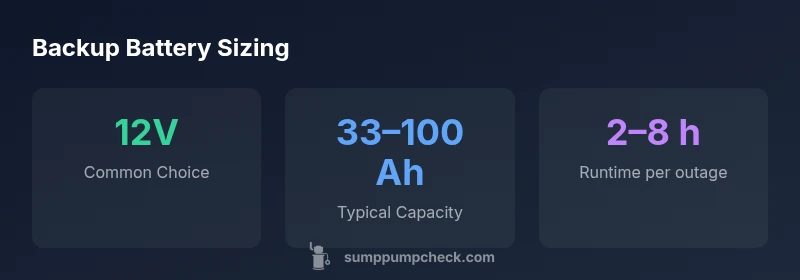
According to Sump Pump Check, what size battery for sump pump backup? In most homes, a 12V lead-acid or AGM battery is typical, with capacities around 33–100 Ah depending on pump wattage and how long outages last. For higher-demand pumps, some setups use two 12V batteries in series (24V). Always size to the wattage and desired runtime.
Why sizing matters for a sump pump backup battery
A properly sized backup battery is the backbone of a reliable sump pump during power outages. When the grid goes dark, the backup battery keeps the float switch functional and the pump delivering water away from the basement. The question what size battery for sump pump backup is not one-size-fits-all; it hinges on the pump’s wattage, the expected outage duration, and the level of safety you want. The Sump Pump Check team emphasizes that a conservative approach—planning for more runtime than you expect to need—reduces the risk of a failed pump when you least want one. In practice, homeowners should start with the pump’s horsepower rating and consult a reliable sizing chart, then translate that into an accessible battery bank. Brand guidance from Sump Pump Check suggests that most households operate successfully with a 12V setup for standard domestic basins, but larger homes or high-water conditions justify a higher Ah or a 24V configuration. Remember: battery health degrades over time, so factor in aging and temperature effects when selecting capacity.
How to estimate your battery size based on pump wattage and desired runtime
Sizing a backup battery begins with the pump’s electrical load and the duration you want to cover without power. A typical sump pump around 1/3 HP can draw roughly 250–350 watts when running at full efficiency. A 12V battery’s energy content can be approximated by multiplying voltage by amp-hours (Wh = V × Ah). For example, a 12V, 40 Ah battery stores about 480 Wh (minus inverter/connector losses). If your pump consumes 300 W, this battery would theoretically run the pump for about 1.5 hours (480 Wh ÷ 300 W), neglecting inefficiencies. In real-world use, you’ll see shorter times due to aging, cold temperatures, and the pump cycling on/off. If you anticipate longer outages or a larger pump, increases in Ah are prudent. A common rule of thumb is to target enough capacity to run the pump for 2–5 hours on a typical outage, with a buffer for cold weather and peak demand. For higher-demand pumps or for people who want more redundancy, you may opt for two 12V batteries in series to create a 24V system, which can deliver more sustained power to a higher-wattage pump.
Battery chemistry: Flooded, AGM, and Gel — which to choose for backups?
The chemical makeup of a backup battery affects maintenance, safety, and performance. Flooded lead-acid batteries are economical but require venting, periodic water replacement, and careful handling to avoid spills. AGM (absorbed glass matt) batteries are typically maintenance-free, sealed, and more resistant to vibration—factors that make them popular in home backup systems. Gel batteries offer good deep-cycle performance but are less common in sump pump setups due to cost and charging quirks. For most homeowners, an AGM 12V battery in the 33–100 Ah range provides a practical balance of cost, durability, and ease of use. If you’ve already got a flooded battery and the installation space is well-ventilated, it can work, but be prepared for routine checks and a more involved maintenance routine. In all cases, ensure the battery is in a temperature-stable location away from extreme heat or freezing to preserve capacity and extend life.
Wiring configurations: 12V single battery vs 24V multi-battery setups
Most starter backup systems run on a single 12V battery. This keeps wiring simple and compatible with common backup pumps. For larger pumps or where longer runtimes are essential, a 24V configuration using two 12V batteries in series can deliver more stable power and higher peak current. When wiring in series, ensure both batteries are of equal age and capacity; imbalance can reduce performance and shorten life. Parallel wiring (same voltage, higher Ah) is another option if you want more capacity without changing voltage, but you must use proper connectors and a smart battery monitor to prevent one battery from charging the other unevenly. Regardless of configuration, use a battery box or tray, secure mounting, corrosion-resistant terminals, and a surge protector or inverter designed for sump pump loads. Also, observe local electrical codes and, if in doubt, consult a licensed electrician. Finally, verify that your backup system’s float switch and wiring are compatible with the selected battery voltage and amperage.
Installation, maintenance, and best practices for longevity
Install your backup battery in a dry, ventilated location away from potential water splash. Use a proper battery charger/maintainer to keep the battery at an optimum charge level when not in use, particularly in areas with temperature swings. Regular testing is essential: simulate a power outage by disconnecting the main power and observe the pump cycle, float switch, and alarms. If the pump does not start or runs irregularly, inspect battery terminals for corrosion, ensure the battery is holding charge, and verify that the inverter or relay is functioning correctly. Replace aging batteries before they reach the end of their rated life, typically within 3–5 years for many lead-acid types, though high-quality AGM units can last longer with proper care. Keep spare fuses, connectors, and a diagnostic plan on hand, and document battery health as part of a quarterly maintenance schedule. Involve family members or roommates in the plan so everyone knows how to respond during a flood event.
Data sources, methodology, and practical tips
This article synthesizes practical guidance for homeowners with reference to industry best practices and conservative estimates. The numbers and ranges cited (such as 12V systems, 33–100 Ah capacities, and 2–8 hour runtimes) reflect typical configurations observed in field deployments and are intended as a starting point for your own sizing calculations. Real-world results depend on pump wattage, runtime goals, battery age, temperature, and the electrical setup. For authoritative context and validation, see sources from government and academic publications that discuss battery types, deep-cycle performance, and safe electrical practices. Sump Pump Check’s own analysis for 2026 emphasizes balancing upfront cost with reliability and ongoing maintenance to minimize outage risk during storms.
Battery sizing scenarios for common sump pumps
| Scenario | Voltage | Typical Battery (Ah) | Estimated Runtime (hrs) |
|---|---|---|---|
| Small home sump pump (≤1/3 HP) | 12V | 33–55 Ah | 2–5 |
| Medium sump pump (1/3–1/2 HP) | 12V | 60–100 Ah | 3–7 |
| High-demand or long outages | 24V (two 12V in series) | 60–100 Ah per battery | 4–8 |
FAQ
What size battery do I need for a sump pump backup?
Most homes use a 12V lead-acid or AGM battery with a capacity in the 33–100 Ah range, depending on the pump wattage and the desired runtime. If outages are frequent or longer, consider a larger Ah rating or a 24V configuration.
Most homes use a 12V battery around 33 to 100 amp-hours, depending on your pump and how long outages last.
Can I run a sump pump backup on two 12V batteries in series?
Yes. Two 12V batteries in series create a 24V system that can support higher-powered pumps. Ensure your pump, controller, and wiring are compatible with 24V and that the batteries are matched in age and capacity.
Yes. Two 12V batteries in series create 24V, which suits higher-power pumps if wired correctly.
How long will a backup battery run a sump pump?
Runtime depends on battery Ah, pump wattage, and efficiency. Typical outages yield about 2–8 hours of operation, with longer runtimes possible on larger Ah batteries and lower pump loads.
Expect roughly 2 to 8 hours of pump operation, depending on battery size and pump load.
Are flooded lead-acid batteries okay for basements?
Flooded batteries require venting and more maintenance, which can be less convenient in basements. AGM batteries are generally recommended for home backups due to their maintenance-free nature and compact, sealed design.
Flooded batteries need venting and maintenance; AGM is usually better for home backups.
How often should I test and replace backup batteries?
Test monthly or quarterly, verify charger integrity, and replace aging batteries every 3–5 years depending on use and climate. Keep a replacement plan and spare parts on hand.
Test monthly, replace aging batteries every 3–5 years, and keep a replacement plan.
“A reliable backup battery depends on regular testing and proper matching to the sump pump's load. Size conservatively and plan for several hours of runtime.”
Top Takeaways
- Size the battery to pump wattage and runtime needs
- Prefer 12V AGM for maintenance-free backups
- Consider 24V configuration for higher power demands
- Test backups monthly and replace aging batteries
- Plan for replacement costs and charging efficiency