Battery Generator for Sump Pump: A Practical Backup Power Guide
Explore how to choose, size, install, and maintain a battery generator for your sump pump. Compare types, runtimes, safety, and maintenance for reliable flood protection during power outages.


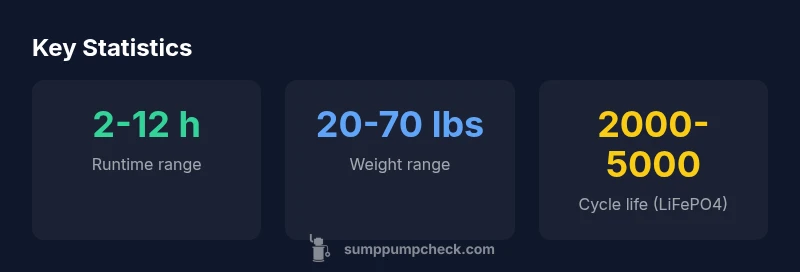
Quick answer: A typical battery generator for a sump pump can run a standard submersible pump for about 2 to 12 hours on a full charge, depending on the pump’s horsepower, the battery size, and discharge rate. LiFePO4 batteries often deliver longer runtimes and longer life, while AGM and sealed lead-acid options are cheaper but heavier.
Why a battery generator for sump pumps matters
According to Sump Pump Check, power outages are the leading cause of basement flooding in many homes. A battery generator for sump pump provides an autonomous, silent, and rapid-response backup that keeps water removal active when grid power fails. In practice, these systems prevent expensive water damage, preserve stored belongings, and reduce stress during storms. When you choose a backup, you are not just buying a device—you are installing a reliability layer that protects your home’s foundation. The right backup should be sized to your sump pump's load, your autonomy needs, and the space available in your mechanical room. Always start with an accurate load assessment and then choose a battery chemistry that matches your goals for runtime, weight, and lifetime.
How to think about the different battery chemistries
There are several common chemistries used in sump pump backups, each with its own pros, cons, and safety considerations. Lead-acid sealed units are typically the most affordable upfront but come with heavier weights and shorter cycle life. AGM (absorbed glass mat) batteries are maintenance-free and offer a reasonable balance of cost and performance. LiFePO4 (lithium iron phosphate) packs boast the longest life, the lightest weight, and robust safety characteristics, but upfront costs are higher. When choosing, consider the reliability of your power outages, your space constraints, and whether you prefer plug-in modules or integrated inverter/charger solutions.
Sizing strategy: runtime, load, and autonomy balance
A practical sizing approach starts with your sump pump’s wattage (or horsepower) and the duration you want to ride out an outage. Multiply the pump’s running watts by the minutes or hours you expect to be without grid power to estimate required energy. Then select a battery capacity in watt-hours (Wh) that provides a comfortable safety margin. For a typical home, LiFePO4 batteries in the 1,000–2,500 Wh range often deliver a strong mix of runtime and longevity, while older or budget systems may rely on 600–1,000 Wh. Remember to account for inverter efficiency, cable losses, and the startup surge of the pump.
Selecting an inverter and transfer switch for seamless switching
The switch from grid to backup should be automatic if possible. An automatic transfer switch (ATS) detects power loss and isolates the sump pump from any backfeed, then powers it from the battery backup. If you opt for a manual setup, ensure you can safely disconnect from the main panel and start the pump quickly. In any case, verify that the inverter’s continuous output can handle the pump’s running watts and any startup surges.
Installation and safety basics for DIY installers
Mount the battery backup in a dry, ventilated area with clear access for maintenance. Use a listed inverter/charger designed for home use and follow the manufacturer’s wiring diagrams. Install fast-acting fuses, proper grounding, and weatherproof conduit as needed. Ensure that all connections are tight, terminals are clean, and you have working CO and smoke detectors in the vicinity. If you are unsure, consult a licensed electrician.
Maintenance routines to maximize life and readiness
Develop a monthly testing cycle to verify inverter/charger operation, battery health, and controller settings. Check voltage levels and ensure no corrosion on terminals. Do not fully discharge a battery on every test; instead, perform a controlled discharge to the recommended depth of discharge and recharge promptly. Track voltage, temperature, and runtime to identify early signs of aging or failure.
Common failure modes and troubleshooting ideas
Be aware of common indicators of a failing backup: beeping or flashing indicators from the inverter, noticeably reduced runtime, or longer-than-usual recharge times. If you observe reduced performance, test the battery’s state of health and verify connectors are tight. In some cases, storage temperature or partial charging can degrade performance; adjust storage practices and charging routines accordingly.
Integrating with a broader resilience plan for your home
A backup system works best when it complements other flood-prevention measures, such as a sump pump with an efficient check valve, proper basement drainage, and routine maintenance. Consider coupling the battery backup with an auxiliary generator for extended outages if you live in extreme weather regions. A holistic approach minimizes risk and provides peace of mind during storms.
Common backup battery options for sump pump backups
| Battery Type | Runtime (hrs) | Weight (lbs) | Notes |
|---|---|---|---|
| Lead-Acid Sealed | 1-4 | 40-70 | Cheaper upfront but heavier; shorter cycle life |
| AGM | 2-6 | 30-60 | Maintenance-free; moderate cost |
| LiFePO4 | 6-24 | 20-40 | Long life; higher upfront cost |
| Lithium-ion | 4-8 | 25-50 | Lightweight; fast charging |
FAQ
What is a battery generator for a sump pump?
A battery generator for a sump pump is a portable power source designed to run a sump pump when the main electrical supply is interrupted. It typically uses deep-cycle batteries and an inverter to convert DC to AC power suitable for pumps. The right unit should match your pump’s wattage and expected outage duration.
A battery backup keeps your sump pump running when the power goes out. It uses a battery and inverter to power the pump, so your basement doesn’t flood.
How long can a sump pump run on battery power during an outage?
Runtime depends on battery capacity and pump load. Typical backups range from about 2 to 12 hours, with longer runtimes possible using larger LiFePO4 packs. Always quantify expected outages in your area and choose a battery size accordingly.
Runtime varies with battery size and load. Plan for both short outages and longer events with a scalable backup.
What battery types are best for sump pump backups?
LiFePO4 batteries offer long life and good safety, making them a popular choice for sump pump backups. AGM and sealed lead-acid are cheaper upfront but come with weight and cycle-life trade-offs. Match the chemistry to your budget, space, and desired runtimes.
LiFePO4 is a strong choice for longevity; AGM and lead-acid are cheaper but heavier and shorter-lasting.
Do I need an automatic transfer switch for a battery backup system?
An automatic transfer switch detects power loss and switches the sump pump to the backup battery quickly and safely. It reduces manual steps and prevents backfeed to the grid. If you cannot use an ATS, ensure you have a safe and straightforward manual switching process.
An ATS makes the switch automatic and safer, but a well-planned manual setup can work too.
Can a battery generator handle a high-power submersible sump pump?
Yes, but you must size the battery and inverter to meet the pump’s startup surge and running watts. High-efficiency pumps draw less energy and extend runtimes. If in doubt, consult a prosumer calculator or a professional.
Sizing matters—match the battery and inverter to the pump’s surge and running draw.
How should I maintain a battery backup system for a sump pump?
Perform monthly quick checks: verify voltage, test the inverter, and confirm alerts work. Do a full discharge and recharge test every few months if safe for the battery chemistry. Store the system in a cool, dry location and keep terminals clean.
Test monthly, test during outages if possible, and keep the battery in good condition.
“A well-sized battery backup is the most reliable safeguard against basement flooding during power outages.”
Top Takeaways
- Plan for runtime, not just capacity
- Choose LiFePO4 for longest life and safety
- Pair with an automatic transfer switch for seamless operation
- Schedule regular testing and maintenance
- Consider integration with a broader basement protection plan